Why Does Sound Travel Faster Through Water Than Air?

1The Counterintuitive Reality
2Understanding Sound Speed Fundamentals
The Core Equation
• K = the material's elastic modulus (bulk modulus for fluids, Young's modulus for solids)
• ρ = the material's density
Why Elasticity Dominates
3Density vs. Elasticity: The Real Factor
Air (at 20°C, sea level)
• Bulk modulus: ~142 kPa
• Sound speed: 343 m/s
Water (at 20°C)
• Bulk modulus: ~2.2 GPa (15,493× higher than air)
• Sound speed: 1,480 m/s (4.3× faster than air)
Steel
• Elastic modulus: ~200 GPa (1,408,451× higher than air)
• Sound speed: ~5,960 m/s (17.4× faster than air)
The Molecular Perspective
• In water: Molecules are essentially touching, separated by less than 0.3 nanometers. Vibrations transfer almost instantaneously through hydrogen bonding networks. The incompressible nature of liquid water (high bulk modulus) means compression waves propagate very efficiently.
• In steel: Atoms are locked in a rigid crystalline lattice. When one atom moves, the metallic bonds force neighboring atoms to move almost simultaneously. The extreme stiffness (elastic modulus) creates near-instantaneous energy propagation.
4The Physics of Molecular Transmission
Sound as a Compression Wave
1. Proximity of molecules: How far must each molecule travel before colliding with the next?
2. Strength of intermolecular forces: How efficiently does collision transfer energy?
3. Elastic restoring force: How quickly does the material return to its original state after compression?
Why Gases Are Slow
Why Liquids Are Faster
Why Solids Are Fastest
5Measured Sound Speeds Across Materials
Gases (slowest)
• Helium: 965 m/s
• Air (20°C): 343 m/s
• Carbon dioxide: 259 m/s (slower than air despite higher density — lower elasticity dominates)
Liquids (faster)
• Water (20°C): 1,480 m/s
• Seawater: 1,520 m/s (slightly faster due to higher density and elasticity from salt)
• Mercury: 1,450 m/s (despite being 13.6× denser than water, similar sound speed due to lower elasticity)
Solids (fastest)
• Lead: 1,960 m/s
• Concrete: ~3,200 m/s
• Wood (along grain): ~3,900 m/s
• Aluminum: 6,420 m/s
• Steel: ~5,960 m/s
• Glass: ~5,640 m/s
• Diamond: ~12,000 m/s (highest known sound speed — extreme stiffness)
6Why This Matters for Soundproofing
The Flanking Problem
Material Selection Based on Impedance
Frequency Dependence
Why Dense Materials Still Matter
7Implications for Acoustic Design
Underwater Communication
Medical Ultrasound
Structural Health Monitoring
Musical Instrument Design
9Conclusion
FAQs: Sound Speed in Water vs Air
Related Guides in Education
Continue exploring with these hand-picked articles

Noise in Communication: 9 Types, Real-World Examples & Proven Solutions
The definitive guide to noise in communication—covering all 9 types (physical, psychological, semantic, physiological, technical, organizational, cultural, environmental, and channel noise) with real-world examples, scientific models, measurable impact data, and proven strategies to eliminate communication barriers.
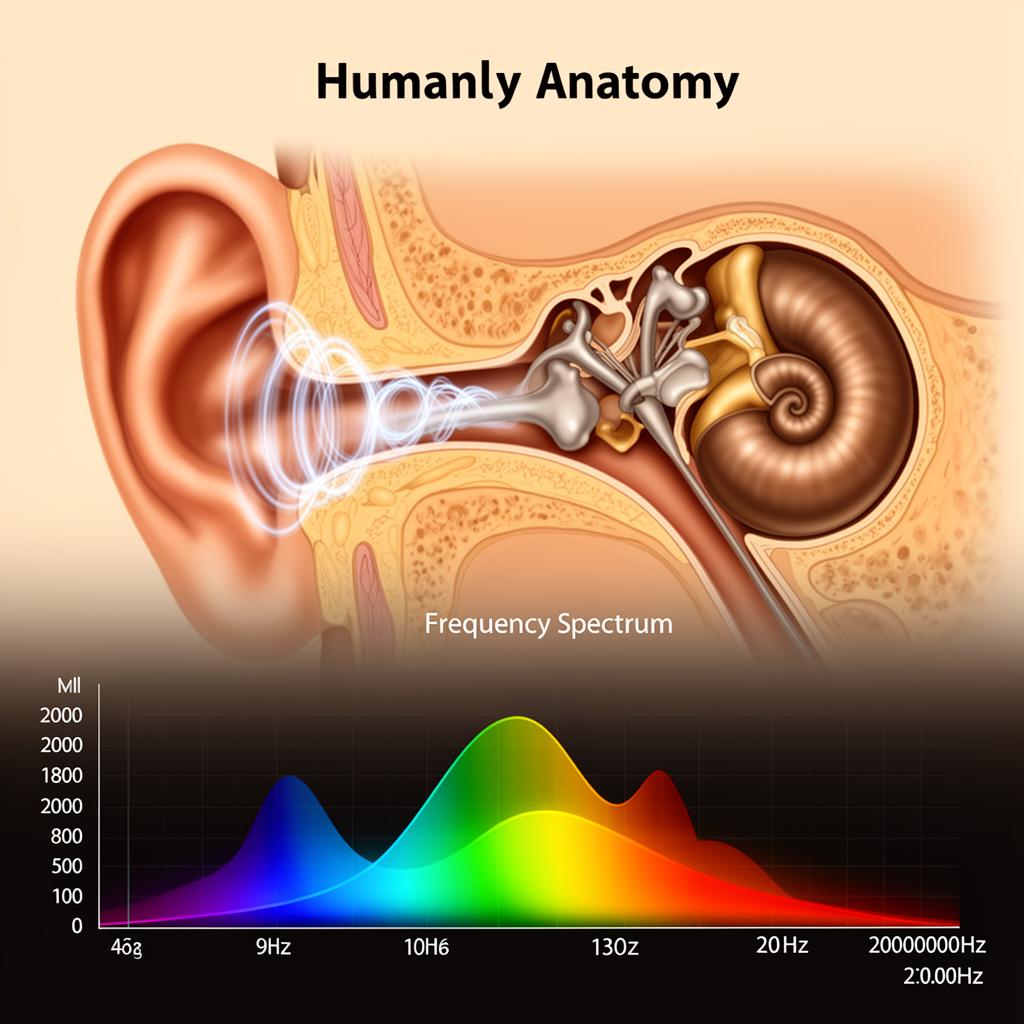
What Frequency Can Humans Hear? The Complete Science of Human Hearing Range
What frequency can humans hear? The complete guide to the 20 Hz–20 kHz human hearing range, equal-loudness contours, age-related hearing loss, infrasound, ultrasound, animal comparisons, and soundproofing by frequency.

How Sound Frequencies Affect Your Emotions, Energy, and Health
Discover how different sound frequencies affect your emotions, brainwaves, stress levels, and physical health. The science of Solfeggio frequencies, binaural beats, and why acoustic environments matter.
Our Complete Product Line
Professional-grade soundproofing materials for any application
Need Expert Soundproofing Advice?
Our team of soundproofing specialists is here to help you choose the right products and installation methods for your museum or gallery project.