Noise in Communication: 9 Types, Real-World Examples & Proven Solutions
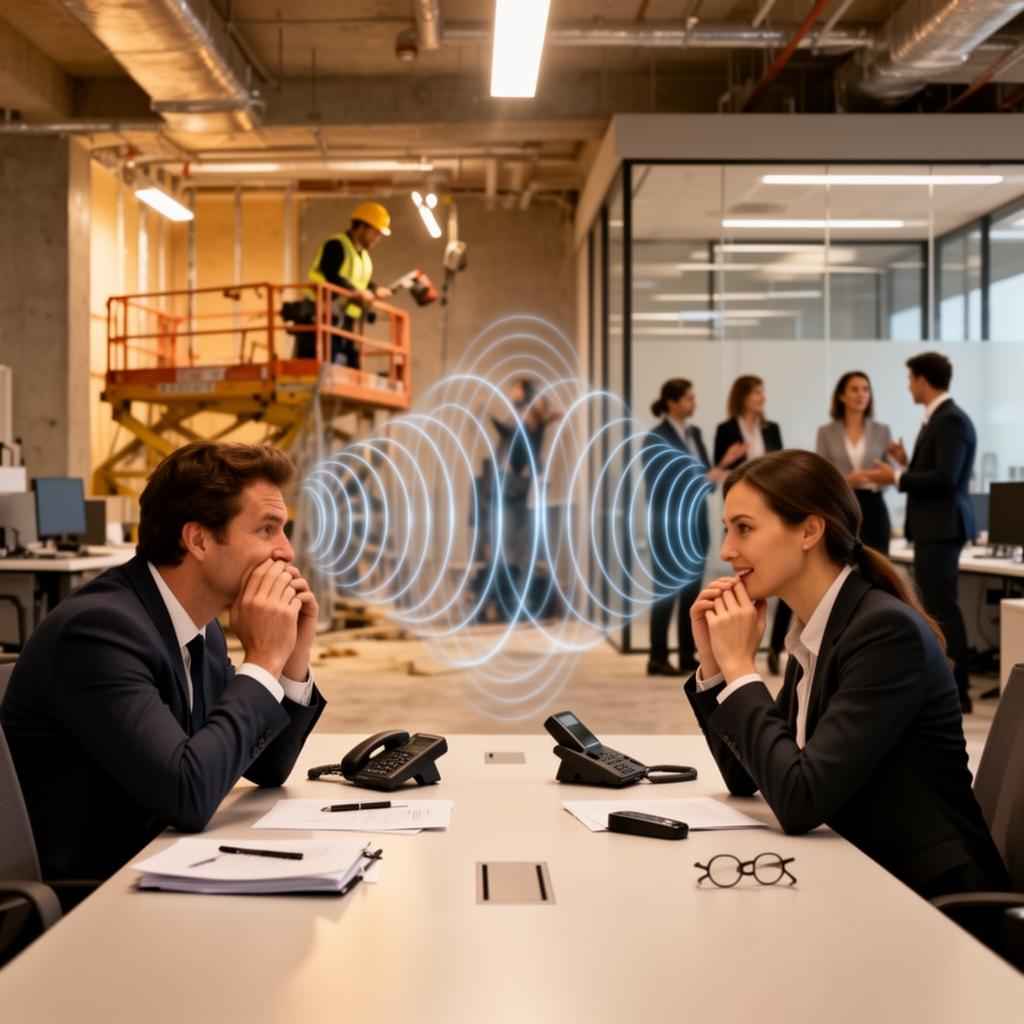
1What Is Noise in Communication?
In communication theory, noise refers to any factor that interferes with the encoding, transmission, or decoding of a message. The concept extends far beyond audible sound—it encompasses every barrier that prevents a receiver from understanding a message exactly as the sender intended it.
The formal definition, established by Claude Shannon and Warren Weaver in their groundbreaking 1948 paper A Mathematical Theory of Communication, describes noise as any signal that is not part of the intended message. Shannon demonstrated mathematically that every communication channel has a finite channel capacity, and noise reduces the amount of useful information that can pass through it.
The Communication Process
Every act of communication follows a predictable sequence:
- Sender — The person or system that originates the message
- Encoding — The process of converting thoughts into transmittable symbols (words, gestures, images)
- Channel — The medium through which the message travels (air, phone line, email, face-to-face)
- Decoding — The receiver's process of interpreting the symbols back into meaning
- Receiver — The person or system that receives and interprets the message
- Feedback — The receiver's response, which confirms or denies understanding
Noise can corrupt the message at any stage of this process—not just during transmission. A stressed sender may encode poorly (psychological noise). A jargon-heavy message may resist decoding (semantic noise). A hearing-impaired receiver may miss auditory signals (physiological noise). Understanding where noise enters the system is the first step to eliminating it.
Why Noise Matters More Than Ever
Modern communication environments have multiplied the sources of noise exponentially. In 1950, the average office worker processed approximately 1,000 messages per month. By 2024, that figure exceeds 120,000 messages per month across email, Slack, Teams, SMS, phone calls, and video conferences. Each additional channel introduces new noise vectors—and the cognitive load of managing multiple channels creates its own form of psychological noise.
2The Shannon-Weaver Communication Model & Noise
The Shannon-Weaver model, published in 1948 at Bell Labs, is the foundational framework for understanding noise in communication. Originally designed for telephone engineering, it has become the standard model in linguistics, organizational psychology, and communication studies.
The Original Mathematical Model
Shannon's model defines communication as:
C = B × log₂(1 + S/N)
Where C = Channel Capacity (bits/sec), B = Bandwidth, S = Signal Power, N = Noise Power
This equation—the Shannon-Hartley theorem—proves that as noise increases, channel capacity decreases logarithmically. In human terms: the noisier the environment, the less information you can successfully communicate per unit of time.
Extending the Model to Human Communication
Scholars David Berlo (1960), Wilbur Schramm (1954), and Dean Barnlund (1970) expanded Shannon's engineering model to account for human-specific noise sources:
| Scholar | Model | Noise Contribution |
|---|---|---|
| Shannon & Weaver (1948) | Linear Model | Physical/technical noise in the channel |
| Schramm (1954) | Interactive Model | Added fields of experience—semantic & cultural noise |
| Berlo (1960) | SMCR Model | Added sender/receiver skills, attitudes, knowledge—psychological noise |
| Barnlund (1970) | Transactional Model | Noise is continuous, bidirectional, and context-dependent |
The transactional model is now considered the most accurate representation of human communication: both parties simultaneously send and receive, and noise is not a discrete event but a constant, dynamic force that fluctuates in real time.
3Physical Noise: External Environmental Interference
Physical noise (also called external noise) is any audible or sensory interference from the environment that prevents a message from being clearly transmitted or received. It is the most obvious and well-studied form of communication noise.
Common Sources of Physical Noise
| Environment | Noise Source | Typical dB Level | Impact on Communication |
|---|---|---|---|
| Office | Open-plan conversation | 60–65 dB | Masks speech at distances >3 meters |
| Classroom | HVAC systems | 45–55 dB | Reduces speech intelligibility by 25% |
| Hospital | Equipment alarms, footsteps | 55–72 dB | Increases medical errors by 12% |
| Restaurant | Background music, kitchen | 70–85 dB | Forces vocal strain, Lombard effect |
| Construction site | Machinery, impact tools | 85–110 dB | Makes verbal communication impossible |
| Home | Neighbor noise through walls | 40–60 dB | Disrupts focus, sleep, remote work |
The Lombard Effect
When background noise exceeds approximately 45 dB, speakers involuntarily raise their voice—a phenomenon called the Lombard effect (named after Étienne Lombard, 1911). In noisy environments, speakers increase vocal effort by 3–6 dB for every 10 dB of background noise. This creates a vicious cycle: louder speech raises the ambient noise floor, which triggers even louder speech from others.
In open-plan offices, the Lombard effect can raise average noise levels from 50 dB to over 70 dB during peak hours—a level where normal conversation becomes genuinely difficult.
Speech Intelligibility & the SII Index
The Speech Intelligibility Index (SII), defined by ANSI S3.5-1997, quantifies how much of a speech signal a listener can understand in a given noise environment. An SII of 1.0 means perfect intelligibility; an SII below 0.45 means less than half of speech is understood. Key thresholds:
- SII > 0.75 — Good: casual conversation understood with minimal effort
- SII 0.45–0.75 — Fair: listener must concentrate, frequent repetitions needed
- SII < 0.45 — Poor: most speech unintelligible, communication fails
In a classroom with 45 dB of HVAC noise, the SII drops to approximately 0.55—meaning children in the back rows miss nearly half of what the teacher says. This is why ANSI S12.60 mandates maximum 35 dB background noise in classrooms.
4Psychological Noise: Internal Mental Barriers
Psychological noise refers to internal mental states—emotions, biases, preconceptions, and cognitive distortions—that interfere with a person's ability to send, receive, or accurately interpret a message. Unlike physical noise, psychological noise is invisible and often unrecognized by the person experiencing it.
Major Forms of Psychological Noise
- Confirmation bias — Selectively hearing information that confirms existing beliefs while filtering out contradictory data. A manager convinced a project is on track may unconsciously dismiss warning signs from team updates.
- Emotional state — Anger, anxiety, grief, and excitement all alter message processing. Research in Cognition & Emotion (2019) found that anxiety reduces working memory capacity by up to 30%, directly impairing the ability to decode complex messages.
- Cognitive overload — When the brain is processing too much information simultaneously, new messages are either ignored or misinterpreted. Miller's Law (1956) established that humans can hold only 7 ± 2 chunks of information in working memory at once.
- Stereotyping & prejudice — Preconceived judgments about a speaker's age, gender, accent, or appearance can cause the receiver to discount, distort, or overweight the message content.
- Wandering attention — Harvard researchers Killingsworth & Gilbert (2010) found that the average person's mind wanders 46.9% of the time. During a 30-minute meeting, participants are mentally absent for nearly 15 minutes.
- Defensive listening — When a receiver perceives criticism (real or imagined), they shift into self-protection mode and stop processing the actual message content.
The Interaction Between Physical and Psychological Noise
Physical and psychological noise compound each other. A 2020 study in Environmental Research found that workers in environments exceeding 65 dB showed cortisol levels 23% higher than those in quiet environments. Elevated cortisol impairs prefrontal cortex function—the brain region responsible for language processing, decision-making, and attention. This means physical noise doesn't just mask messages acoustically; it chemically degrades the brain's ability to process the messages it does receive.
5Semantic Noise: Language & Meaning Barriers
Semantic noise occurs when the sender and receiver assign different meanings to the same words, symbols, or phrases. The message is transmitted clearly, but the receiver decodes it differently than the sender intended.
Sources of Semantic Noise
| Source | Example | Result |
|---|---|---|
| Technical jargon | "We need to improve our STC ratings" (said to a non-technical client) | Client has no idea what STC means, nods and leaves confused |
| Ambiguous language | "Let's table this discussion" (US: postpone; UK: address now) | Complete opposite actions depending on speaker origin |
| Euphemisms | "We're right-sizing the organization" | Employees unsure if they're being laid off or promoted |
| Acronyms | "The ROI on the MVP for the B2B SaaS vertical" | Excludes anyone without domain knowledge |
| Homonyms | "Check the bank" (financial institution or river edge?) | Context-dependent interpretation failure |
The Sapir-Whorf Hypothesis & Semantic Fields
Linguists Edward Sapir and Benjamin Lee Whorf proposed that language doesn't just describe reality—it shapes how we perceive it. Speakers of different languages literally categorize the world differently. Russian speakers, who have separate words for light blue ("goluboy") and dark blue ("siniy"), can distinguish between these shades 10% faster than English speakers, who use a single word "blue."
In professional contexts, this means that experts and non-experts don't just use different words—they perceive different realities. An acoustics engineer saying "the assembly has a coincidence frequency at 2,500 Hz" is not merely using jargon the client doesn't know; the engineer is describing a phenomenon the client literally cannot conceptualize without the requisite knowledge framework.
6Physiological Noise: Biological Barriers to Reception
Physiological noise stems from biological and physical conditions of the sender or receiver that impair their ability to communicate effectively. This is the most personal form of noise and is often the least discussed in professional settings.
Types of Physiological Noise
- Hearing impairment — The WHO reports that 1.5 billion people worldwide experience some degree of hearing loss. Age-related hearing loss (presbycusis) typically affects high-frequency perception first, causing consonants like 's', 'f', 'th', and 'sh' to become indistinguishable. This doesn't make speech inaudible—it makes speech unintelligible.
- Visual impairment — Affects the ability to read nonverbal cues, written messages, presentations, and environmental signage. In face-to-face communication, visual cues account for up to 55% of message interpretation (Mehrabian, 1967).
- Fatigue — Sleep deprivation reduces cognitive processing speed by 20–50%. The CDC reports that 35% of American adults get less than 7 hours of sleep, meaning over a third of the workforce is operating with physiological noise during every communication.
- Hunger & dehydration — Blood glucose drops of just 10% below baseline reduce attention, memory encoding, and verbal fluency. Dehydration of 1–2% of body weight impairs cognitive function measurably.
- Pain & illness — Chronic pain consumes cognitive bandwidth. A person experiencing a migraine during a meeting isn't choosing to ignore the speaker—their neural resources are literally allocated to pain processing.
- Speech disorders — Stuttering, dysarthria, aphasia, and voice disorders affect the sender's encoding process, creating noise before the message even enters the channel.
Noise-Induced Hearing Loss (NIHL) & Communication
Extended exposure to noise above 85 dB causes permanent hearing damage. OSHA estimates that 22 million American workers are exposed to hazardous noise levels annually. The resulting hearing loss doesn't just affect the workplace where the damage occurred—it creates lifelong physiological noise in every future communication. This is one of the most direct links between physical acoustic noise and permanent communication impairment.
7Technical Noise: Technology & Equipment Failures
Technical noise (also called mechanical noise or electronic noise) arises from failures, limitations, or distortions in the technology used to transmit or receive messages. In the digital age, this has become one of the most pervasive and frustrating noise types.
Digital Communication Technical Noise
| Technology | Noise Source | Communication Impact |
|---|---|---|
| Video conferencing | Packet loss, latency >150ms, echo | Speakers talk over each other, facial cues lost in pixelation |
| Spam filters, full inboxes, formatting loss | Messages never received or read out of context | |
| Phone calls | Codec compression, poor cell signal | Voice quality degrades, emotional tone lost |
| Chat/messaging | Notification overload, threaded confusion | Important messages buried in noise of low-priority alerts |
| Presentations | Projector failure, incompatible formats, font rendering | Visual data unavailable, audience disengages |
Audio Technical Noise in Conference Rooms
A 2022 Frost & Sullivan study found that 85% of meeting rooms with video conferencing have at least one audio quality issue: echo, feedback, uneven microphone pickup, or background noise transmission. The most common cause? Poor room acoustics. Hard parallel walls, glass surfaces, and exposed ceilings create reverberation times (RT60) of 1.0–2.0 seconds—far above the 0.4–0.6 second range recommended for speech intelligibility.
When reverberation exceeds 0.6 seconds, microphones pick up reflected sound mixed with direct speech, and remote participants hear a muddy, echo-laden signal that degrades comprehension by up to 40%.
8Organizational Noise: Structural & Cultural Interference
Organizational noise emerges from the structure, hierarchy, policies, and culture of an organization. It is systemic rather than individual—meaning it affects every communication within the system, not just isolated interactions.
Sources of Organizational Noise
- Information silos — Departments that don't share information create redundant work, conflicting priorities, and knowledge gaps. McKinsey estimates that employees spend 1.8 hours per day searching for information that already exists somewhere in their organization.
- Hierarchical filtering — Messages passing through multiple management layers get distorted at each level. Research shows that by the time a message passes through five organizational levels, only 20% of the original content remains intact—an 80% information loss.
- Unclear communication channels — When employees don't know whether to use email, Slack, a meeting, or a formal memo, messages go to the wrong audience or get lost entirely.
- Conflicting directives — When different managers give contradictory instructions, the resulting confusion is a form of organizational noise that paralyzes action.
- Meeting overload — Excessive meetings create noise by fragmenting attention. A Harvard Business Review study found that senior managers attend an average of 23 hours of meetings per week, leaving minimal time for focused communication processing.
The "Open Office" Paradox
Open-plan offices were designed to reduce organizational noise by eliminating physical barriers between teams. Instead, they dramatically increased physical noise while providing minimal improvement in collaboration. A landmark 2018 study by Bernstein & Turban in the Philosophical Transactions of the Royal Society B found that transitioning to open offices reduced face-to-face interactions by 73% and increased email usage by 67%. Workers retreated into headphones and digital communication to escape the physical noise—replacing one noise type with another.
9Cultural Noise: Cross-Cultural Communication Barriers
Cultural noise occurs when differences in cultural backgrounds, values, norms, and communication styles cause misinterpretation of messages. With globalized workforces, cultural noise has become one of the most consequential—and underestimated—communication barriers.
Dimensions of Cultural Noise
| Cultural Dimension | Low-Context Cultures | High-Context Cultures | Noise When Mixed |
|---|---|---|---|
| Directness | US, Germany, Netherlands | Japan, China, Korea | Direct speakers seem rude; indirect speakers seem evasive |
| Silence | Uncomfortable; indicates disagreement | Respectful; indicates consideration | Silence misread as agreement or hostility |
| Eye contact | Sign of honesty and engagement | Can indicate challenge or disrespect | Trust signals misinterpreted |
| Feedback style | "This needs major revision" | "This is interesting, perhaps we could consider..." | Severity of criticism missed or overstated |
Edward T. Hall's Context Framework
Anthropologist Edward T. Hall (1976) identified the spectrum of high-context to low-context communication as the primary axis of cultural noise. In high-context cultures (Japan, Arab nations, China), meaning is embedded in relationships, hierarchy, tone, and nonverbal cues. In low-context cultures (USA, Germany, Scandinavia), meaning is carried primarily in explicit words.
When a Japanese executive says "That would be very difficult" to an American proposal, the American hears a challenge to overcome. The Japanese executive intended it as a polite refusal. This single example of cultural noise has derailed billions of dollars in international business negotiations.
Proxemics and Physical Space
Hall also identified that cultures have vastly different norms for personal space during communication. Latin American, Middle Eastern, and Southern European cultures maintain conversational distances of 0.5–1.0 meters, while Northern European and East Asian cultures prefer 1.0–1.5 meters. When these norms clash, both parties experience discomfort that creates psychological noise—one feels invaded, the other feels rejected.
10Environmental Noise: Spatial & Contextual Interference
Environmental noise encompasses the broader physical and spatial conditions of the communication setting that affect message transmission—beyond just audible sound. It includes lighting, temperature, spatial arrangement, weather, and the overall sensory environment.
Environmental Factors That Create Communication Noise
- Temperature extremes — Cognitive performance drops measurably outside the 68–77°F (20–25°C) comfort range. A Cornell University study found that workers in offices below 68°F made 44% more errors than those in the optimal range.
- Poor lighting — Inadequate lighting reduces the ability to read facial expressions, body language, and written materials. It also causes eye strain and fatigue, compounding physiological noise.
- Seating arrangement — Communication dynamics shift dramatically based on physical positioning. Circular arrangements promote equality; boardroom layouts create power hierarchies. A person seated at the end of a long table receives and processes information differently than someone in the center.
- Room size & acoustics — Large rooms with hard surfaces create echo and reverberation that degrades speech intelligibility. Small rooms can feel claustrophobic, triggering psychological noise.
- Air quality — A 2021 Harvard T.H. Chan School study found that indoor CO₂ levels above 1,000 ppm reduce cognitive function by 15%, and levels above 2,500 ppm reduce it by 50%. Poorly ventilated meeting rooms routinely exceed 2,000 ppm within 45 minutes of full occupancy.
The Total Environmental Load
Environmental noise rarely operates in isolation. A poorly designed meeting room might simultaneously produce physical noise (HVAC hum at 50 dB), environmental noise (temperature at 78°F, CO₂ at 1,800 ppm), and psychological noise (anxiety from the cramped space). These factors are multiplicative, not additive—each additional stressor amplifies the impact of the others.
11Channel Noise: Medium-Specific Distortion
Channel noise is specific to the communication medium itself—the inherent limitations and distortions introduced by the channel through which a message travels. Every medium filters, compresses, or transforms the original message in some way.
Channel Fidelity Comparison
| Channel | Information Bandwidth | Noise Introduced | Best For |
|---|---|---|---|
| Face-to-face | Highest (verbal + visual + spatial + olfactory) | Minimal channel noise; other types still apply | Complex, emotional, or high-stakes messages |
| Video call | High (verbal + limited visual) | Compression artifacts, latency, eye-contact mismatch | Remote collaboration, visual presentations |
| Phone call | Medium (verbal + vocal tone) | No visual cues, codec compression, interruption ambiguity | Quick decisions, relationship maintenance |
| Medium-low (text + formatting) | No vocal tone, delayed feedback, tone misinterpretation | Documentation, asynchronous information sharing | |
| Text/chat | Low (text only) | Maximum ambiguity, missing context, fragmented threads | Brief, factual, time-sensitive updates |
Media Richness Theory
Richard Daft and Robert Lengel's Media Richness Theory (1986) ranks communication channels by their ability to convey rich, nuanced information. The theory predicts that using a low-richness channel for a high-complexity message creates severe channel noise. Sending a termination notice by text message, for example, strips away the tone, empathy, and nonverbal context that the message requires—guaranteeing misinterpretation and emotional escalation.
The practical rule: match the channel richness to the message complexity. Simple, routine messages tolerate lean channels. Complex, ambiguous, or emotionally charged messages demand rich channels with full feedback capability.
12The Measurable Cost of Communication Noise
Communication noise is not just an abstract concept—it has concrete, measurable financial consequences across every sector.
Financial Impact by Industry
| Sector | Annual Cost of Noise | Primary Noise Types | Source |
|---|---|---|---|
| U.S. businesses (all) | $1.2 trillion/year | All types combined | Grammarly/Harris Poll, 2023 |
| Healthcare | $12 billion/year (preventable errors) | Physical, technical, semantic | Joint Commission, 2022 |
| Construction | $31 billion/year (rework) | Physical, organizational, semantic | FMI/PlanGrid Report |
| Office/knowledge work | $15,000/employee/year (lost productivity) | Physical, psychological, organizational | Basex Research |
| Education (K-12) | 1.5 grade-level reading delay | Physical (classroom noise) | Acoustical Society of America |
The Hidden Costs
Beyond direct financial losses, communication noise creates cascading second-order costs:
- Employee turnover — Poor communication is cited as the #1 reason for leaving a job by 63% of employees (Dynamic Signal, 2023)
- Project failure — PMI reports that 56% of project budget risk is attributable to ineffective communication
- Patient safety — The Joint Commission found that communication failures are the root cause of 70% of sentinel events (unexpected deaths or serious injuries) in hospitals
- Legal liability — Miscommunications in contracts, safety instructions, and medical consent create massive legal exposure
13The Signal-to-Noise Ratio in Human Communication
Engineers use the Signal-to-Noise Ratio (SNR) to quantify how much useful signal exists relative to noise. The concept translates directly to human communication and provides a powerful framework for diagnosing and solving communication problems.
SNR = 10 × log₁₀(P_signal / P_noise) dB
A positive SNR means signal dominates. A negative SNR means noise dominates.
Applying SNR to Human Communication
| Scenario | Signal | Noise | Effective SNR |
|---|---|---|---|
| Quiet private office, focused listener | Clear speech at 60 dB | 25 dB ambient + no psychological noise | +35 dB (excellent) |
| Open office, stressed listener | Speech at 60 dB | 55 dB ambient + cognitive overload | +5 dB physical, negative psychological |
| Video call, poor acoustics | Compressed speech | Echo, latency, notification pings | Near 0 dB (marginal) |
| Outdoor construction site | Shouting at 85 dB | 95 dB machinery | −10 dB (communication impossible) |
The Minimum SNR for Effective Communication
Research consistently shows that speech requires a minimum SNR of +15 dB for comfortable, effortless understanding. At +6 dB, listeners must actively concentrate. At 0 dB, only about 50% of speech is intelligible. Below 0 dB, communication effectively fails unless supplemented by visual cues, written materials, or other redundant channels.
For children, the elderly, non-native speakers, and hearing-impaired individuals, the minimum required SNR is significantly higher—typically +20 to +25 dB. This is why classroom acoustics standards are stricter than office standards, and why hospital rooms require careful acoustic design.
14Physical Noise Reduction: The Science of Soundproofing
Of all nine noise types, physical noise is the only one that can be engineered out of existence. While psychological, semantic, and cultural noise require training, awareness, and behavioral change, physical noise can be measurably reduced through acoustic treatment and soundproofing materials.
The Four Principles of Soundproofing
| Principle | Mechanism | Materials | Noise Reduction |
|---|---|---|---|
| Mass | Dense materials resist sound vibration | Mass loaded vinyl (MLV), concrete, lead | 6 dB per doubling of mass (Mass Law) |
| Damping | Converts vibration energy to heat | Viscoelastic compounds, constrained-layer damping | Reduces resonance peaks by 10–20 dB |
| Decoupling | Breaks the vibration path between surfaces | Resilient channels, isolation clips, air gaps | 10–15 dB improvement |
| Absorption | Porous materials trap sound energy | Fiberglass, mineral wool, acoustic foam | Reduces reverberation time by 50–80% |
Mass Loaded Vinyl: The Communication Noise Solution
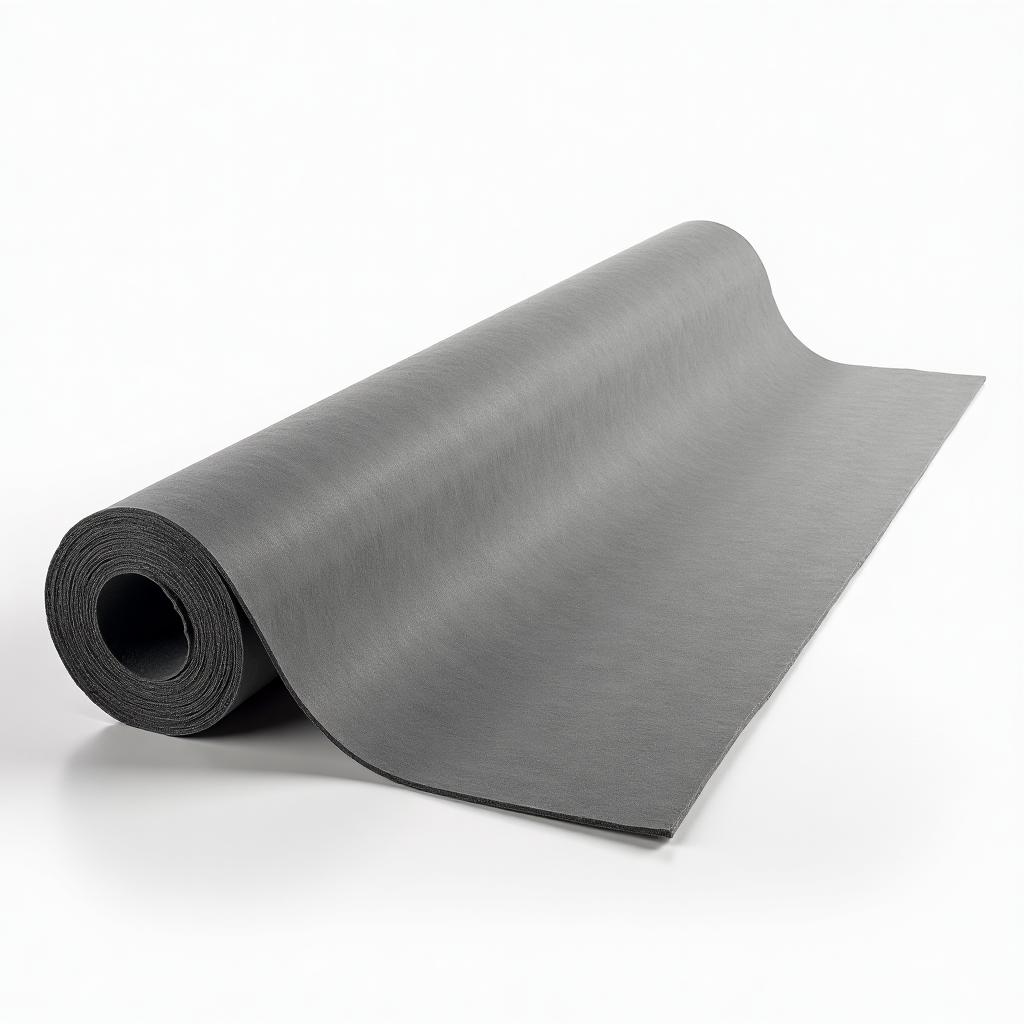
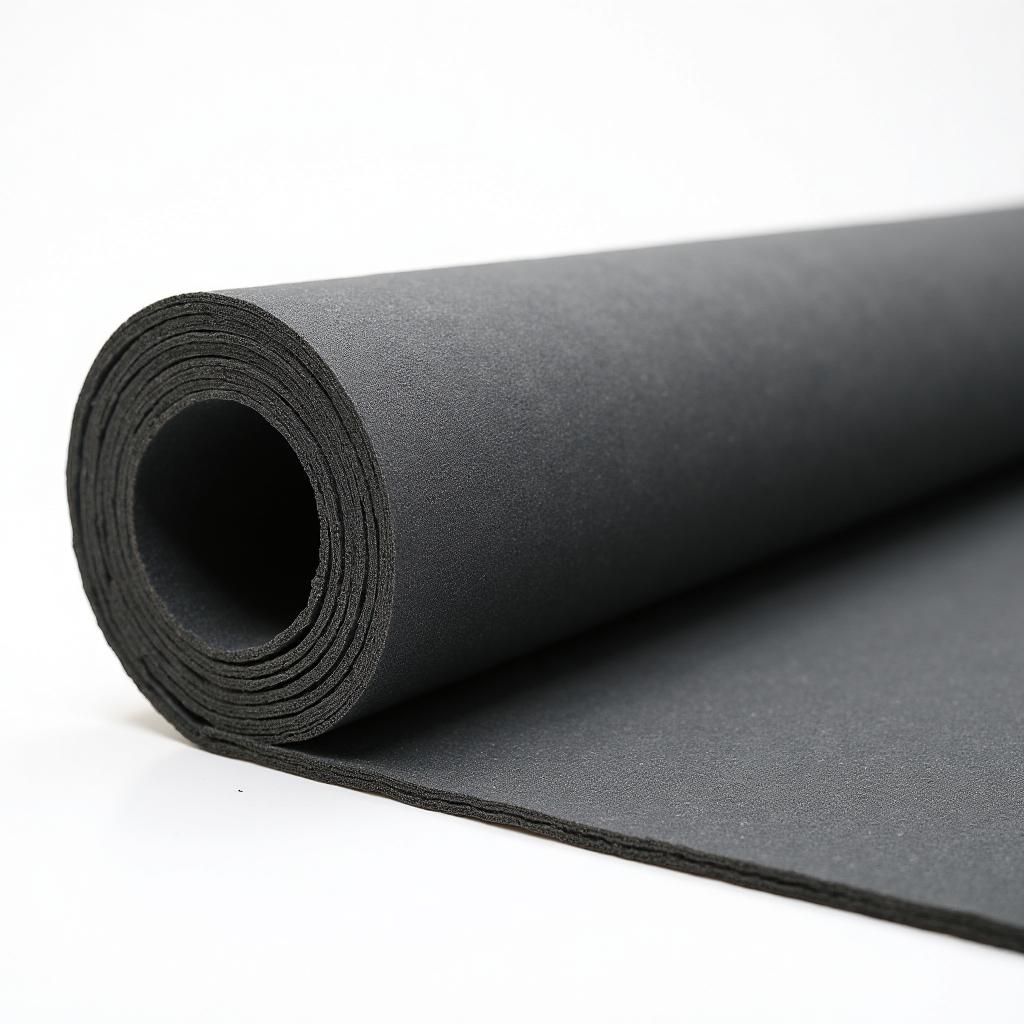
Mass loaded vinyl (MLV) is the most effective single material for eliminating physical communication noise. At just 1/8-inch thick, MLV adds significant mass to walls, ceilings, and floors without increasing wall thickness. A single layer of 1 lb/sq ft MLV adds approximately 25-27 STC points to an existing assembly.
In practical communication terms, this means:
- Conference rooms — MLV-treated walls prevent adjacent office conversations from bleeding through, maintaining speech privacy and eliminating physical noise for in-room participants
- Classrooms — MLV helps schools meet the ANSI S12.60 requirement of ≤35 dB background noise, directly improving the SNR for student comprehension
- Healthcare facilities — MLV in hospital walls reduces cross-room noise that contributes to communication errors and supports HIPAA privacy requirements
- Home offices — MLV-treated walls eliminate household noise intrusion during video calls, ensuring remote workers maintain professional communication quality
- Recording studios & podcasting — MLV provides the acoustic isolation needed for clear audio capture, eliminating technical noise at its source
Case Study: Open Office Acoustic Retrofit
A 200-person technology company in Austin, Texas reported that employees rated communication effectiveness at 3.1/10 in their open-plan office. Background noise levels averaged 65 dB during business hours. After installing MLV-backed acoustic partitions, ceiling-mounted absorption panels, and MLV-treated conference room walls, the average noise level dropped to 42 dB—a 23 dB reduction. Employee communication satisfaction scores rose to 7.8/10, and the number of emails sent internally dropped by 31% as employees returned to face-to-face conversation.
15Comprehensive Strategies to Eliminate All Noise Types
Effective noise reduction requires a multi-layered strategy that addresses every noise type simultaneously. Here is a comprehensive action framework:
Physical Noise Solutions
- Install mass loaded vinyl in walls, ceilings, and floors to block sound transmission
- Use acoustic ceiling tiles and wall panels to reduce reverberation
- Maintain HVAC noise below 35 dB NC rating in communication spaces
- Provide private rooms or phone booths for focused communication
- Use noise-canceling headphones and directional microphones for virtual meetings
Psychological Noise Solutions
- Practice mindfulness techniques before important conversations to clear cognitive noise
- Acknowledge emotional states explicitly: "I'm frustrated right now, so let me make sure I'm hearing you correctly"
- Use the steel-man technique: restate the other person's argument in its strongest form before responding
- Limit meeting lengths to 25 or 50 minutes to prevent cognitive fatigue
- Eliminate multitasking during conversations—close laptops, put phones face-down
Semantic Noise Solutions
- Define technical terms at first use—never assume shared vocabulary
- Use the "explain it to a 12-year-old" test for important messages
- Provide written glossaries for cross-functional projects
- Ask "what did you hear me say?" to verify message reception
- Use concrete examples alongside abstract concepts
Organizational Noise Solutions
- Establish clear channel guidelines: what goes in email vs. chat vs. meetings
- Limit organizational hierarchy to no more than 4 levels for any critical communication
- Implement "skip-level" meetings to bypass filtering effects
- Create shared dashboards that give all stakeholders access to the same data
- Audit meeting culture: eliminate any meeting that could be an email
Cultural Noise Solutions
- Invest in cross-cultural communication training for global teams
- Learn the high-context vs. low-context communication preferences of your colleagues
- When in doubt, over-communicate: provide both direct statements and contextual framing
- Use written follow-ups after verbal agreements to ensure shared understanding
- Respect different norms for silence, feedback, and personal space
Technical & Environmental Noise Solutions
- Treat conference rooms acoustically to achieve RT60 below 0.6 seconds
- Maintain meeting room temperatures between 68–74°F and CO₂ below 1,000 ppm
- Test all presentation technology before the meeting, not during it
- Provide redundant communication channels: if the video fails, switch to phone immediately
- Invest in professional-grade microphones and speakers for hybrid meeting rooms
18Conclusion
Noise in communication is not a single problem—it is a complex ecosystem of nine interconnected interference types, each capable of degrading message fidelity and each amplifying the effects of the others. From the audible hum of an HVAC system to the invisible weight of cultural assumptions, noise surrounds every act of communication.
The good news: every noise type has a solution. Physical noise can be engineered away with mass loaded vinyl and acoustic treatment. Psychological noise can be managed with mindfulness and cognitive strategies. Semantic noise can be eliminated with clear language and verification. Organizational and cultural noise can be reduced through intentional design and training.
The most effective approach addresses physical noise first—because it is the foundation upon which all other communication improvement is built. You cannot practice active listening in a room where you can't hear. You cannot read nonverbal cues through pixelated video caused by acoustic echo. You cannot maintain focus when your cortisol levels are elevated by chronic noise exposure.
Start with the physics. Then address the psychology. Then optimize the systems. That is the formula for noise-free communication.
FAQs: Noise in Communication
Related Guides in Education
Continue exploring with these hand-picked articles
What Frequency Can Humans Hear? The Complete Science of Human Hearing Range
What frequency can humans hear? The complete guide to the 20 Hz–20 kHz human hearing range, equal-loudness contours, age-related hearing loss, infrasound, ultrasound, animal comparisons, and soundproofing by frequency.
How Sound Frequencies Affect Your Emotions, Energy, and Health
Discover how different sound frequencies affect your emotions, brainwaves, stress levels, and physical health. The science of Solfeggio frequencies, binaural beats, and why acoustic environments matter.
Why Do We Sing in the Shower? The Acoustic Science Explained
Discover why showers sound like recording studios — the acoustic science of bathroom resonance, reverb, standing waves, and why your voice genuinely sounds better in the shower.
Our Complete Product Line
Professional-grade soundproofing materials for any application
Need Expert Soundproofing Advice?
Our team of soundproofing specialists is here to help you choose the right products and installation methods for your museum or gallery project.