Education7 min readAuthorMass Loaded Vinyl DirectPublishedUpdated

    Why Do We Sing in the Shower? The Acoustic Science Explained
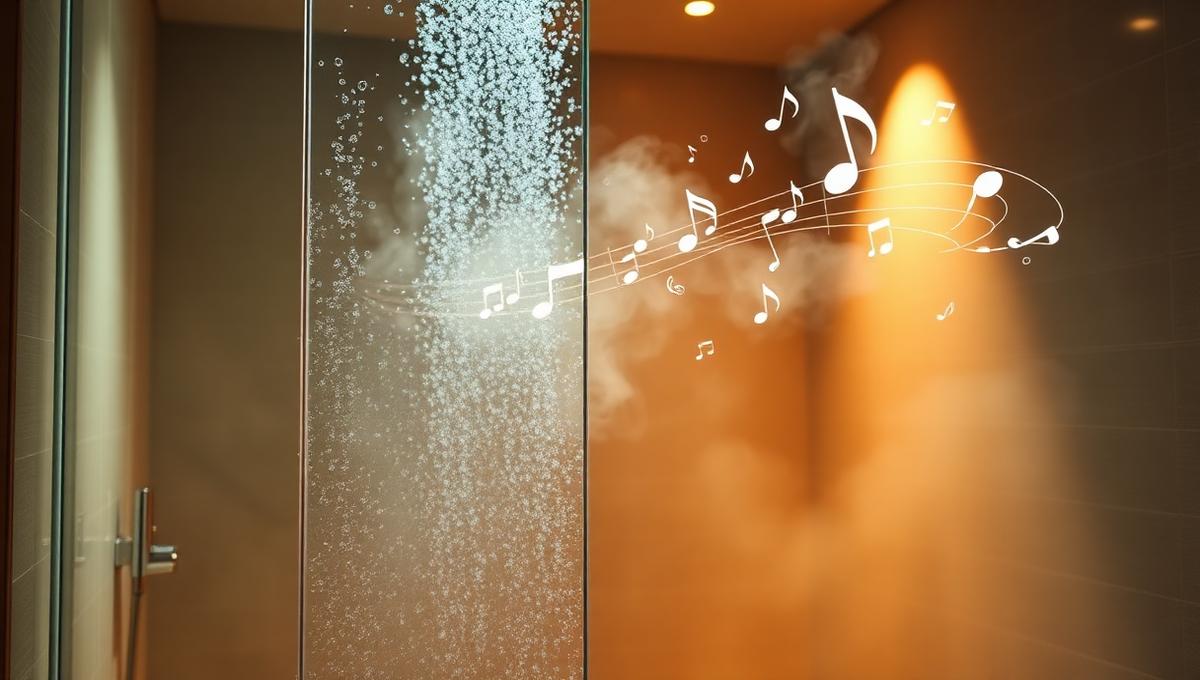
    Modern bathroom shower with steam and musical notes floating through the air illustrating acoustic resonance
    Modern bathroom shower with steam and musical notes floating through the air illustrating acoustic resonance

    1It's Not Just Confidence — It's Physics

    The popular explanation for shower singing is psychological: warm water relaxes you, privacy lowers your inhibitions, and you simply feel like singing. That's partially true — but it's only half the story.
    The other half is acoustic physics. A typical bathroom is a small, enclosed space with hard, reflective surfaces on every side — tile, glass, porcelain, and stone. These materials reflect sound waves instead of absorbing them, creating a natural reverb effect that enriches and sustains your voice in ways that a carpeted living room never could.
    In acoustic engineering terms, a bathroom behaves like a reverb chamber — a room specifically designed to enhance sound through reflection. The difference is that professional reverb chambers cost thousands of dollars to build. Your bathroom does it for free.

    2The Bathroom as an Acoustic Chamber

    To understand why bathrooms sound so good, you need to understand three acoustic properties that every room possesses: reflection, absorption, and diffusion.

    Reflection

    When sound waves hit a hard surface, they bounce back — just like light bouncing off a mirror. Ceramic tile, glass shower doors, porcelain tubs, and stone countertops are all highly reflective materials with absorption coefficients below 0.05. That means they reflect more than 95% of the sound energy that hits them.
    In a typical bathroom, your voice bounces off the walls, floor, ceiling, and shower enclosure multiple times before the energy dissipates. Each reflection reaches your ears slightly delayed, creating the layered, sustained sound we perceive as reverb.

    Absorption

    Soft materials — carpet, curtains, upholstered furniture — absorb sound energy and convert it to heat. Bathrooms have almost none of these materials. A towel on a rack and a bath mat on the floor provide negligible absorption. This means almost all of your vocal energy stays in the room, bouncing around and reinforcing itself.

    Diffusion

    While bathrooms are excellent reflectors, they're poor diffusers. The flat, parallel surfaces create flutter echo — a rapid series of reflections between two parallel walls. In larger rooms this sounds metallic and unpleasant, but in the small dimensions of a shower stall, the reflections arrive so quickly that your brain perceives them as a smooth, continuous reverb rather than distinct echoes.

    3How Reverb Makes Your Voice Sound Better

    Reverb is the single biggest reason your shower voice sounds better than your normal voice. Here's what it actually does:
    Fills in gaps: Nobody holds a perfectly steady note. Your voice naturally wavers, and there are micro-gaps between syllables. Reverb fills these gaps with reflected sound, making your singing sound smoother and more continuous.
    Adds richness: Each reflection arrives at a slightly different time and from a slightly different angle, creating a chorus-like effect that makes a single voice sound fuller — almost as if multiple voices are singing in harmony.
    Sustains notes: In a dry room (no reverb), a note dies the instant you stop singing. In a reverberant bathroom, the note continues for a fraction of a second after you stop, creating a natural decay tail that sounds musical and polished.
    Masks imperfections: Slight pitch errors and timing mistakes get blurred by the wash of reflected sound. The reverb acts as a natural audio smoothing filter, making off-key notes less noticeable.
    Professional recording studios and concert halls use these exact same principles — they just control them with precision. When an audio engineer adds reverb to a vocal track in post-production, they're essentially recreating what your shower does naturally.

    4Standing Waves and Resonant Frequencies

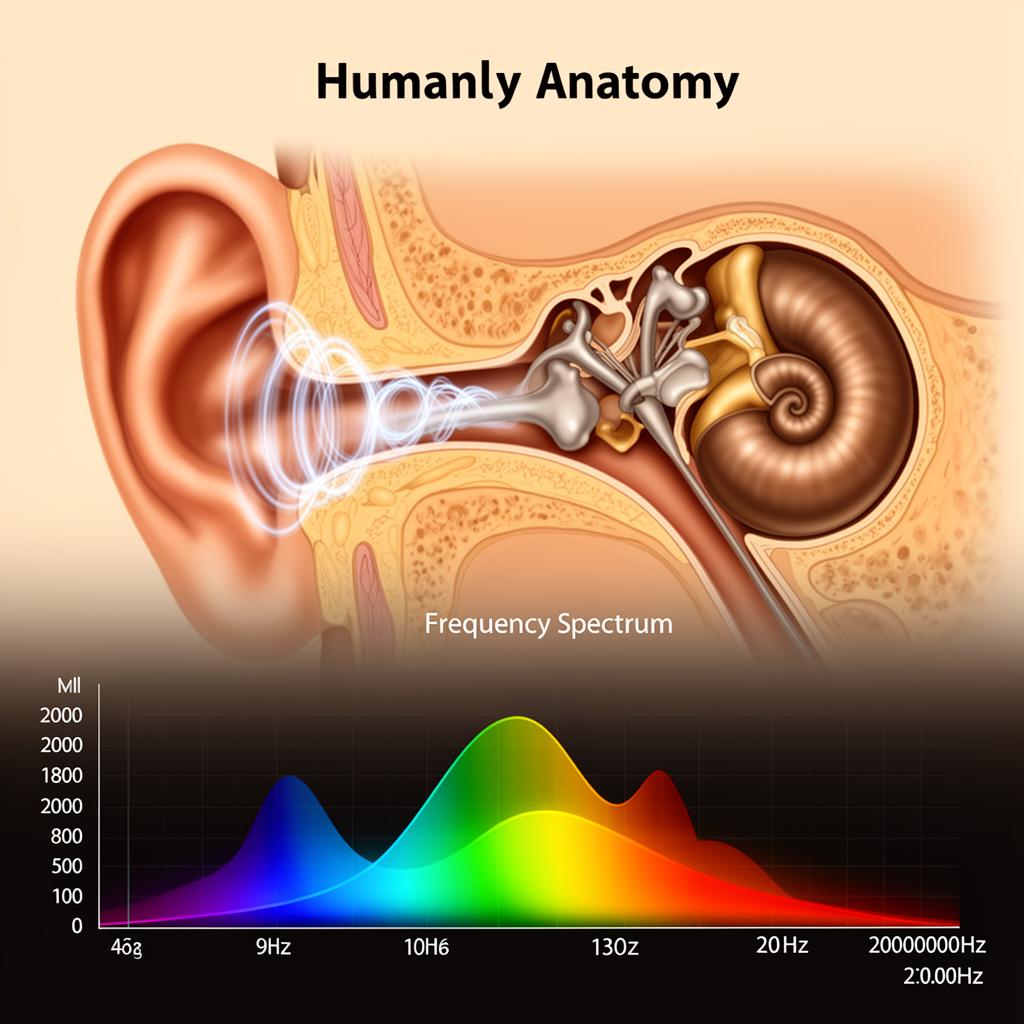
    There's another acoustic phenomenon at play in the shower: standing waves. When sound waves bounce between two parallel surfaces, certain frequencies reinforce themselves — the reflected wave aligns perfectly with the original wave, creating a resonance that amplifies that specific frequency.
    The frequencies that resonate depend on the distance between the walls. The formula is straightforward:
    f = n × (v / 2L)
    Where f is the resonant frequency, n is the harmonic number (1, 2, 3...), v is the speed of sound (~343 m/s), and L is the distance between walls.
    For a typical shower stall about 0.9 meters (3 feet) wide, the fundamental resonant frequency is approximately 190 Hz — which falls right in the range of the human singing voice (roughly 80–1,100 Hz for most people). This means certain notes you sing will resonate naturally with the physical dimensions of the shower, becoming noticeably louder and richer without any extra effort.
    This is the same principle behind organ pipes, guitar bodies, and concert hall design. Your shower is essentially a resonant cavity tuned to vocal frequencies.

    5Why Hard Surfaces Reflect Sound So Well

    The key to the shower's acoustic magic is its construction materials. Here's how common bathroom surfaces compare in terms of sound absorption (where 0.0 = perfect reflection and 1.0 = perfect absorption):
    MaterialAbsorption Coefficient (1 kHz)Sound Reflected
    Ceramic Tile0.01–0.0298–99%
    Glass0.02–0.0496–98%
    Porcelain0.0199%
    Concrete/Stone0.01–0.0298–99%
    Carpet (for comparison)0.30–0.5050–70%
    Acoustic Foam0.80–0.955–20%
    The difference is dramatic. A tiled bathroom reflects 20 to 50 times more sound energy than a carpeted, furnished room. That's why walking from the shower into the bedroom feels like someone turned your voice down — the soft materials are absorbing all the energy that the tile was bouncing back to your ears.

    6The Psychology of Shower Singing

    The acoustics are the foundation, but psychology amplifies the effect. Several factors combine to make you more likely to sing — and enjoy it — in the shower:
    Privacy: The shower is one of the few truly private moments in most people's day. Without an audience, the fear of judgment disappears, and you're free to experiment with your voice.
    Warm water and relaxation: Warm water lowers cortisol levels and relaxes muscles, including the muscles in your throat and diaphragm that control singing. A relaxed vocal tract produces a richer, more resonant tone.
    Dopamine feedback loop: When you hear your voice sounding good (thanks to the reverb), your brain releases dopamine — the reward neurotransmitter. This makes you want to keep singing, creating a positive feedback loop between the acoustic enhancement and your emotional state.
    White noise masking: The sound of running water acts as a white noise generator, masking background sounds from outside the bathroom. This creates a perceptual isolation that makes your voice feel louder and more prominent relative to the environment.
    Together, these factors create a unique combination: a physically relaxed state, emotional freedom, acoustic enhancement, and real-time positive feedback. It's essentially the perfect conditions for uninhibited vocal performance.

    7How Shower Acoustics Compare to Professional Spaces

    It might sound absurd, but a shower shares genuine acoustic properties with professional music environments:
    Reverb time (RT60): A typical shower has an RT60 (the time it takes for sound to decay by 60 dB) of roughly 0.8–1.5 seconds. For comparison, a concert hall targets 1.5–2.5 seconds, a recording studio vocal booth targets 0.2–0.4 seconds, and a cathedral can reach 5–10 seconds. The shower falls right between a studio and a concert hall — enough reverb to sound musical without drowning out clarity.
    Early reflections: Because the walls are so close, the first reflections arrive within 2–5 milliseconds of the original sound. This is too fast for your brain to perceive as a separate echo — instead, it fuses with the direct sound and adds perceived loudness and body. Professional studios use early reflection panels to achieve this same effect.
    Frequency response: The shower's resonant frequencies naturally boost the lower-mid range of the human voice (150–400 Hz), adding warmth and body. This is the same frequency range that audio engineers typically boost when mixing vocals to make them sound full and present.
    The major difference, of course, is control. In a professional space, every surface, angle, and material is chosen deliberately. In a shower, the acoustic properties are accidental — but remarkably effective.

    8What Happens When You Add Absorption

    If you've ever sung in a bathroom with a shower curtain instead of a glass door, you may have noticed it doesn't sound quite as good. That's because the fabric curtain absorbs some of the high-frequency reflections, reducing the reverb and brightness.
    The same principle applies to any absorption you add to a bathroom:
    Towels on the walls reduce flutter echo and high-frequency reverb, making the room sound slightly drier.
    A large bath mat absorbs some floor reflections, reducing the total reverb time.
    An open door lets sound energy escape into adjacent rooms, dramatically reducing the enclosed resonance effect.
    This is exactly how acoustic engineers control sound in professional settings. Adding mass loaded vinyl (MLV) to walls blocks sound from transmitting to adjacent rooms, while acoustic panels on interior surfaces control how the room sounds on the inside. The shower demonstrates the fundamental difference between soundproofing (blocking transmission) and acoustic treatment (controlling reflections within a space).
    Your shower happens to have near-zero acoustic treatment, which is why it sounds so reverberant. A recording studio has precisely calibrated treatment, which is why it sounds controlled. Both are intentional acoustic environments — the shower just doesn't know it.

    10Conclusion

    The next time you catch yourself belting out a song in the shower, know that you're not just imagining things — physics is genuinely making your voice sound better. The combination of hard, reflective surfaces, small room dimensions that create resonant frequencies in the vocal range, natural reverb that smooths and enriches your tone, and the psychological freedom of privacy creates an acoustic environment that rivals some professional spaces. It's a perfect, accidental reverb chamber built into nearly every home. And while the shower wasn't designed as a singing room, understanding why it works so well reveals fundamental principles of acoustics that apply to concert halls, recording studios, home theaters, and every soundproofing project in between.

    FAQs: Why Do We Sing in the Shower

    Need Expert Soundproofing Advice?

    Our team of soundproofing specialists is here to help you choose the right products and installation methods for your museum or gallery project.