Acoustics & Education28 min readAuthorMass Loaded Vinyl DirectPublishedUpdated

    What Is Sound? The Complete Science of How Sound Works
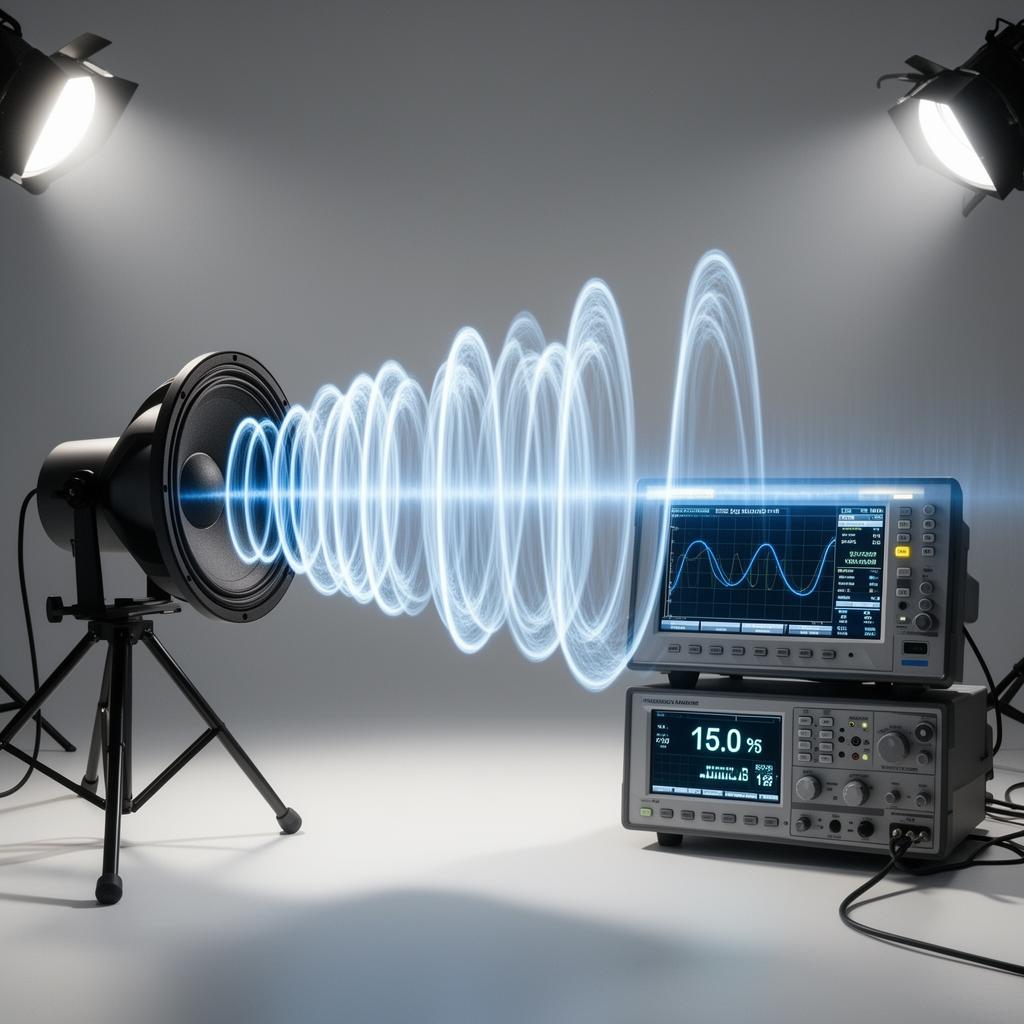
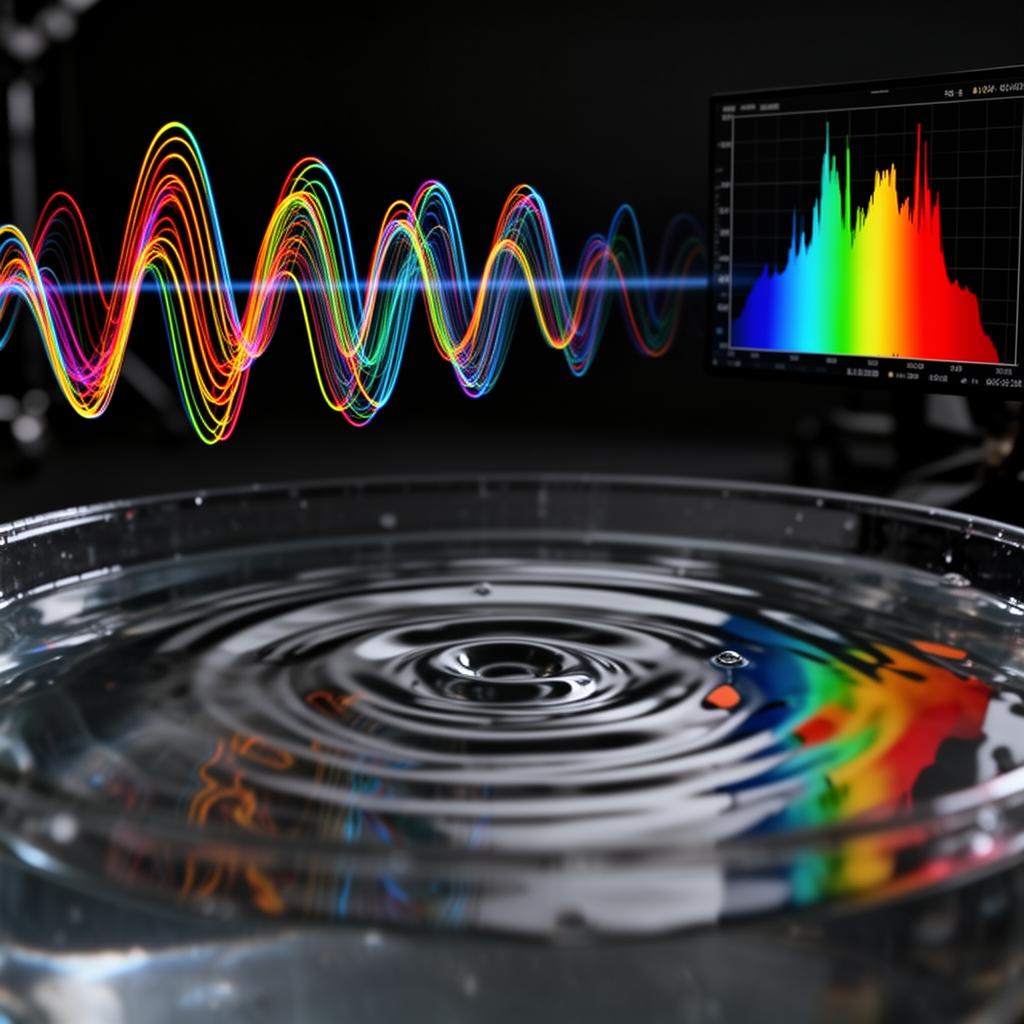
    Professional acoustic measurement equipment with speaker producing visible sound waves in a laboratory environment demonstrating sound wave propagation
    Professional acoustic measurement equipment with speaker producing visible sound waves in a laboratory environment demonstrating sound wave propagation

    1What Is Sound? The Fundamental Definition

    At its core, sound is a mechanical wave—a disturbance that transfers energy through matter without transferring matter itself. When an object vibrates (a guitar string, a vocal cord, a jackhammer), it pushes against the molecules of the surrounding medium. Those molecules push against their neighbors, which push against their neighbors, creating a chain reaction of pressure changes that radiates outward from the source.

    Compression and Rarefaction

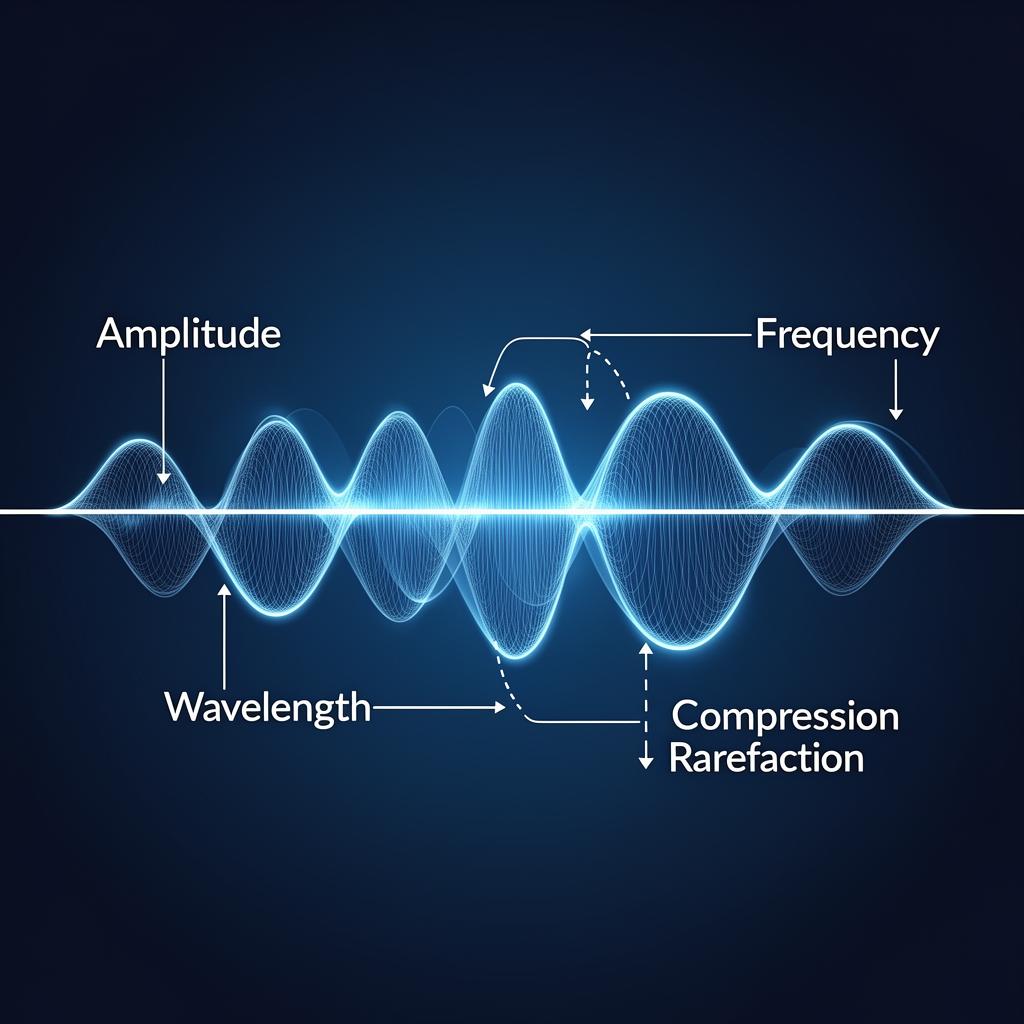
    A sound wave consists of alternating zones of compression (where molecules are pushed together, creating high pressure) and rarefaction (where molecules are spread apart, creating low pressure). These pressure fluctuations travel through the medium as a wave pattern:
    Compression zone: Molecules are packed closer together than normal—pressure is above atmospheric
    Rarefaction zone: Molecules are spread farther apart than normal—pressure is below atmospheric
    Wavelength: The distance from one compression peak to the next
    Wave cycle: One complete compression-rarefaction pair
    It's critical to understand that the molecules themselves don't travel from the sound source to your ear. Each molecule oscillates back and forth around its resting position, bumping into neighbors and passing along the energy. It's the disturbance that travels, not the matter. This is analogous to a crowd doing "the wave" in a stadium—each person stands and sits in place, but the wave pattern moves around the arena.

    Why Sound Requires a Medium

    Because sound depends on molecule-to-molecule collision, it absolutely requires a physical medium—gas, liquid, or solid—to propagate. Sound cannot travel through a vacuum. In the emptiness of outer space, where there are essentially no molecules, there can be no sound. Every explosion, engine roar, and laser blast in science fiction movies set in space is scientifically impossible. Astronauts communicate exclusively through radio waves (electromagnetic radiation), which travel through the electromagnetic field and do not require matter.

    Sound vs. Light: A Critical Distinction

    Sound and light are fundamentally different phenomena, though we often discuss them interchangeably:
    Sound is a mechanical wave—it requires matter and travels through molecular collisions
    Light is an electromagnetic wave—it can travel through a vacuum and moves at 186,000 miles per second
    Sound speed in air: ~1,130 feet per second (roughly 1 mile in 5 seconds)
    Light speed: ~983,571,056 feet per second (roughly 1 million times faster than sound)
    This enormous speed difference is why you see lightning before you hear thunder. For every 5 seconds between the flash and the boom, the lightning is approximately 1 mile away.

    2How Sound Waves Propagate

    Understanding propagation—how sound moves from source to listener—is essential for both acoustic design and soundproofing.

    Longitudinal Waves in Air

    In gases and liquids, sound travels as a longitudinal wave, meaning the molecular displacement occurs in the same direction as the wave's travel. Picture a Slinky stretched across a table: if you push one end forward, a compression wave travels to the other end. The coils don't permanently shift—they oscillate back and forth, passing energy along.
    Key characteristics of longitudinal sound propagation:
    Omnidirectional spread: In open air, sound radiates outward in all directions from the source as an expanding sphere (not a circle—three dimensions, not two)
    No net molecular movement: Molecules oscillate around their equilibrium position. Sound doesn't cause wind
    Speed is medium-dependent: The velocity of sound is determined by the density and elasticity of the medium, not by the sound's volume or pitch
    Energy loss over distance: As the spherical wavefront expands, the same energy is distributed over an ever-larger surface area, causing intensity to decrease

    Transverse Waves in Solids

    In solid materials, sound can also travel as transverse waves (also called shear waves), where molecular displacement is perpendicular to the wave direction—like the ripple in a flicked rope. This is significant in building acoustics because:
    Structural vibrations in walls, floors, and ceilings often propagate as transverse waves
    Flanking noise (sound that bypasses a wall by traveling through the floor or ceiling structure) relies on both wave types
    Effective soundproofing must address both airborne longitudinal waves AND structure-borne transverse waves

    Diffraction, Reflection, and Refraction

    Sound waves interact with their environment in three fundamental ways:
    Diffraction: Sound bends around obstacles and through openings. This is why you can hear someone talking around a corner even when you can't see them. Lower frequencies diffract more readily than higher frequencies—which is why bass seems to "go through" walls while treble is more easily blocked
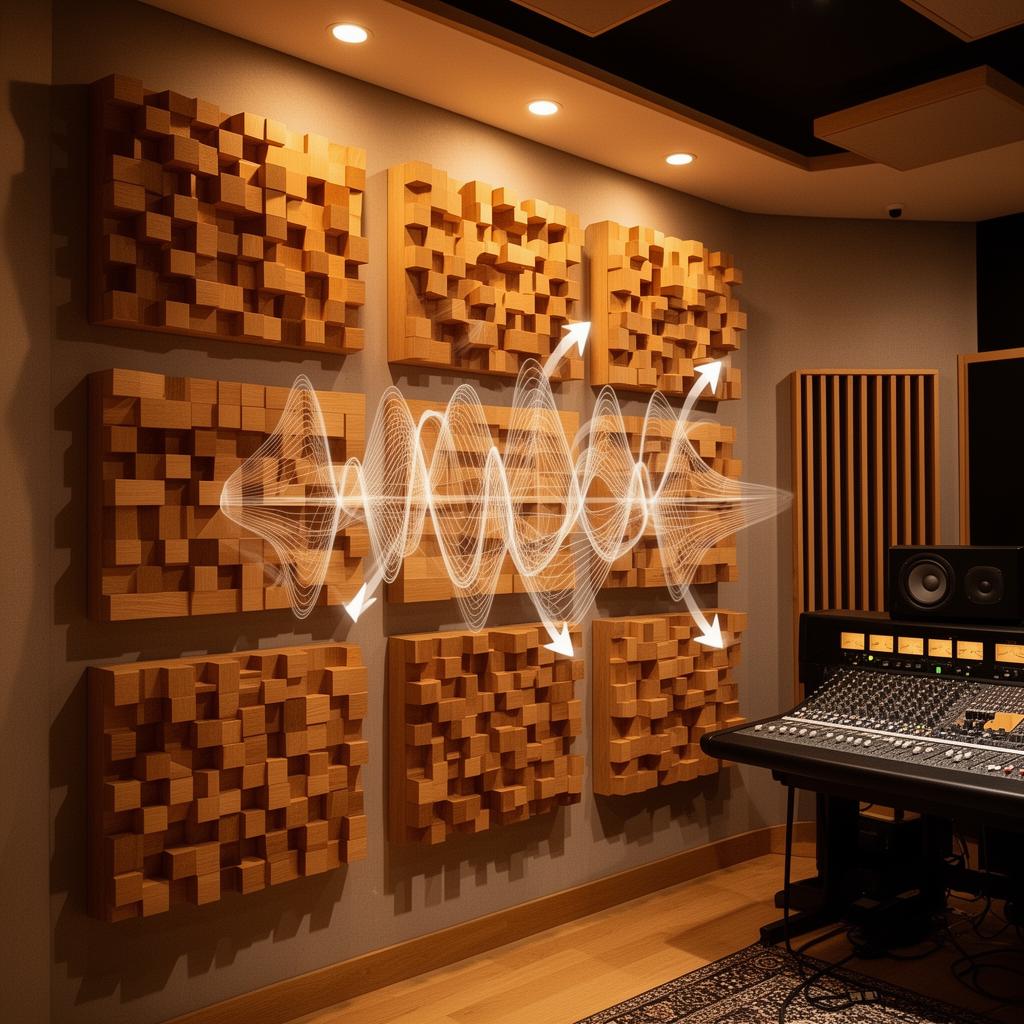
    Reflection: When sound hits a hard, smooth surface, it bounces back. In an enclosed room, this creates echo (a distinct repeat) and reverberation (a sustained wash of reflected sound). Hard parallel walls create a particularly problematic effect called flutter echo—a rapid, metallic-sounding repetition
    Refraction: Sound changes direction when it passes between media of different densities or temperatures. On cool evenings, warm air near the ground refracts sound downward, which is why conversations carry farther across a lake at night

    3The Three Properties of Every Sound Wave

    Every sound in the universe—from a whisper to a thunderclap—can be described by three fundamental properties.

    1. Frequency (Pitch)

    Frequency is the number of complete wave cycles that pass a fixed point per second, measured in Hertz (Hz). One Hertz equals one cycle per second.
    Low frequency (20–250 Hz): Deep, rumbling sounds—bass guitars, thunder, traffic hum, HVAC systems. These are the hardest sounds to block because their long wavelengths diffract easily around barriers
    Mid frequency (250–4,000 Hz): The range of human speech, most musical instruments, television audio, and the sounds that most affect our perception of comfort
    High frequency (4,000–20,000 Hz): Bright, piercing sounds—cymbals, bird songs, the sibilant "s" and "t" in speech. These are relatively easy to block with mass and distance
    The human ear can detect frequencies from approximately 20 Hz to 20,000 Hz, though this range narrows with age—most adults over 40 cannot hear above 15,000 Hz. Sounds below 20 Hz are called infrasound (felt rather than heard—think earthquake rumbles and wind turbine vibrations). Sounds above 20,000 Hz are called ultrasound (used in medical imaging and bat echolocation).

    2. Amplitude (Volume/Loudness)

    Amplitude is the strength of the pressure fluctuation in a sound wave, which we perceive as loudness. Greater amplitude means molecules are displaced farther from their resting positions during each oscillation, creating more intense pressure peaks.
    Critical distinction: frequency and amplitude are independent. A bass drum and a piccolo can both be played at the same volume (amplitude), despite having vastly different pitches (frequencies). Turning up the volume on a speaker increases amplitude without changing frequency—the molecules wiggle farther back and forth, but at the same rate.

    3. Wavelength

    Wavelength is the physical distance between two consecutive compressions (or rarefactions) in a sound wave. It is inversely related to frequency:
    Low frequency = long wavelength: A 20 Hz bass tone has a wavelength of about 56 feet (17 meters)
    Mid frequency = medium wavelength: A 1,000 Hz tone has a wavelength of about 1.1 feet (0.34 meters)
    High frequency = short wavelength: A 20,000 Hz tone has a wavelength of about 0.7 inches (17 millimeters)
    Wavelength matters enormously in soundproofing. A material must be a significant fraction of the wavelength to effectively block or absorb a given frequency. This is why thin materials can block high-frequency sounds (short wavelengths) but are nearly transparent to bass (long wavelengths)—and why mass loaded vinyl, despite being only 1/8" thick, is effective: its extreme density provides the mass needed to resist even long-wavelength vibrations.

    4The Decibel Scale: Measuring Sound Intensity

    The decibel (dB) is the standard unit for measuring sound intensity. Understanding the decibel scale is essential because it behaves very differently from the linear measurements most people are accustomed to.

    Why Decibels Are Logarithmic

    The decibel scale is logarithmic, not linear. This means:
    • An increase of 3 dB represents a doubling of sound energy (though barely perceptible to the ear)
    • An increase of 10 dB represents a 10x increase in sound energy and is perceived as roughly twice as loud
    • An increase of 20 dB represents a 100x increase in sound energy
    • An increase of 30 dB represents a 1,000x increase in sound energy
    The logarithmic scale exists because human hearing spans an extraordinary range—from the faintest whisper to sounds powerful enough to cause physical pain. A linear scale would require numbers in the billions to cover this range.

    Common Sound Levels

    Here are reference points that put the decibel scale in perspective:
    0 dB: Threshold of human hearing—the quietest detectable sound
    20 dB: Rustling leaves, quiet whisper
    30 dB: Quiet library, soft whisper at 5 feet
    40 dB: Quiet residential area at night
    50 dB: Moderate rainfall, refrigerator hum
    60 dB: Normal conversation at 3 feet
    70 dB: Vacuum cleaner, busy restaurant
    80 dB: Garbage disposal, food blender—prolonged exposure begins to risk hearing damage
    90 dB: Lawn mower, motorcycle at 25 feet
    100 dB: Jackhammer, live rock concert
    110 dB: Car horn at 3 feet, baby crying at peak volume
    120 dB: Threshold of pain—ambulance siren, jet engine at 100 meters
    140 dB: Jet engine at 25 meters—immediate hearing damage
    194 dB: Theoretical maximum for sound in Earth's atmosphere

    Adding Decibels: It's Not Simple Addition

    Because decibels are logarithmic, combining sound sources doesn't work like regular math. Two 60 dB sources playing simultaneously do not produce 120 dB—they produce approximately 63 dB. Ten identical 60 dB sources produce 70 dB. This counterintuitive behavior has practical implications: in a noisy restaurant with 20 conversations, reducing one table's noise makes virtually no measurable difference. You must address the overall acoustic environment to achieve meaningful reduction.

    5How Sound Travels Through Different Media

    One of the most counterintuitive aspects of sound is how dramatically its behavior changes depending on the substance it travels through.

    Speed of Sound in Various Media

    Sound velocity depends on two factors: the medium's density and its elasticity (how readily it springs back to shape). Denser, more elastic materials transmit sound faster:
    Air at 68°F (20°C): 1,130 ft/s (344 m/s)
    Air at 32°F (0°C): 1,086 ft/s (331 m/s)—warmer air carries sound faster
    Freshwater: 4,800 ft/s (1,480 m/s)—about 4.3× faster than air
    Seawater: 5,000 ft/s (1,530 m/s)—slightly faster due to dissolved salts
    Wood (oak): 12,600 ft/s (3,850 m/s)
    Concrete: 11,500 ft/s (3,500 m/s)
    Steel: 16,400 ft/s (5,000 m/s)—about 14.5× faster than air
    Diamond: 39,370 ft/s (12,000 m/s)—the fastest known
    This is why pressing your ear to a railroad track lets you hear a distant train long before the sound arrives through the air. It's also why sound transmits so efficiently through building structures—studs, joists, pipes, and concrete slabs all act as high-speed conductors of acoustic energy.

    Temperature and Humidity Effects

    Sound speed in air increases with temperature because warmer molecules move faster and collide more frequently. A practical consequence: on cool evenings, the warm air layer near the ground acts as a waveguide, bending sound downward and allowing it to travel farther. This is why you can clearly hear conversations across a lake at night but not during the day.
    Humidity also slightly increases the speed of sound because water vapor is lighter than the nitrogen and oxygen molecules it displaces, reducing air density. However, this effect is small—approximately 0.35% increase at 100% humidity versus dry air.

    6The Inverse Square Law

    The inverse square law is one of the most important principles in acoustics. It describes how sound intensity decreases with distance from a point source in free space (outdoors, with no reflective surfaces).

    How It Works

    As sound radiates outward from a point source, the same energy is spread over an ever-expanding spherical surface. Because the surface area of a sphere equals 4πr², the intensity decreases proportionally to the square of the distance:
    Double the distance → 1/4 the intensity (−6 dB)
    Triple the distance → 1/9 the intensity (−9.5 dB)
    10× the distance → 1/100 the intensity (−20 dB)
    In practical terms: if a lawn mower measures 90 dB at 3 feet, it measures approximately 84 dB at 6 feet, 78 dB at 12 feet, and 70 dB at 30 feet.

    Why the Inverse Square Law Matters Indoors

    Inside buildings, the inverse square law is modified by reflections. Hard walls, ceilings, and floors bounce sound energy back into the room, creating a reverberant field where intensity doesn't decrease as rapidly with distance. This is why noisy restaurants feel uniformly loud regardless of where you sit—the reflected energy creates a diffuse sound field. Acoustic treatment (absorptive panels, ceiling clouds, carpet) reduces this reflected energy and allows the inverse square law to work more effectively, improving both comfort and speech intelligibility.

    7Resonance and Natural Frequencies

    Every physical object—from a wine glass to a suspension bridge—has one or more natural frequencies at which it "wants" to vibrate. When an external sound wave matches one of these frequencies, the object vibrates with increasing amplitude in a phenomenon called resonance.

    How Resonance Works

    Imagine pushing a child on a swing. If you push at exactly the right moment (matching the swing's natural frequency), each push adds energy and the swing goes higher. Sound resonance works identically—each wave cycle adds energy to the vibrating object:
    Wine glass shattering: A sustained pure tone at ~550 Hz (the glass's resonant frequency) at 105+ dB causes the glass to vibrate with increasing amplitude until it fractures
    Room modes: Rectangular rooms have standing wave patterns at specific frequencies determined by their dimensions. At these frequencies, certain positions in the room experience dramatically boosted or cancelled bass response
    Structural resonance: Floors, walls, and ceilings can resonate at specific frequencies, amplifying transmitted noise. A floor joist system with a resonance at 125 Hz will transmit footstep impacts at that frequency far more efficiently than at other frequencies

    Why Resonance Matters for Soundproofing

    Every soundproofing barrier has a coincidence frequency (also called the critical frequency)—a point where the material's bending wavelength matches the sound wavelength, causing a dramatic drop in transmission loss. Single-layer barriers are most vulnerable at this frequency.
    The solution is to use multiple layers of different materials—each with a different coincidence frequency—so no single frequency passes through unimpeded. This is one reason why a wall assembly combining mass loaded vinyl + drywall + insulation outperforms any single thick layer: the different materials have different resonant and coincidence characteristics, providing broad-spectrum noise reduction.

    8Sound Absorption vs. Sound Blocking

    This distinction is perhaps the most commonly confused concept in acoustics, and misunderstanding it leads to wasted money and disappointing results.

    Sound Absorption

    Sound absorption reduces echo, reverberation, and ambient noise within a room. Absorptive materials convert sound energy into microscopic amounts of heat through friction as air molecules vibrate within their porous structure.
    Characteristics of good absorbers:
    Porous and fibrous: Fiberglass panels, mineral wool, open-cell foam, heavy curtains
    Lightweight relative to their thickness: They don't need mass—they need air pathways
    Effective thickness matters: A 2" panel absorbs frequencies down to about 500 Hz. A 4" panel extends absorption to 250 Hz. For bass control below 125 Hz, you need 6"+ of material or specialized bass traps
    Measured by NRC (Noise Reduction Coefficient): A number from 0 to 1.00 where 1.00 means perfect absorption

    Sound Blocking (Sound Isolation/Soundproofing)

    Sound blocking prevents sound from transmitting through a barrier from one space to another. Blocking requires mass, density, and airtight construction—the opposite characteristics of absorbers.
    Characteristics of good blockers:
    Dense and heavy: Mass loaded vinyl (1 lb/sq ft), multiple layers of drywall, concrete, brick
    Limp and non-resonant: Materials that don't vibrate sympathetically (MLV is specifically engineered to be limp rather than rigid)
    Airtight: Any gap, crack, or hole is a sound leak. A 1% opening can transmit 50% of sound energy
    Measured by STC (Sound Transmission Class): Higher numbers mean more blocking

    The Critical Mistake

    Foam panels on a wall will make a room sound better inside (less echo), but they will do virtually nothing to stop sound from passing through the wall to the next room. If your goal is to prevent your neighbor from hearing your music, you need mass—not foam. If your goal is to reduce echo in your podcast studio, you need absorption—not more drywall. Most real-world projects require both strategies: mass to block transmission, plus absorption to control the acoustic character of the space.

    9Speech Intelligibility and Signal-to-Noise Ratio

    Our ears are extraordinarily sophisticated instruments, processing frequencies from 20 to 20,000 Hz simultaneously and translating them into meaning within milliseconds. But this processing has limits.

    Signal-to-Noise Ratio (SNR)

    The signal-to-noise ratio compares the level of a desired sound (the "signal"—a voice, music, an announcement) to the level of background noise. A higher ratio means clearer perception:
    SNR of +15 dB or more: Excellent intelligibility—conversation is effortless
    SNR of +10 dB: Good intelligibility with occasional requests to repeat
    SNR of +5 dB: Fair—requires concentration to understand speech
    SNR of 0 dB: Voice and noise are at equal levels—intelligibility drops below 50%
    Negative SNR: The noise floor is louder than the speech—comprehension is essentially impossible
    In a room with a 50 dB noise floor, a person speaking at 60 dB achieves an SNR of only +10 dB. Reducing the noise floor to 35 dB—achievable with proper acoustic treatment and soundproofing—improves the SNR to +25 dB, transforming the listening experience from "straining to hear" to "effortless clarity."

    Why Speech Intelligibility Matters

    Poor speech intelligibility has measurable consequences:
    Classrooms: Students in rooms with poor SNR score 10-15% lower on standardized tests (ANSI S12.60 requires background noise below 35 dB in classrooms)
    Hospitals: Miscommunication due to noise contributes to an estimated 30% of medical errors
    Offices: Workers in noisy open-plan offices lose an average of 86 minutes per day to noise-related distraction
    Restaurants: 72% of diners rank "noise level" as their top complaint about restaurants

    The Lombard Effect

    When background noise is high, people unconsciously raise their voices to be heard—the Lombard Effect. This creates a vicious cycle: louder voices raise the overall noise floor, causing others to speak even louder, in an escalating feedback loop that can push ambient levels in restaurants and bars above 85 dB—the threshold for hearing damage risk.

    10The Noise Reduction Coefficient (NRC)

    The NRC is a single-number rating that indicates how much sound a material absorbs. It is the arithmetic average of absorption coefficients measured at four frequencies: 250 Hz, 500 Hz, 1,000 Hz, and 2,000 Hz.

    NRC Values Explained

    NRC 0.00: Perfect reflector—100% of sound bounces back (polished concrete, glass)
    NRC 0.25: Low absorption—most sound reflects (painted drywall: NRC ~0.05-0.10)
    NRC 0.50: Moderate absorption—half the sound energy is absorbed
    NRC 0.75: Good absorption—most echo is eliminated
    NRC 1.00: Perfect absorber—essentially no reflected sound (specialized acoustic panels can exceed 1.00 due to edge diffraction effects)
    Common material NRC values for reference:
    Concrete block: 0.02-0.05
    Standard drywall (painted): 0.05-0.10
    Hardwood floor: 0.10-0.15
    Carpet on concrete: 0.25-0.35
    Carpet on pad: 0.35-0.55
    Heavy drapes: 0.40-0.60
    2" fiberglass panel: 0.75-0.90
    4" acoustic panel: 0.90-1.05

    Important NRC Limitation

    NRC only measures absorption—it tells you nothing about a material's ability to block sound transmission. A material with NRC 1.00 (fiberglass panel) might have an STC of only 5, meaning it absorbs beautifully but blocks almost no sound from passing through. This is why specifying acoustic materials requires understanding both NRC and STC ratings.

    11Sound Transmission Class (STC)

    STC is the standard single-number rating for how well a building element (wall, floor, ceiling, door) blocks airborne sound. Higher numbers mean better sound isolation.

    STC Ratings and What They Mean

    STC 25: Normal speech is clearly audible and easily understood through the wall
    STC 30: Loud speech is audible and fairly well understood
    STC 35: Loud speech is audible but not intelligible—this is the minimum code requirement for most party walls
    STC 40: Loud speech sounds like a murmur
    STC 45: Loud speech is barely audible—recommended minimum for quality residential construction
    STC 50: Loud sounds are barely heard—the standard for quality apartments and condos
    STC 55: Superior isolation—suitable for home theaters and music rooms
    STC 60+: Excellent isolation—recording studios, hospitals, courtrooms

    Real-World Wall Assembly Examples

    Single stud wall, 1 layer 1/2" drywall each side: STC 33
    Same wall + fiberglass insulation in cavity: STC 37-39
    Same wall + 1 lb MLV on one side + insulation: STC 48-52
    Same wall + 1 lb MLV + resilient channel + insulation: STC 52-56
    Double stud wall + MLV + insulation + double drywall: STC 58-63
    Notice the dramatic improvement from adding mass loaded vinyl. A single layer of 1 lb MLV can boost an assembly from STC 37 to STC 50—a transformation from "I can understand every word my neighbor says" to "I can barely detect that someone is home next door."

    STC Limitations

    STC is measured using frequencies from 125 Hz to 4,000 Hz, which means it underweights bass frequencies. A wall that tests at STC 50 may still transmit enough bass for you to feel your neighbor's subwoofer. For environments with significant low-frequency noise (clubs, mechanical rooms, home theaters), the OITC (Outdoor-Indoor Transmission Class) rating is more appropriate as it emphasizes the lower frequencies where most real-world noise problems occur.

    12How Soundproofing Actually Works: The Four Principles

    Professional soundproofing relies on four distinct physical principles, and the best assemblies leverage all four simultaneously.

    1. Mass (Add Weight)

    The Mass Law of acoustics states that doubling the mass per unit area of a barrier increases its sound transmission loss by approximately 6 dB. Dense, heavy materials resist being set into vibration by sound waves—they simply have too much inertia to move easily.
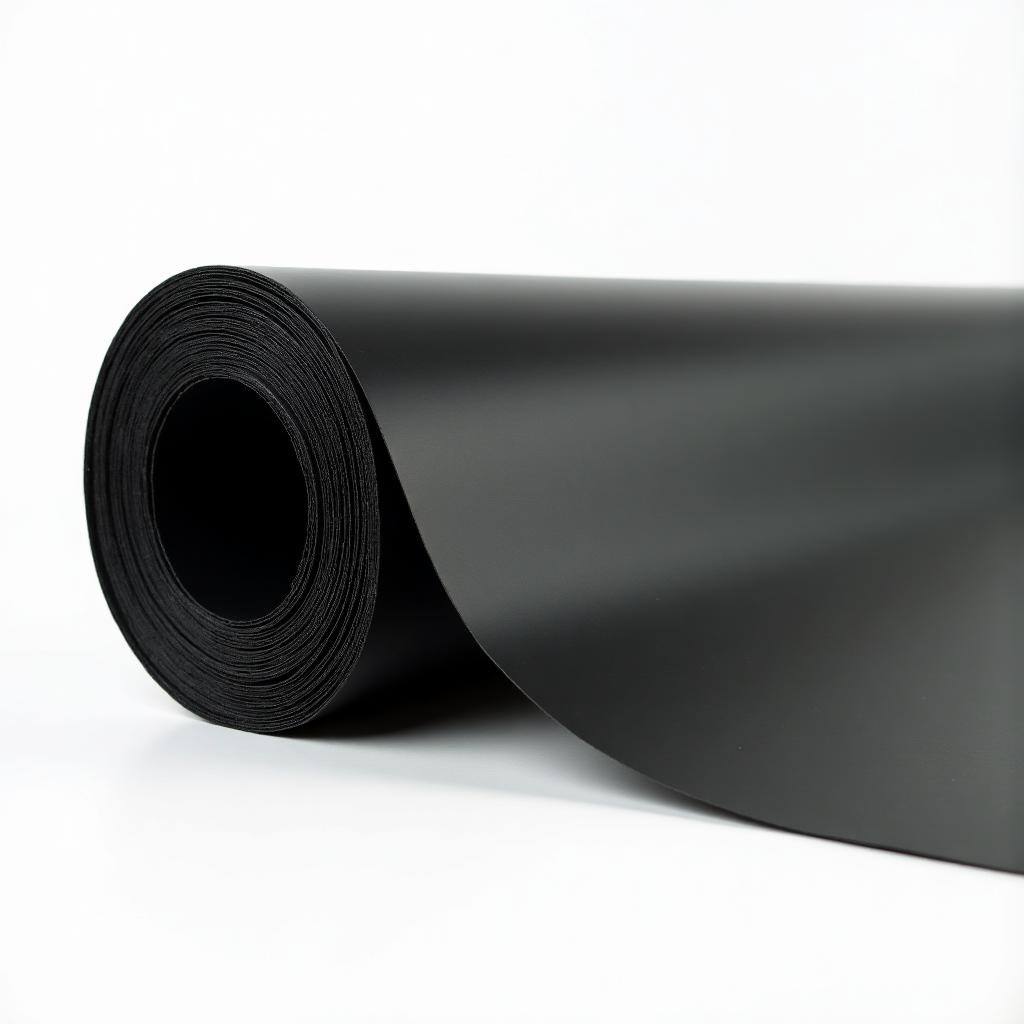
    This is the principle behind mass loaded vinyl (MLV). At 1 lb per square foot and only 1/8" thick, MLV packs extraordinary density into minimal thickness. It adds mass without adding significant bulk—critical for retrofit applications where space is limited.

    2. Damping (Convert Vibration to Heat)

    Viscoelastic damping materials (like Green Glue compound) convert vibrational energy into microscopic heat through molecular friction. Applied between two rigid layers (like two sheets of drywall), damping compounds reduce the vibration that would otherwise transmit through the assembly. MLV also provides excellent damping due to its limp, non-resonant molecular structure—it resists sympathetic vibration far better than rigid materials of equal mass.

    3. Decoupling (Break the Vibration Path)

    Decoupling physically separates the two sides of a wall, floor, or ceiling so that vibrations on one side cannot directly transfer to the other. Methods include:
    Resilient channels: Thin metal strips that isolate drywall from studs
    Sound isolation clips (e.g., RSIC-1): Rubber-mounted clips that create a floating wall
    Staggered stud walls: Each side of drywall attaches to different studs
    Double stud walls: Two completely independent wall frames with an air gap
    Floating floors: A subfloor resting on resilient pads, separated from the structural floor

    4. Absorption (Fill the Cavity)

    Placing absorptive insulation (fiberglass batts or mineral wool) inside a wall, floor, or ceiling cavity absorbs sound energy that would otherwise bounce between the interior surfaces and re-radiate through the assembly. Cavity insulation typically adds 4-8 STC points to a wall assembly.

    The Ideal Assembly

    The highest-performing soundproofing assemblies combine all four principles: Mass (MLV + double drywall) + Damping (viscoelastic compound between layers) + Decoupling (resilient channels or clips) + Absorption (cavity insulation). This comprehensive approach can achieve STC ratings of 60+ even with standard wood-framed construction.

    13Equal Loudness Contours and Human Perception

    Human hearing is not linear—we don't perceive all frequencies at equal sensitivity. Our ears are naturally most sensitive to frequencies between 2,000 and 5,000 Hz (the range of a child's cry or a fire alarm) and significantly less sensitive to very low and very high frequencies.

    The Fletcher-Munson Curves

    In the 1930s, Harvey Fletcher and Wilden Munson mapped human loudness perception by asking subjects to compare tones of different frequencies. The resulting equal loudness contours (later refined by Robinson and Dadson, and now standardized as ISO 226:2003) show that:
    • At low volumes (20-30 dB), we can barely hear bass below 100 Hz, even though our ears easily detect midrange frequencies at the same level
    • At moderate volumes (60-70 dB), our hearing becomes more balanced across frequencies
    • At high volumes (90+ dB), our perception is nearly flat across the spectrum
    This has direct implications for soundproofing design. When you reduce the overall sound level in a room (say, from 70 dB to 40 dB through soundproofing), the remaining bass frequencies may seem to "disappear" entirely while midrange sounds are still faintly audible. This can create the misleading impression that your soundproofing blocks bass better than midrange—in reality, your ears are simply less sensitive to the quieter bass.

    A-Weighting: Adjusting for Human Perception

    Because of these perceptual differences, sound measurements are often expressed in dBA (A-weighted decibels), which filters the measurement to approximate human hearing sensitivity. Noise ordinances, OSHA regulations, and most environmental noise standards use dBA. For low-frequency-dominant noise (mechanical equipment, subwoofers), dBC (C-weighted) measurements are more appropriate because C-weighting treats all frequencies more equally.

    14Types of Noise: Airborne vs. Structure-Borne

    Understanding the two fundamental noise transmission paths is essential for choosing the right soundproofing strategy.

    Airborne Noise

    Airborne noise originates from a source that directly vibrates the air—voices, music, television, traffic, aircraft, barking dogs. The sound travels through the air as pressure waves, strikes a wall or floor, sets it into vibration, and re-radiates as sound on the other side.
    Airborne noise is measured by STC (Sound Transmission Class) and is controlled primarily through mass and airtight construction. Mass loaded vinyl excels at blocking airborne noise because its extreme density per thickness resists being set into vibration by air pressure waves.

    Structure-Borne (Impact) Noise

    Structure-borne noise results from direct physical contact with the building structure—footsteps, dropped objects, dragged furniture, plumbing vibration, closing doors, HVAC equipment mounted to framing. The impact directly vibrates the structure, and this vibration propagates through connected elements and re-radiates as sound in adjacent spaces.
    Structure-borne noise is measured by IIC (Impact Insulation Class) and is controlled primarily through decoupling and resilient underlayments. This is why footstep noise from an upstairs neighbor is so difficult to solve—it requires physically separating the walking surface from the structural floor, typically using a floating floor assembly with resilient mats or underlayment.

    Flanking Noise: The Hidden Problem

    Flanking noise bypasses your soundproofing barrier by traveling through connected structures—along a floor slab, through a shared ceiling, via HVAC ductwork, or through back-to-back electrical outlets. A perfectly soundproofed wall can be completely undermined by flanking paths. This is why effective soundproofing must consider the entire sound path, not just the most obvious barrier.

    15Sound Masking and Speech Privacy

    Counterintuitively, one of the most effective tools for acoustic comfort is adding carefully designed background noise rather than removing all noise.

    What Is Sound Masking?

    Sound masking introduces a uniform, unobtrusive background noise—typically engineered to match the spectrum of human speech—through speakers distributed throughout a space. This raised background noise level reduces the intelligibility of nearby conversations without significantly increasing perceived loudness.
    White noise: All audible frequencies at equal intensity—sounds harsh and "hissy." Rarely used in practice
    Pink noise: Energy decreases at higher frequencies, sounding more natural. Common in sound masking systems
    Shaped masking noise: Custom-engineered spectrum designed to specifically mask speech frequencies (500-4,000 Hz) while remaining comfortable for prolonged exposure

    Applications

    Open-plan offices: Sound masking is often more cost-effective than building walls. A well-designed system can achieve the equivalent acoustic privacy of adding STC 10 to every partition
    Medical facilities: HIPAA regulations require speech privacy for patient information. Sound masking in waiting rooms and corridors helps meet compliance
    Courthouses and legal offices: Attorney-client privilege demands speech privacy that masking can help provide
    Libraries and study spaces: Low-level masking eliminates the "pin-drop silence" that makes every whisper distractingly audible
    Research shows that total silence is actually counterproductive for concentration and comfort. Microsoft's anechoic chamber (the quietest room on Earth at −20.3 dB) demonstrates this: most people become disoriented within 30-45 minutes because the brain expects some ambient sound input.

    18Conclusion

    Sound is far more than vibrating air molecules—it's a complex physical phenomenon that profoundly affects how we live, work, learn, heal, and connect with each other. From the microscopic compression waves that carry a whispered secret to the overwhelming pressure of a jet engine, sound follows precise physical laws that we can measure, predict, and control. Understanding these fundamentals—frequency, amplitude, wavelength, the decibel scale, the inverse square law, resonance, absorption, and transmission—empowers you to make informed decisions about your acoustic environment. Whether you're specifying a wall assembly for a multifamily project, choosing materials for a home theater, or simply trying to sleep through the night without hearing traffic, the physics of sound is on your side. At Mass Loaded Vinyl Direct, we engineer our products around these very principles—delivering the mass, density, and limp-mass damping that the science of sound demands for real-world noise control.

    FAQs: What Is Sound

    Need Expert Soundproofing Advice?

    Our team of soundproofing specialists is here to help you choose the right products and installation methods for your museum or gallery project.