Materials12 min readAuthorMass Loaded Vinyl DirectPublishedUpdated

    What Is MLV Actually Made Of? (And Why the Ingredients Matter)
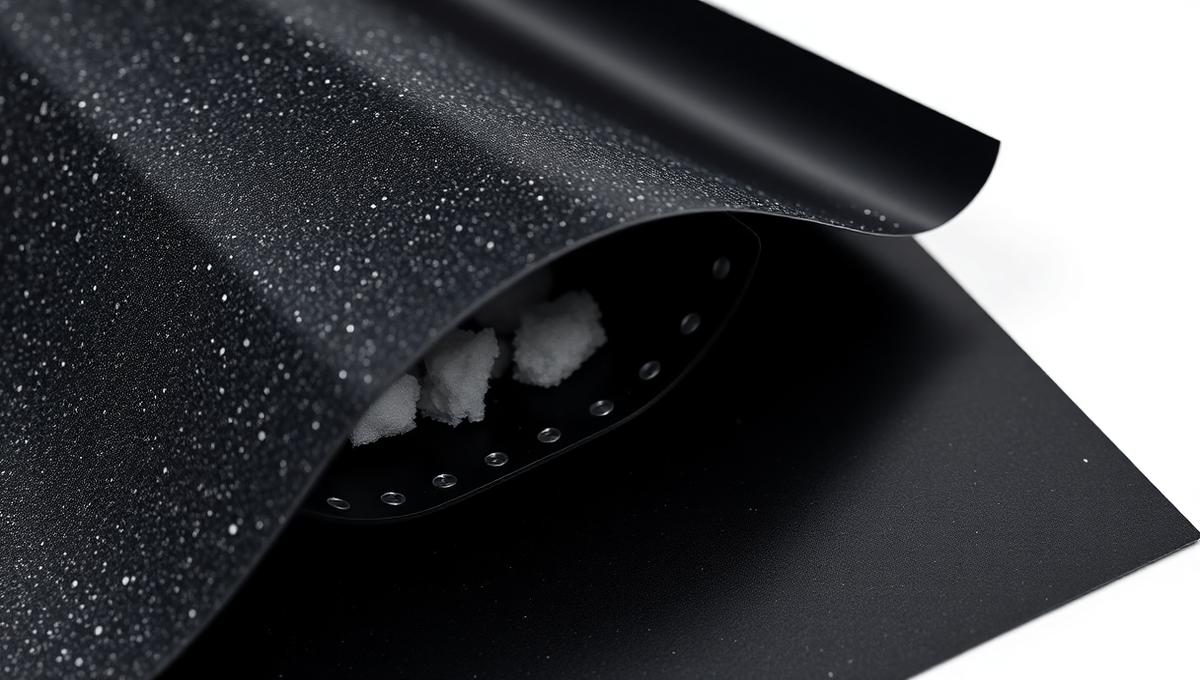
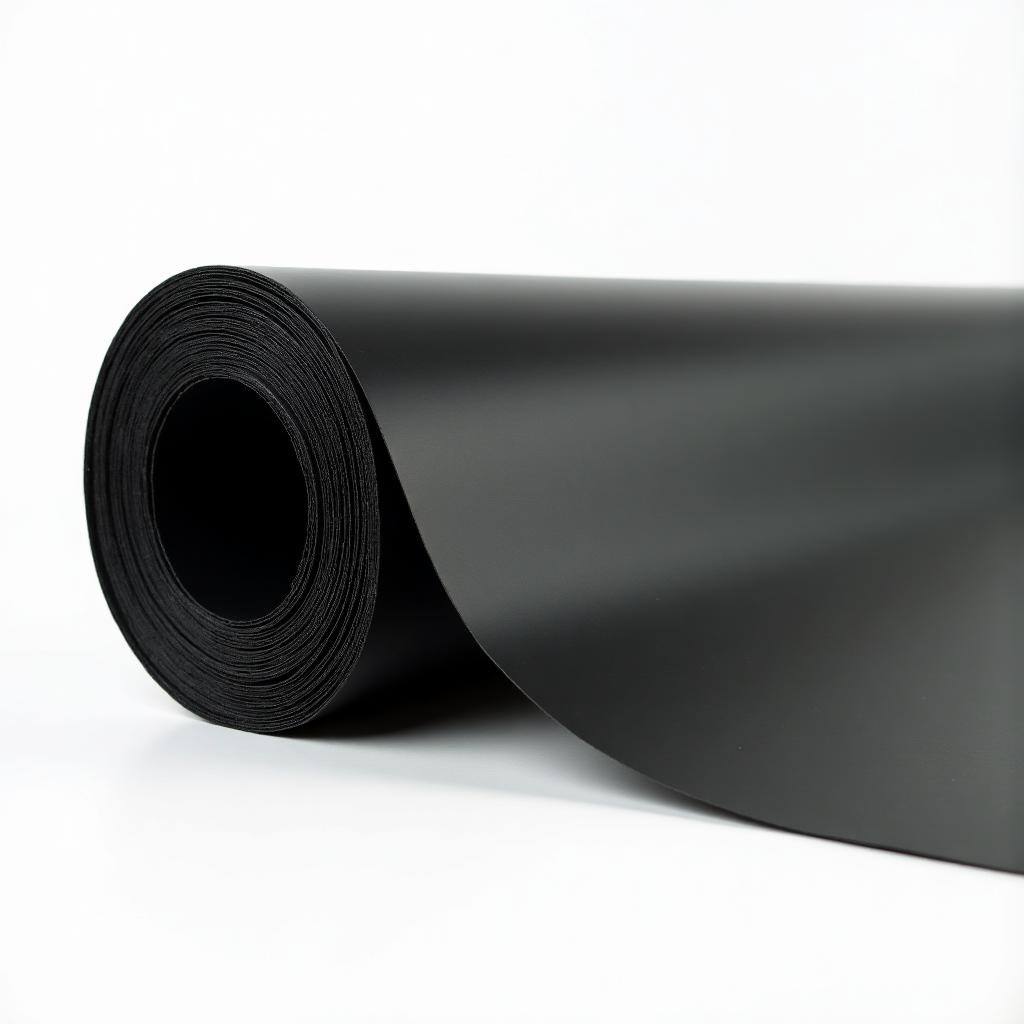
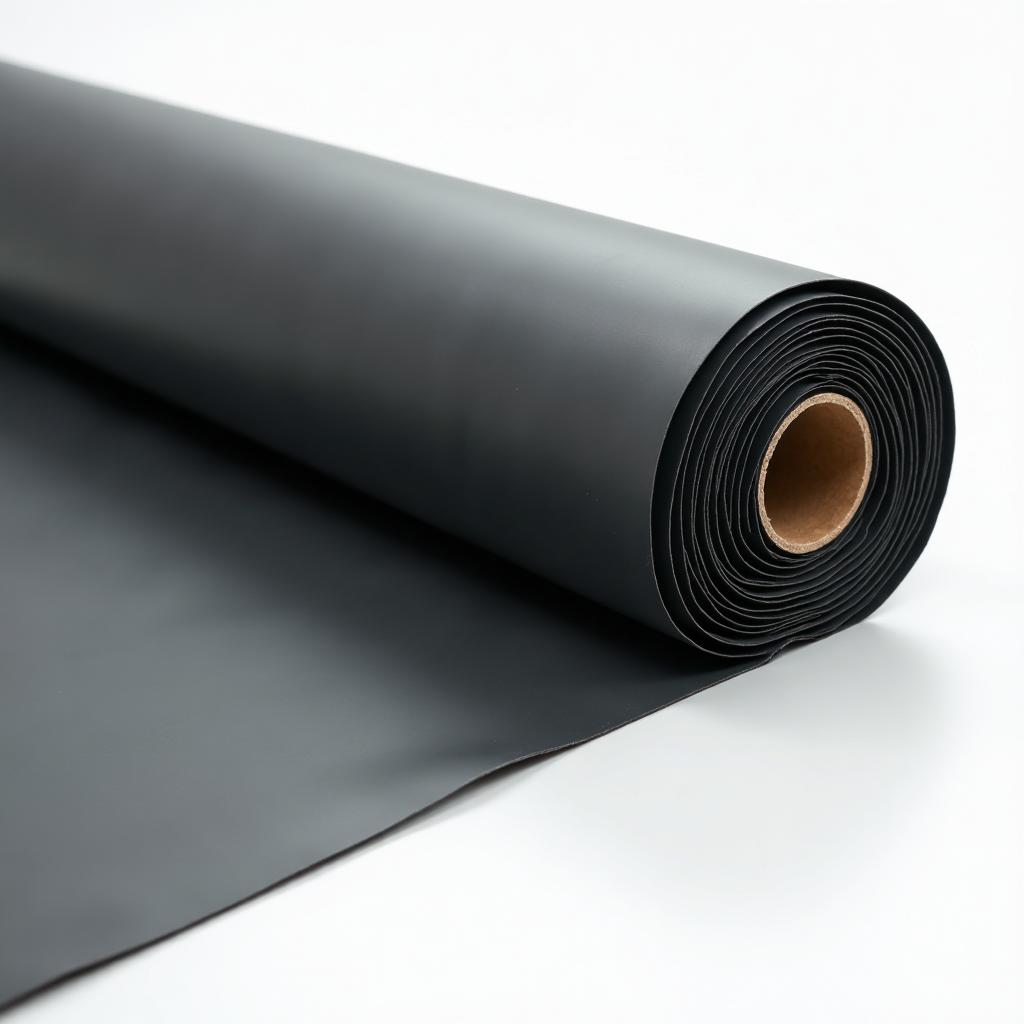
    Close-up cross-section of mass loaded vinyl showing dense black flexible material with visible mineral filler particles used for soundproofing
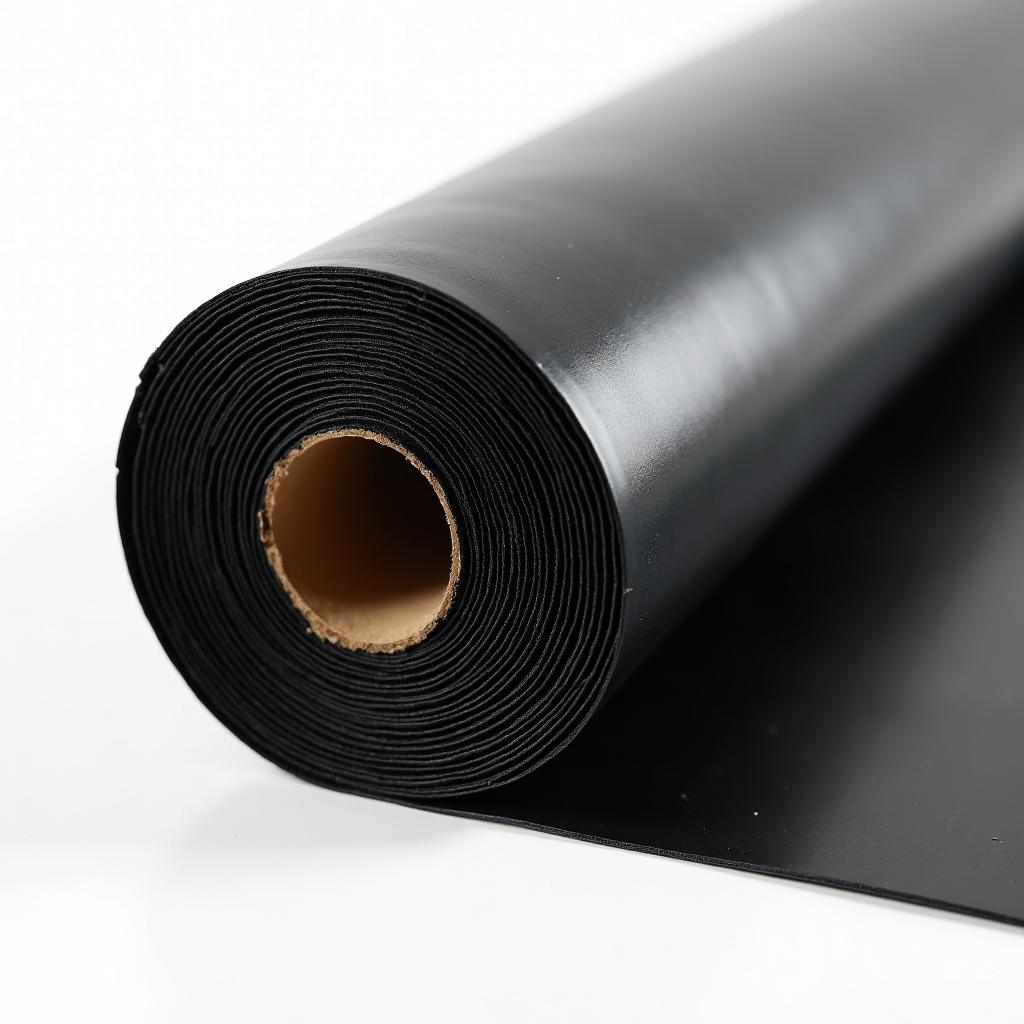
    Close-up cross-section of mass loaded vinyl showing dense black flexible material with visible mineral filler particles used for soundproofing

    1Why Material Composition Matters for Soundproofing

    Soundproofing obeys a fundamental physics principle called the Mass Law. Every time you double the mass per unit area of a barrier, you gain approximately 6 dB of sound transmission loss. That means the denser and heavier a material is for its thickness, the better it blocks sound.
    This is precisely why MLV outperforms materials like drywall, plywood, and foam. A single layer of 1 lb/ft² MLV is only 1/8 inch thick yet weighs as much as a half-inch sheet of standard drywall. The secret is not magic—it is mineral-loaded polymer chemistry engineered specifically for maximum density in minimum thickness.
    When manufacturers change the filler type, adjust the polymer blend, or reduce the mineral loading percentage, acoustic performance changes dramatically. Two sheets of MLV that look identical can deliver wildly different STC ratings depending on what is actually inside them.

    2The Primary Ingredients of Mass Loaded Vinyl

    Every sheet of mass loaded vinyl contains two fundamental components: a thermoplastic polymer matrix and a high-density mineral filler. The polymer gives MLV its flexibility, durability, and weather resistance. The mineral filler provides the extreme density that blocks sound waves.

    The Polymer Matrix

    The base polymer in quality MLV is typically polyvinyl chloride (PVC) or a thermoplastic elastomer (TPE) blend. PVC provides excellent chemical resistance, fire retardancy, and long-term dimensional stability. It remains flexible across a wide temperature range—critical for installations in attics, basements, and exterior walls where temperatures fluctuate seasonally.
    Plasticizers are added to the PVC to keep the material pliable. Without them, PVC would be rigid like a drainpipe. The type and quantity of plasticizer directly affect how easy the MLV is to cut, drape over surfaces, and seal at seams. High-quality MLV uses non-migrating plasticizers that will not leach out over decades, keeping the material flexible for the life of the building.

    The Mineral Filler

    The filler is what makes MLV heavy. The two most common mineral fillers are barium sulfate (BaSO₄) and calcium carbonate (CaCO₃). Barium sulfate has a specific gravity of 4.48—over four times heavier than water—making it the gold standard for acoustic barriers. Calcium carbonate has a specific gravity of 2.71 and is significantly cheaper but requires greater thickness to achieve equivalent mass.
    Premium MLV products use barium sulfate exclusively or in a dominant blend. Budget products rely heavily on calcium carbonate, which is why they often feel thinner or lighter per square foot despite similar visual appearance.

    Additives and Stabilizers

    Beyond the two primary ingredients, MLV contains UV stabilizers (for outdoor or exposed applications), thermal stabilizers (preventing degradation during manufacturing), colorants (typically carbon black for the characteristic dark color), and fire retardant compounds that help the material meet ASTM E84 flame spread requirements.

    3How These Raw Materials Are Combined

    MLV manufacturing uses a process called calendering—the same technique used to produce heavy-gauge vinyl flooring and industrial membranes.
    Raw PVC resin, plasticizers, mineral filler, and stabilizers are fed into a high-shear mixer that blends them into a homogeneous compound at elevated temperatures (typically 300-350°F). The ratio of mineral filler to polymer is critical—professional-grade MLV contains 60-80% mineral filler by weight. This extreme loading is what creates the density that blocks sound.
    The heated compound passes through a series of heavy steel rollers (calender rolls) that compress it into a continuous sheet of precise thickness. The gap between rollers determines the final gauge—typically 1/16 inch for lightweight products and 1/8 inch for standard 1 lb/ft² MLV.
    After calendering, the sheet cools on a conveyor system and is either wound onto large rolls (typically 4 feet wide by 25-60 feet long) or cut into panels. Quality control checks verify thickness uniformity, weight per square foot, and flexibility at this stage. A variation of more than ±5% in weight across the sheet indicates poor filler distribution that will create weak spots in the acoustic barrier.

    4The Physics: Why Dense Fillers Block Sound

    Sound waves are pressure fluctuations traveling through air. When they strike a barrier, three things happen: some energy reflects back, some absorbs into the material as heat, and some transmits through to the other side. The goal of MLV is to maximize reflection and absorption while minimizing transmission.
    Dense materials resist being set into vibration by incoming sound waves. The heavier the barrier per unit area (its surface mass density), the more energy a sound wave must expend to vibrate it. Barium sulfate particles embedded throughout the PVC matrix create millions of tiny inertial anchors that resist acoustic vibration at every point across the sheet.
    MLV also benefits from internal damping. Unlike rigid materials such as steel or glass, the flexible polymer matrix converts vibrational energy into microscopic heat through intermolecular friction. This damping effect is especially powerful at the resonant frequencies where rigid barriers actually lose performance—a phenomenon called the coincidence dip. MLV's limp, non-rigid nature means it has no significant coincidence dip, delivering consistent blocking across the frequency spectrum.
    A single layer of 1 lb/ft² MLV delivers an STC 26-27 on its own. When added to a standard 2×4 wall assembly with fiberglass insulation and drywall, the combined assembly typically achieves STC 50-55—meeting or exceeding residential building codes for party walls.
    Looking for the right MLV weight for your project? Our MLV Regular (1 lb/ft²) delivers the ideal balance of mass and flexibility for most wall and ceiling applications.

    5Barium Sulfate vs. Calcium Carbonate: The Filler Debate

    This is the single most important quality distinction in the MLV market and the one most manufacturers avoid discussing openly.
    Barium sulfate (specific gravity 4.48) packs 65% more mass per unit volume than calcium carbonate (specific gravity 2.71). This means barium sulfate MLV achieves 1 lb/ft² at a thinner profile, resulting in a more flexible sheet that is easier to install, seals better at overlaps, and conforms to irregular surfaces like pipes and ductwork.
    Calcium carbonate is roughly 70% cheaper as a raw material. Manufacturers using it must either make the sheet thicker to hit the same weight target (increasing material cost and reducing flexibility) or accept a lower surface mass density (reducing acoustic performance). Many budget MLV products advertise 1 lb/ft² but actually weigh 0.7-0.85 lb/ft² when independently tested.
    The practical difference is measurable. In controlled laboratory testing, barium sulfate MLV consistently outperforms calcium carbonate MLV by 2-4 STC points at identical thickness. Over a full wall assembly, that translates to a noticeable difference in perceived noise reduction.
    Our MLV Pro (1.1 lb/ft²) uses a premium barium sulfate formulation for maximum density in the thinnest possible profile—ideal for projects demanding the highest STC ratings.

    6What Separates Cheap MLV from Professional-Grade MLV

    The MLV market is flooded with products that look similar on the surface but differ enormously in actual composition and performance. Here is what to watch for:
    Filler percentage: Professional MLV contains 60-80% mineral filler by weight. Budget products may contain as little as 40%, substituting cheaper extender oils and excess plasticizer for the heavy minerals that actually block sound
    Filler type: Premium products use barium sulfate. Budget products use calcium carbonate or even recycled calcium-based fillers with inconsistent particle sizes
    Plasticizer quality: Cheap plasticizers migrate out of the PVC over time, causing the MLV to stiffen, crack, and lose its acoustic seal at seams. This degradation can begin within 3-5 years in temperature-variable environments
    Thickness consistency: Professional calendering produces sheets with ±3% thickness variation. Poor manufacturing creates thin spots that act as acoustic weak points—sound finds and exploits these every time
    Weight accuracy: Reputable manufacturers guarantee their stated lb/ft² weight and will provide test certificates. Budget sellers rarely offer independent weight verification
    A quick field test: weigh a 1 ft × 1 ft sample on a kitchen scale. A genuine 1 lb/ft² MLV should weigh between 0.95 and 1.05 pounds. Anything below 0.9 lb is under-filled and will underperform its rated STC.

    7Safety, Toxicity, and Environmental Considerations

    A common concern is whether the barium sulfate in MLV is toxic. The answer is no. Barium sulfate is chemically inert and non-toxic—it is the same compound used as a contrast agent in medical imaging (barium swallows and CT scans). It does not dissolve in water, does not off-gas, and poses zero inhalation risk once embedded in the polymer matrix.
    Modern MLV formulations are lead-free. Decades ago, some sound barriers used lead sheeting or lead-loaded vinyl for density. These products are no longer manufactured or sold by reputable suppliers. All current MLV products from established manufacturers use barium sulfate or calcium carbonate exclusively.
    PVC itself has faced environmental scrutiny, but MLV installed inside wall assemblies has a functional lifespan exceeding 50 years—far longer than most building materials. Its longevity means less frequent replacement and lower lifecycle environmental impact. Some manufacturers now offer TPE-based (thermoplastic elastomer) MLV as a PVC-free alternative, though these products typically cost 30-50% more.
    During installation, MLV produces no dust, no fumes, and requires no special protective equipment beyond standard construction PPE. It can be cut with a utility knife and does not require power tools that generate airborne particles.

    8How to Verify MLV Quality Before You Buy

    Before committing to a bulk MLV purchase, use these verification steps to ensure you are getting professional-grade material:
    Request an ASTM E90 test report: This is the standard laboratory test for sound transmission loss. Any serious manufacturer will have current test data showing STC ratings for their specific product
    Check the weight per square foot: Ask for the exact surface mass density. Quality 1 lb/ft² MLV should weigh between 0.95 and 1.05 lb/ft². If the manufacturer cannot provide this number or hedges with ranges like '0.5-1.0 lb/ft²,' that is a red flag
    Ask about filler composition: Reputable manufacturers will disclose whether they use barium sulfate, calcium carbonate, or a blend. Evasive answers typically mean calcium carbonate or recycled fillers
    Request a sample: Quality MLV feels dense, heavy, and uniformly flexible. It should drape smoothly without stiff spots or thin areas. The surface should be smooth and consistent in color
    Verify fire rating: Look for ASTM E84 Class A flame spread and smoke development ratings. This matters for code compliance and insurance
    Check the warranty: Professional-grade MLV carries warranties of 10-20+ years. Budget products rarely offer more than 1-2 years
    At Mass Loaded Vinyl Direct, every product ships with full ASTM test documentation, verified weight-per-square-foot specifications, and a satisfaction guarantee. Browse our complete product line to find the right MLV for your project.

    10Conclusion

    Mass loaded vinyl is not a generic rubber mat or a mystery material—it is a precisely engineered acoustic barrier built from high-density mineral fillers bonded within a flexible thermoplastic matrix. The specific combination of barium sulfate (or calcium carbonate), PVC polymer, plasticizers, and stabilizers determines everything: how much sound it blocks, how long it lasts, how easy it is to install, and whether it meets building codes. Understanding these raw materials empowers you to make informed purchasing decisions, avoid cheap imitations, and specify the right product for your soundproofing project.

    FAQs: What Is MLV Made Of

    Need Expert Soundproofing Advice?

    Our team of soundproofing specialists is here to help you choose the right products and installation methods for your museum or gallery project.