Spray Foam Insulation vs MLV: The Insulation Illusion

1The Great Insulation Misconception
• Sound insulation requires MASS to block sound waves—dense, heavy materials resist vibration
• Spray foam is lightweight and rigid—the opposite of what blocks sound
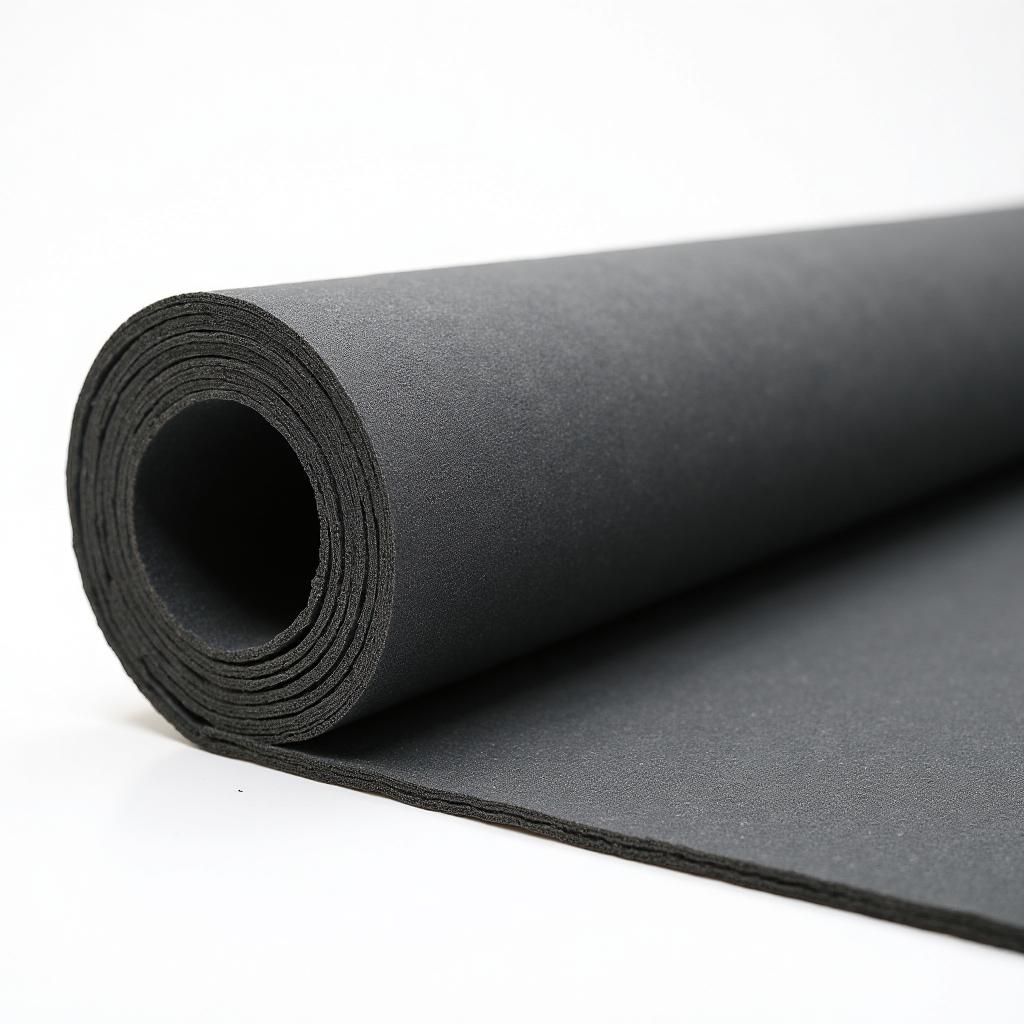
• MLV is dense and limp—exactly what physics requires for sound transmission loss
Why This Misconception Persists
• Marketing language: Terms like 'noise reduction' and 'quieter home' appear in spray foam advertising
• R-value conflation: High R-value suggests 'blocking' things—but R-value measures heat resistance, not sound
• Minor improvements: Spray foam may reduce very high-frequency sounds slightly, which feels like 'working'
• Contractor misinformation: Many general contractors don't understand acoustics and repeat marketing claims
• Sunk cost bias: After spending thousands, homeowners want to believe it worked
2How Sound Transmission Actually Works
The Mass Law
• MLV density: 60-120 lb/ft³ (dense barium sulfate compound)
• Mass law verdict: MLV adds 60-240x more mass per inch than spray foam
Why Rigid Materials Make Things Worse
Absorption vs. Blocking
• Absorption reduces echo and reverberation WITHIN a space (treats room acoustics)
• Blocking prevents sound from PASSING THROUGH a wall (sound transmission loss)
Spray foam provides modest absorption (reduces some echo in the cavity) but virtually zero blocking. MLV is specifically designed for blocking sound transmission.
3Performance Head-to-Head
| Wall Assembly | Baseline STC | With Spray Foam | With 1 lb MLV |
|---|---|---|---|
| Single wood stud, empty cavity | STC 33 | STC 35-37 | STC 48-50 |
| Single wood stud, R-13 fiberglass | STC 38 | STC 39-41 | STC 53-55 |
| Double drywall each side | STC 43 | STC 44-46 | STC 55-58 |
| Metal stud with insulation | STC 40 | STC 41-43 | STC 55-57 |
• Spray foam adds 2-4 STC points to a wall assembly—barely perceptible
• MLV adds 15-17+ STC points—a dramatic, immediately noticeable reduction
• Each 10 STC points represents approximately 50% reduction in perceived loudness
• Spray foam at $8,000-15,000 delivers results you can barely measure
• MLV at $500-2,000 delivers results you can immediately hear
Low-Frequency Performance
• MLV: Excels at low-frequency blocking due to mass law physics
• Result: For traffic noise, home theaters, and HVAC noise, spray foam is completely ineffective
4Cost Analysis
Spray Foam Cost Breakdown
• Open-cell spray foam: $1.00-1.50/sq ft = $2,500-3,750
• Closed-cell spray foam: $1.50-3.00/sq ft = $3,750-7,500
• Typical improvement: 2-4 STC points
• Cost per STC point: $625-3,750 per STC point
MLV Cost Breakdown
• 1 lb MLV material: $1.00-1.50/sq ft = $2,500-3,750
• Professional installation: $0.50-1.00/sq ft = $1,250-2,500
• Total cost: $3,750-6,250
• Typical improvement: 15-17 STC points
• Cost per STC point: $220-415 per STC point
Value Comparison
| Metric | Spray Foam | MLV |
|---|---|---|
| Cost per STC point | $625-3,750 | $220-415 |
| STC improvement per $1,000 | 0.3-1.6 points | 2.4-4.5 points |
| To achieve STC 50 | Impossible with spray foam alone | $3,750-6,250 |
5When Spray Foam Has a Role
Air Sealing (Indirect Benefit)
High-Frequency Absorption (Minor)
Combined Thermal + Minor Acoustic Improvement
What Spray Foam Cannot Do
• Achieve meaningful STC improvements (more than 3-5 points)
• Meet building code STC requirements for multifamily construction
• Provide speech privacy between rooms
• Reduce impact noise from footsteps above
6When MLV Is the Clear Winner
Traffic and Transportation Noise
Multifamily Construction
Home Theaters and Music Rooms
HVAC and Mechanical Noise
Bedroom Walls and Privacy
Commercial and Office Spaces
7The Optimal Approach
Best Practice Assembly
2. Mass barrier: 1 lb MLV on the stud face before drywall
3. Air sealing: Acoustic caulk at perimeters and penetrations (cheaper than spray foam)
4. Finish layers: Standard or double-layer drywall
Performance Results
• STC 55-60: Excellent sound blocking
• R-13 to R-15: Good thermal performance
• Cost: Comparable to or less than spray foam alone
• Value: Actual soundproofing + thermal insulation vs. thermal only
For Retrofit Projects
• Install MLV over existing drywall
• Add new drywall layer over MLV
• Results in significant STC improvement despite the existing spray foam
• The spray foam doesn't help much, but it doesn't prevent MLV from working
What to Tell Your Contractor
• 'What STC rating will this assembly achieve?'
• 'Can you provide lab test data showing spray foam's transmission loss?'
• 'How does this meet IBC requirements for STC 50 party walls?'
Most contractors cannot answer these questions because spray foam isn't a soundproofing material—it's a thermal insulation product that's been marketed with acoustic buzzwords.
9Conclusion
The Verdict on Spray Foam vs MLV: These products serve fundamentally different purposes. Spray foam is thermal insulation with negligible acoustic benefit. MLV is a dedicated soundproofing material with documented STC performance. Using spray foam for soundproofing is like using a blanket as a door—it might help slightly, but it's the wrong tool for the job.
The numbers don't lie: MLV delivers 5-15x more soundproofing value per dollar spent. For any project where noise control actually matters—traffic noise, multifamily construction, home theaters, mechanical rooms, or simple peace and quiet—Mass Loaded Vinyl is the physics-backed, code-compliant, cost-effective solution.
Don't fall for The Insulation Illusion. Thermal insulation and sound insulation require different materials, different physics, and different solutions. Choose the right tool for each job.
FAQs: Spray Foam vs MLV
Related Guides in Comparison
Continue exploring with these hand-picked articles
Drywall vs MLV: The Heavyweight Battle for Silence
Drywall is everywhere, but can stacking more of it compete with Mass Loaded Vinyl for soundproofing? Compare STC ratings, installation, and costs to find the best noise-blocking solution.
Green Glue vs MLV: The Damping Compound Showdown
Green Glue damping compound vs Mass Loaded Vinyl - which soundproofing material wins? Compare cost, STC performance, installation, and ideal use cases for each solution.
QuietRock vs MLV: The Engineered Drywall Duel
QuietRock engineered drywall vs Mass Loaded Vinyl - which soundproofing solution wins? Compare STC ratings, installation, cost, and when to use each for your project.
Our Complete Product Line
Professional-grade soundproofing materials for any application
Need Expert Soundproofing Advice?
Our team of soundproofing specialists is here to help you choose the right products and installation methods for your museum or gallery project.