Comparison15 min readAuthorMass Loaded Vinyl DirectPublishedUpdated

    QuietRock vs MLV: The Engineered Drywall Duel
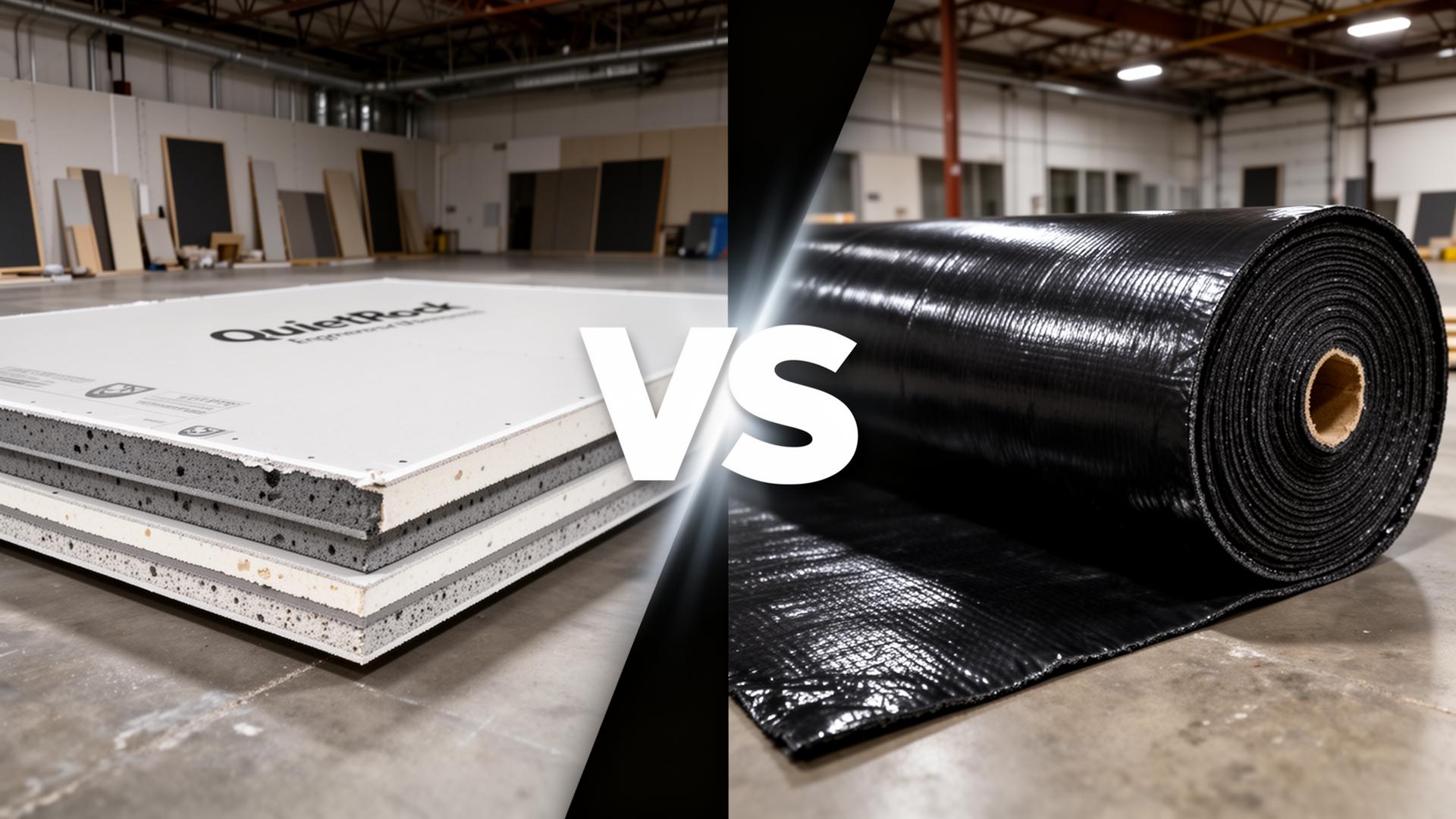
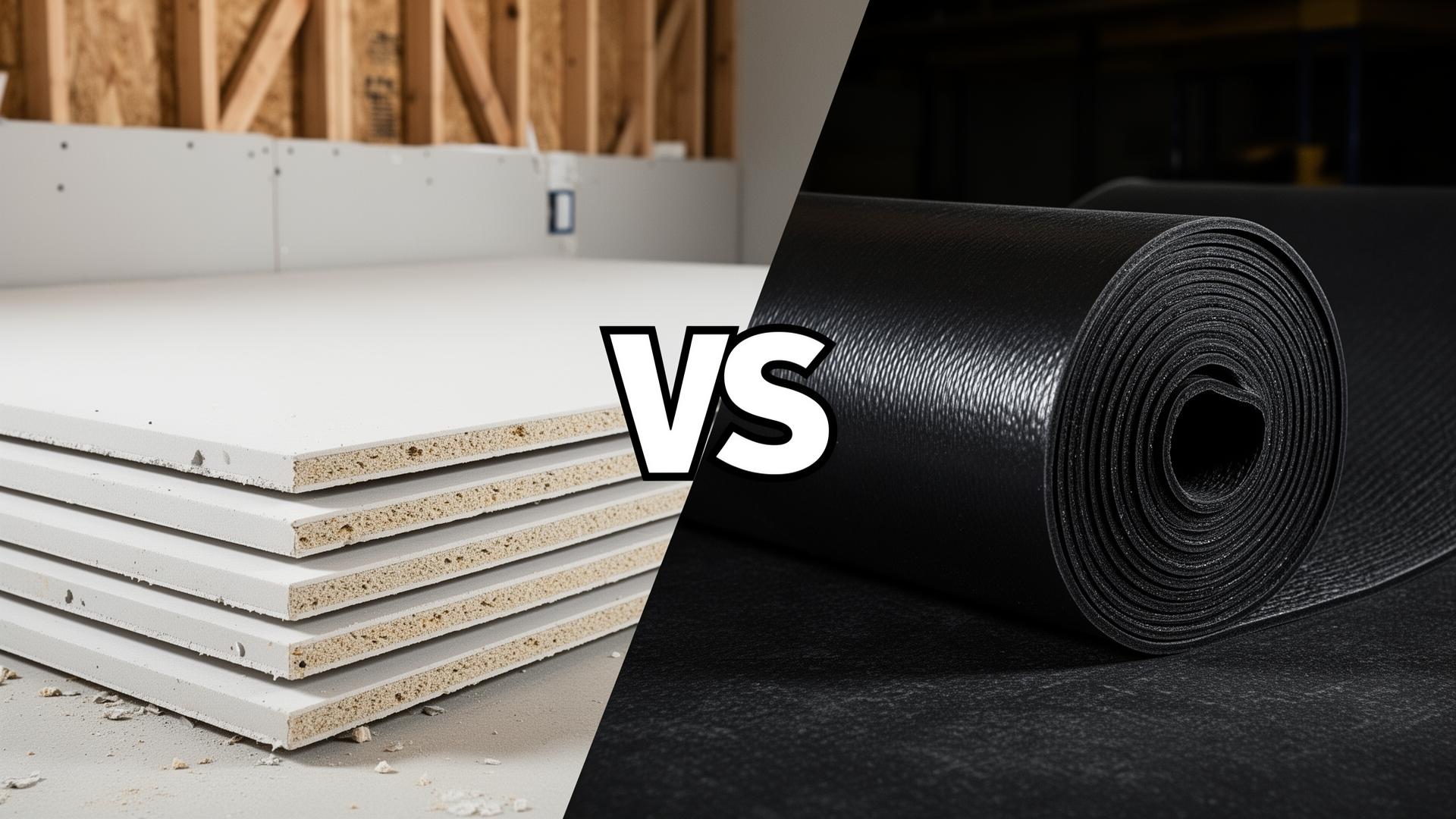
    VS comparison showing QuietRock engineered drywall panel on left versus black Mass Loaded Vinyl roll on right
    VS comparison showing QuietRock engineered drywall panel on left versus black Mass Loaded Vinyl roll on right

    1Understanding the Technologies

    Before diving into performance numbers, understanding how each material works explains why they perform differently in various applications. QuietRock and MLV represent two distinct engineering philosophies for blocking sound.

    QuietRock: Constrained Layer Damping

    QuietRock is a family of engineered soundproof drywall products featuring multiple layers of gypsum with viscoelastic polymers sandwiched between them. This constrained layer damping technology converts sound vibration energy into small amounts of heat, reducing the panel's ability to transmit sound.
    Key characteristics of QuietRock:
    • Multiple gypsum layers with damping polymers between them
    • Available in various thicknesses (5/8" standard, 1-3/8" for EZ-Snap)
    • Installs like standard drywall—same tools, same techniques
    • Single-panel solution—no additional layers required
    • STC ratings from 48-80 depending on product and assembly
    • Excellent mid-frequency performance (speech range)
    • Fire-rated options available for code compliance

    Mass Loaded Vinyl: Limp Mass Barrier

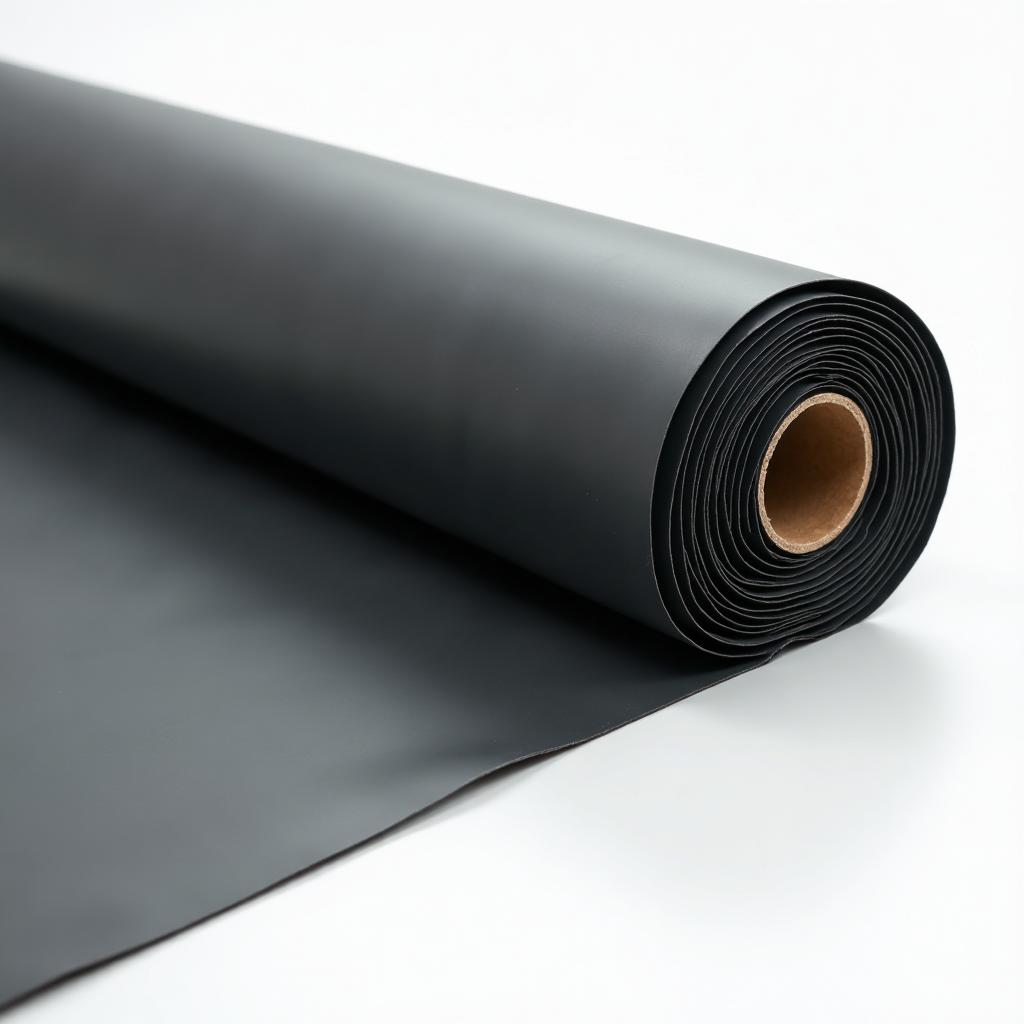
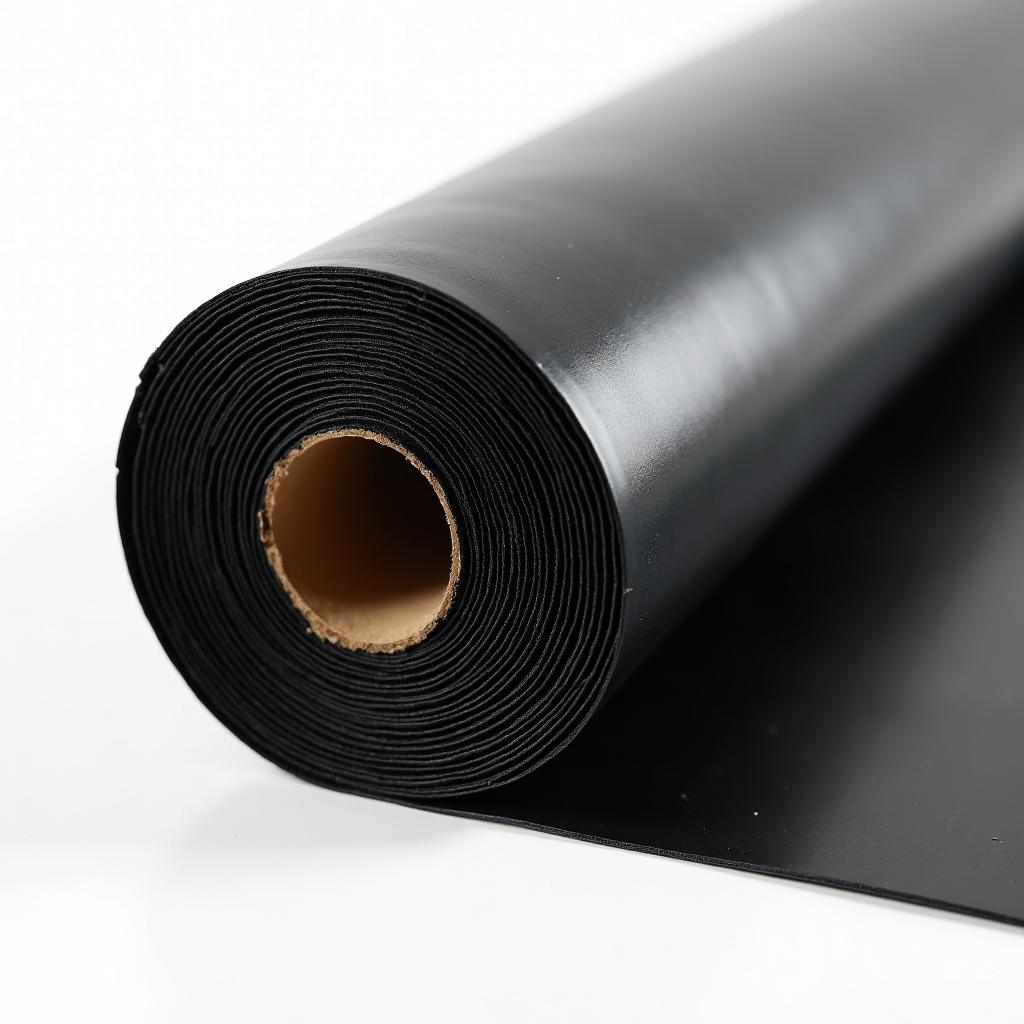
    Mass Loaded Vinyl (MLV) takes a different approach entirely. Instead of damping vibration, MLV simply adds dense, non-resonant mass to the wall assembly. The mass law principle is straightforward: heavier walls are harder to vibrate, which means less sound transmission.
    Key characteristics of MLV:
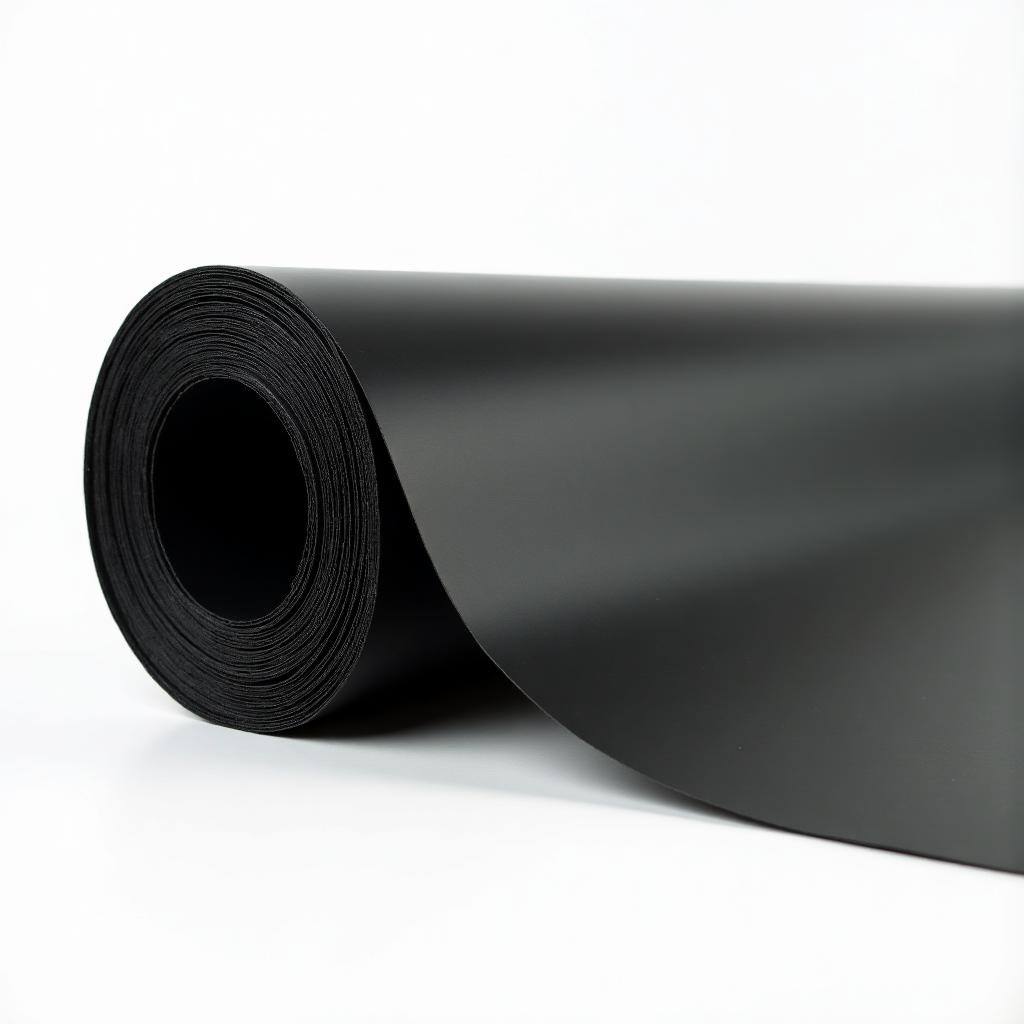
    • Thin, heavy, flexible membrane (1/16" to 1/4" thick, 0.6-2 lb/ft²)
    • Installed as a hidden layer behind finish drywall
    • Works independently—not a finish surface
    • Immediate performance—no cure time needed
    • STC improvements of 15-17+ points added to any assembly
    Exceptional low-frequency performance (bass blocking)
    • Flexible installation on walls, ceilings, floors, pipes, and HVAC

    The Core Difference

    QuietRock dampens vibration within an engineered panel through constrained layer technology. MLV blocks transmission by adding mass that resists vibration. QuietRock replaces your drywall; MLV adds to your drywall. This distinction is crucial: QuietRock is an all-in-one finish solution, while MLV is a flexible barrier component that works with any finish material.

    2Performance Head-to-Head

    Let's examine real STC test data to see how QuietRock and MLV actually perform. Laboratory and field testing reveal important differences in the QuietRock vs MLV performance comparison.
    Wall AssemblyBaseline STCWith QuietRock 545With 1 lb MLV + Std Drywall
    Single wood stud, no insulationSTC 33-35STC 48-50STC 50-52
    Single wood stud with R-13 insulationSTC 38-40STC 52-54STC 53-56
    Single metal stud with insulationSTC 40-42STC 52-55STC 55-58
    Resilient channel with insulationSTC 46-48STC 56-58STC 58-62
    Low-Frequency Performance (Bass Blocking): This is where MLV significantly outperforms QuietRock. Bass frequencies (50-250 Hz) from home theaters, traffic noise, HVAC systems, and bass-heavy music require mass to block effectively. QuietRock's damping technology is less effective at these low frequencies, while MLV's dense mass excels at blocking bass. For any application involving low-frequency noise, MLV is the clear winner.
    Mid-Frequency Performance (Speech Privacy): QuietRock shines in the speech intelligibility range (250-4000 Hz). Its constrained layer damping specifically targets the resonance frequencies where voices and everyday sounds occur. Both materials perform well here, but QuietRock's engineered damping provides consistent speech privacy.
    High-Frequency Performance: Both materials effectively block high frequencies. At these shorter wavelengths, either solution provides excellent performance. High frequencies are rarely the limiting factor in soundproofing applications.
    Consistency Factor: MLV's performance follows the predictable mass law—doubling mass adds approximately 6 dB of transmission loss. QuietRock performance can vary based on installation quality, particularly around edges, seams, and penetrations. MLV typically delivers more consistent field results when properly installed with sealed seams.

    3Installation Showdown

    Installation requirements significantly impact total project cost and quality control. The QuietRock vs MLV installation comparison reveals practical differences that matter on the jobsite.

    QuietRock Installation

    QuietRock installs like standard drywall with a few important differences:
    Weight: Heavier than standard drywall (QuietRock 545 is ~2.5 lbs/ft² vs. 1.8 lbs/ft² for standard 5/8")
    Fasteners: Standard drywall screws work, but spacing may differ per manufacturer specs
    Cutting: Score and snap like standard drywall, though slightly more effort
    Finishing: Standard taping and mudding procedures apply
    No additional layers: Single-panel installation—no membrane + drywall combination
    Immediate finishing: Ready for tape and mud immediately after installation

    MLV Installation

    MLV requires a different installation approach as a hidden barrier layer:
    Application: Roll out material, cut with utility knife, fasten to studs
    Seaming: Critical step—overlap seams 2-3 inches, seal with acoustic caulk
    Weight: 1-2 lb/ft² depending on product—heavy rolls require planning
    Coverage: Can wrap around corners, over pipes, into ceiling spaces
    Finish layer: Standard drywall installed over MLV (any type/brand)
    Flexibility: Conforms to irregular surfaces, wraps obstacles

    Installation Speed Comparison

    For a 12x12 room with approximately 500 sq ft of wall surface:
    QuietRock: Similar to standard drywall, perhaps 10-15% slower due to weight
    MLV + Drywall: Two installation steps—MLV application (~1-2 hours) plus standard drywall
    Winner: QuietRock for pure speed; MLV for flexibility and performance

    Skill Requirements

    QuietRock: Any drywall installer can work with QuietRock. No special training required beyond awareness of weight and manufacturer specifications.
    MLV: Proper seaming and sealing technique is essential. Gaps, poor overlaps, or unsealed penetrations compromise performance. Moderate learning curve for crews unfamiliar with acoustic barriers.

    4Cost Breakdown

    Material costs only tell part of the story. Total project economics in the QuietRock vs MLV cost comparison include labor, associated materials, and performance value.
    Cost ComponentQuietRock 545MLV (1 lb) + Std Drywall
    Material per sq ft$3.00-4.00/sq ft$1.50-2.00/sq ft (MLV) + $0.40-0.60/sq ft (drywall)
    Total material cost$3.00-4.00/sq ft$1.90-2.60/sq ft
    Labor costStandard drywall rates+$0.25-0.40/sq ft additional for MLV
    Estimated total installed$4.50-6.00/sq ft$2.75-4.00/sq ft
    Typical STC achievedSTC 48-55STC 50-58
    Cost per STC point$0.28-0.35/sq ft per STC point$0.16-0.23/sq ft per STC point
    Value Analysis: MLV delivers better STC improvement per dollar—approximately 30-40% more sound blocking for each dollar spent. While QuietRock's premium pricing includes convenience and single-step installation, MLV provides superior value for projects where performance is the priority.
    Availability Factor: QuietRock may require special ordering through drywall distributors, with lead times varying by location. MLV is readily available from acoustics suppliers with predictable shipping. For time-sensitive projects, MLV availability may be more reliable.
    Waste Considerations: QuietRock scraps are handled like drywall waste. MLV scraps can be repurposed for pipe wrapping, duct insulation, or small enclosures—reducing effective material costs.

    5When QuietRock Wins

    QuietRock is the better choice when specific project requirements align with its strengths:
    Single-Trade Simplicity: When working with drywall crews who prefer one-step installation without learning MLV techniques, QuietRock maintains familiar workflows.
    Retrofit Over Existing Walls: For adding soundproofing without removing existing drywall, installing QuietRock directly over old walls is straightforward. MLV would require furring strips or more complex preparation.
    Speech Privacy Focus: In office environments, conference rooms, and medical exam rooms where speech frequency blocking is the primary concern, QuietRock's mid-frequency damping delivers excellent results.
    Fire Rating Requirements: QuietRock offers Type X fire-rated versions that satisfy code requirements while providing soundproofing—eliminating the need for separate fire-rated and acoustic layers.
    Thin Wall Assemblies: When wall thickness is constrained and every fraction of an inch matters, QuietRock's single-panel solution avoids the added thickness of MLV + drywall combinations.
    Predictable Budgets: QuietRock's single-product pricing simplifies estimating. When budget certainty is more important than lowest cost, QuietRock's straightforward pricing helps.

    6When MLV Wins

    MLV is the superior choice when project requirements demand its specific performance characteristics:
    Low-Frequency Control: For home theaters, recording studios, music rooms, or buildings near highways/airports/rail, MLV's bass-blocking capability is essential. QuietRock won't adequately control these problematic low frequencies. Our MLV Pro (1.1 lb/sf) delivers maximum low-frequency performance.
    Maximum Performance Required: When code compliance or client expectations require STC 55+, MLV provides a more reliable path to these ratings. Achieving similar results with QuietRock requires premium product lines at significantly higher costs.
    Budget-Conscious Projects: When every dollar counts but soundproofing quality can't be sacrificed, MLV delivers 30-40% better value per STC point than QuietRock.
    Versatile Applications: MLV wraps pipes, lines HVAC ducts, installs in floors and ceilings, and works with any finish material. QuietRock is wall-specific. For whole-building acoustic treatment, MLV's versatility is unmatched.
    Performance Consistency: MLV's mass-law physics delivers predictable, consistent results. Mass doesn't fail—if the MLV is there and seams are sealed, it performs. Perfect for projects requiring guaranteed acoustic outcomes.
    Floor and Ceiling Applications: MLV excels in floor-ceiling assemblies where QuietRock isn't applicable. For multifamily construction requiring floor impact sound control, MLV is the professional choice.

    7Combining for Maximum Performance

    For the ultimate in soundproofing performance, combining MLV and QuietRock creates assemblies that outperform either material alone. This isn't redundant—it's synergistic engineering.

    Why the Combination Works

    MLV and QuietRock use different sound-reduction mechanisms that complement rather than duplicate each other:
    • MLV adds mass that blocks all frequencies, especially bass
    • QuietRock adds damping that reduces panel resonance and mid-frequency transmission
    • Together, they address both mass law and damping requirements
    • The combination achieves STC ratings difficult to match any other way

    Premium Assembly Example

    For recording studios, home theaters, or luxury multifamily construction:
    • 3-5/8" metal studs at 24" o.c.
    • Mineral wool insulation in cavity
    • 1 lb MLV applied directly to stud face on one side
    • QuietRock 545 as finish layer over MLV
    • Standard drywall or QuietRock on opposite side
    • Acoustic sealant at all perimeters and penetrations
    Tested STC: 60-65+
    This assembly delivers exceptional performance across all frequency ranges. The MLV handles bass frequencies while QuietRock optimizes mid-frequency damping and provides a convenient finish surface.

    Cost-Benefit of Combination

    Adding both materials increases costs by $4-5/sq ft over basic construction, but achieves performance that would otherwise require double-stud walls or significantly thicker assemblies. For space-constrained premium projects like high-rise condos or professional studios, the combination offers the best performance-per-inch available.

    9Conclusion

    The Verdict on QuietRock vs MLV: Both materials effectively reduce sound transmission, but they excel in different situations. QuietRock offers installation convenience and strong mid-frequency performance in a single-panel solution. MLV delivers superior low-frequency control, better overall value, and unmatched versatility across wall, floor, ceiling, and specialty applications.

    For best value in terms of STC improvement per dollar, MLV wins—delivering 30-40% more sound blocking performance per dollar spent. For installation simplicity in drywall-focused projects, QuietRock streamlines workflows.

    The right choice depends on your specific needs: If you need bass blocking or maximum performance, choose MLV. If you need single-trade simplicity or speech privacy in offices, consider QuietRock. For premium applications where performance is paramount, combining both materials creates assemblies that outperform either alone.

    FAQs: QuietRock vs MLV

    Need Expert Soundproofing Advice?

    Our team of soundproofing specialists is here to help you choose the right products and installation methods for your museum or gallery project.