Materials9 min readAuthorMass Loaded Vinyl DirectPublishedUpdated

    Soundproofing Materials That Are a Complete Waste of Money
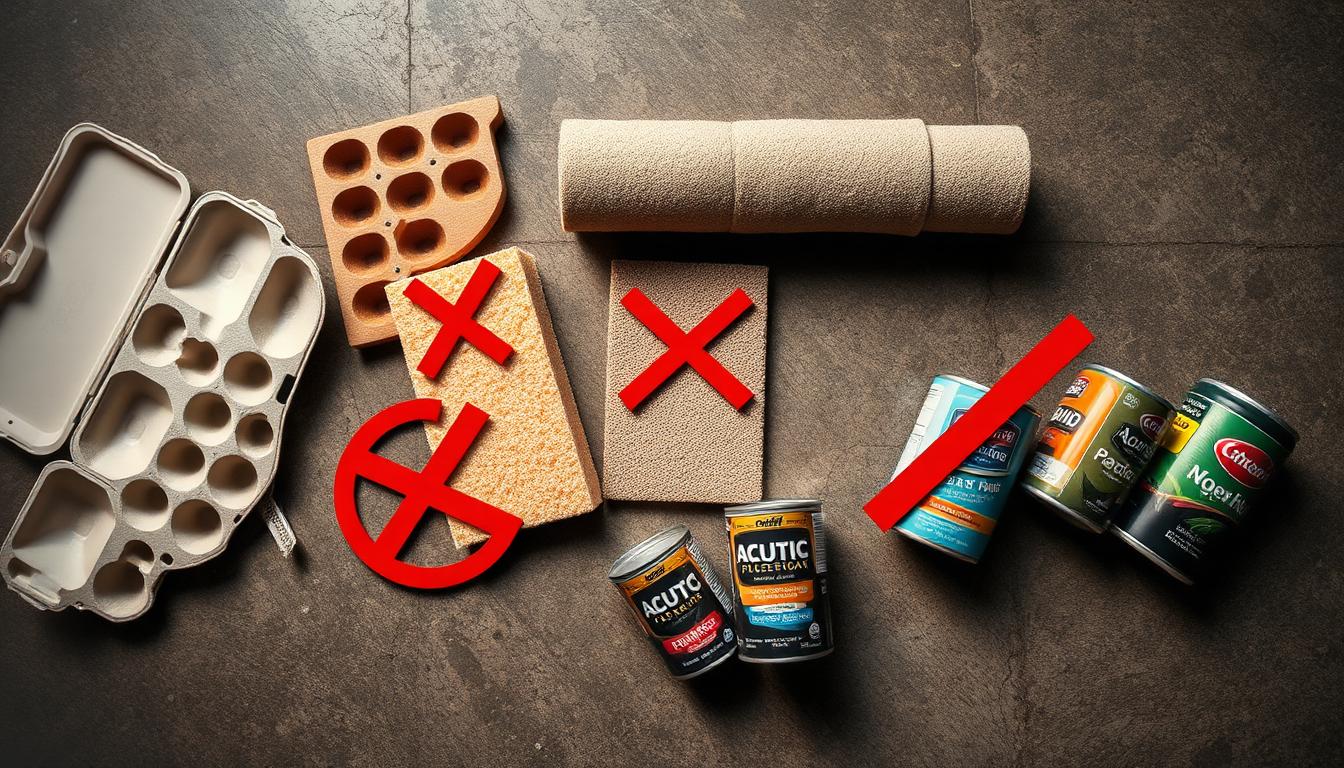
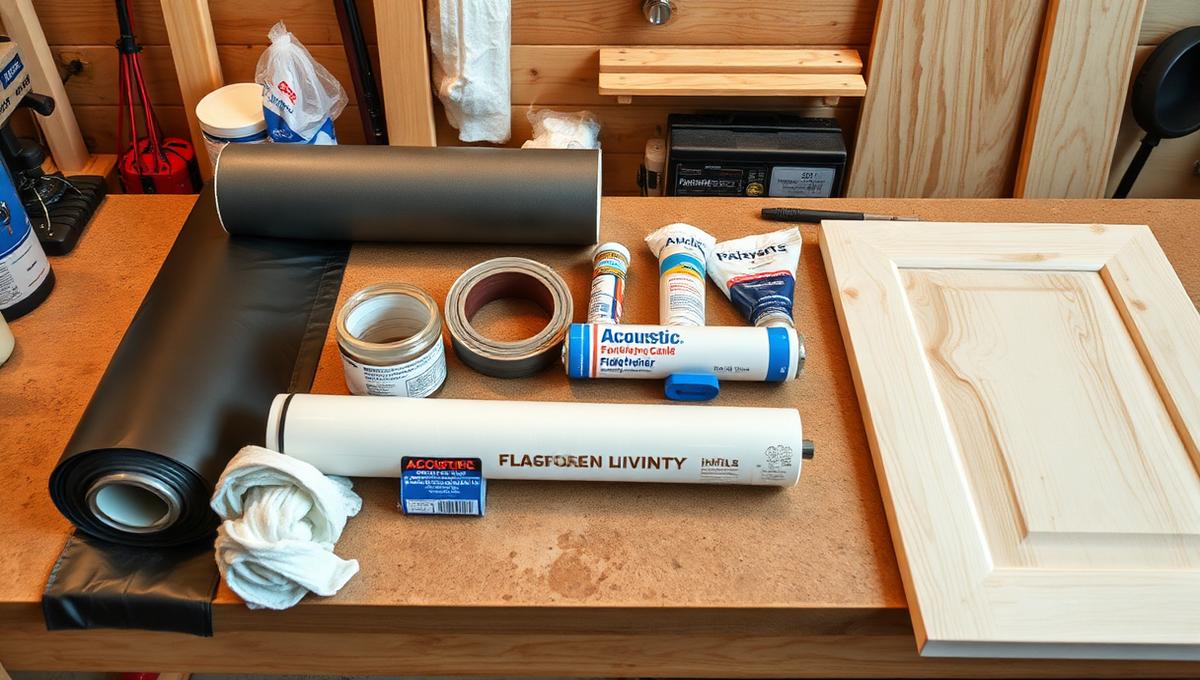
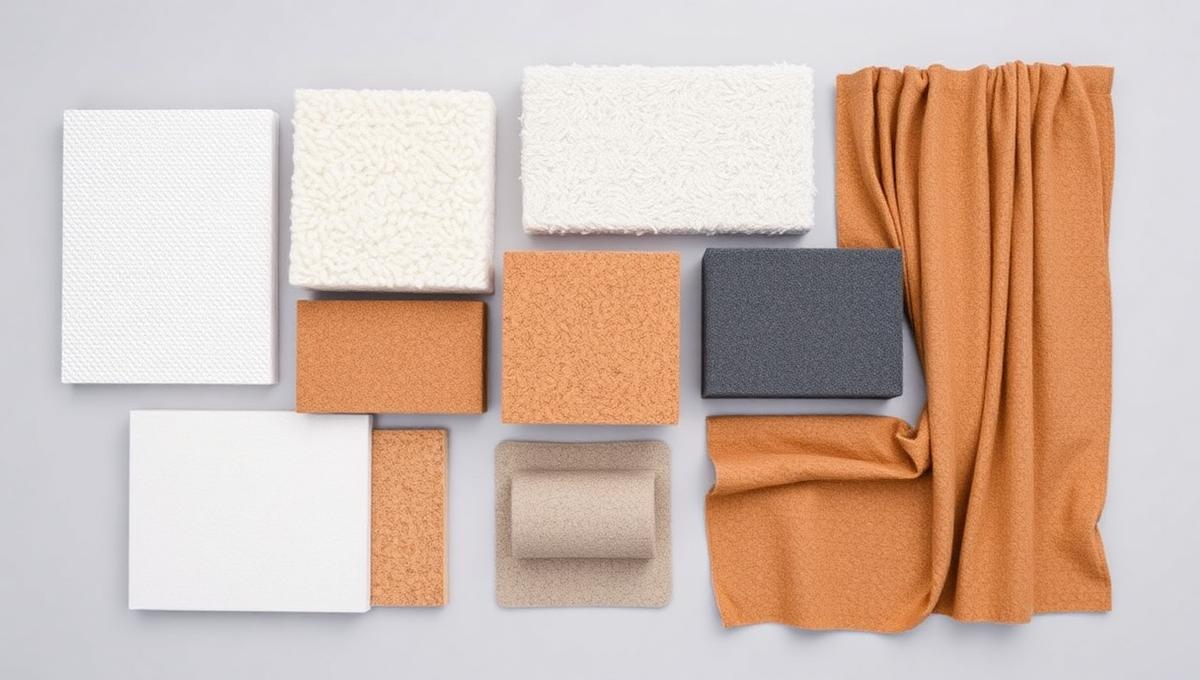
    Flat lay of ineffective soundproofing materials including egg cartons, thin foam panels, carpet roll, and acoustic paint cans with red X marks on a concrete surface
    Flat lay of ineffective soundproofing materials including egg cartons, thin foam panels, carpet roll, and acoustic paint cans with red X marks on a concrete surface

    1Why So Many Soundproofing Products Don't Work

    Sound travels through structures as vibration. To block it, you need one or more of four things: mass (heavy, dense material that resists vibration), decoupling (breaking the physical connection between surfaces), damping (converting vibrational energy into heat), or absorption (trapping airborne sound waves inside porous material). Most gimmick products provide almost none of these properties.
    The reason these myths persist is that people confuse quieting a room's internal echo with blocking sound transmission. If you clap in a room with foam on the walls, the echo dies faster — so you assume it is 'soundproofed.' But your neighbor on the other side of that wall hears exactly the same amount of noise as before. The foam changed how sound behaves inside your room, not how much passes through the wall.
    To evaluate any material, ask one question: Does it add meaningful mass, create an air gap, or damp structural vibration? If the answer is no, it will not reduce sound transmission — no matter what the Amazon listing claims.

    21. Egg Cartons

    The myth: Egg cartons work like acoustic foam because of their bumpy shape.
    The reality: Egg cartons are the most infamous soundproofing myth in existence. They are made of thin molded paper pulp with almost zero mass. Their bumpy surface creates a tiny amount of high-frequency flutter echo reduction — roughly equivalent to tacking a few sheets of newspaper to your wall. They provide zero sound blocking whatsoever.
    Independent testing shows egg cartons have an NRC (Noise Reduction Coefficient) of approximately 0.05-0.10, compared to proper acoustic panels at 0.80-1.00. That means egg cartons absorb only 5-10% of sound energy that hits them — and even that minimal absorption occurs only at frequencies above 2,000 Hz.
    Additional problems: Egg cartons are a serious fire hazard. They are made of dry, porous cardboard that ignites easily and burns fast. Building inspectors will flag them instantly. They also collect dust, attract insects, and look terrible.
    What to use instead: If you need to reduce echo on a budget, 2-inch rigid fiberglass panels wrapped in fabric cost $15-30 each and provide NRC ratings of 0.85 or higher.

    32. Cheap Thin Foam Panels

    The myth: The $20 packs of 1-inch pyramid or wedge foam tiles sold on Amazon will soundproof your room.
    The reality: These thin foam tiles weigh almost nothing — typically 0.5-1.0 lb per square foot. They absorb a modest amount of mid-to-high frequency echo (NRC 0.25-0.45 for 1-inch thickness), but they block zero sound transmission. They add no mass to the wall. They create no air gap. They provide no damping.
    The confusion is amplified by misleading marketing. Many Amazon listings use phrases like 'soundproof foam' or 'noise-blocking panels' when the product is purely an absorption tile. Real acoustic foam panels used in professional studios are typically 3-4 inches thick, made from higher-density melamine or polyurethane, and cost $8-15 per square foot — not $20 for a 12-pack.
    When thin foam does have value: If your only goal is reducing echo and flutter inside a single room — like taming a boxy podcast closet — cheap foam provides mild improvement. But if you are trying to stop sound from reaching another room, you are throwing money away.
    What to use instead: For actual soundproofing, add mass loaded vinyl (MLV) behind drywall. A single layer of 1 lb/sf MLV adds STC 5-7 points to a standard wall — something foam cannot do at any thickness.

    43. Carpet Alone

    The myth: Laying carpet will soundproof your floor and stop noise complaints from downstairs neighbors.
    The reality: Carpet reduces impact noise moderately — footsteps, dropped objects, chair scrapes. A thick carpet with pad can improve IIC (Impact Insulation Class) by 15-25 points, which is meaningful. However, carpet does almost nothing for airborne noise like voices, music, TV, and bass. Its STC contribution is negligible because it has very little mass per square foot.
    The specific problem: airborne sound travels through the structural floor assembly — the subfloor, joists, and ceiling below. Carpet sits on top and does not interact with this transmission path. Bass frequencies (under 250 Hz) pass through carpet as if it is not there.
    When carpet helps: In multi-family buildings where impact noise (walking, running, exercise) is the primary complaint, carpet plus a quality pad provides real improvement. For upper-floor condos with hardwood or LVP flooring, adding carpet in high-traffic areas can reduce impact complaints significantly.
    What to use instead: For airborne noise through floors, install an acoustic underlayment with mass (like MLV-based floor underlayment) between the subfloor and finished flooring. For maximum performance, combine MLV underlayment with a decoupled ceiling assembly below.

    54. Soundproof Paint

    The myth: Special paint formulated with sound-deadening compounds can soundproof your walls.
    The reality: Soundproof paint is one of the most expensive ways to achieve almost nothing. These products contain ceramic microspheres or latex fillers that add marginal mass per coat. At roughly $40-50 per gallon covering 100-150 sq ft, they add approximately 0.1-0.3 lb per square foot at the recommended 3-coat application.
    Independent testing by acoustic consultants consistently shows STC improvements of 1-3 points from soundproof paint — within the margin of error for field testing. For reference, the human ear cannot detect a difference of less than 3 STC points. You would need to apply 10+ coats to approach anything perceptible, at which point you have spent hundreds of dollars and built up an uneven, heavy coating.
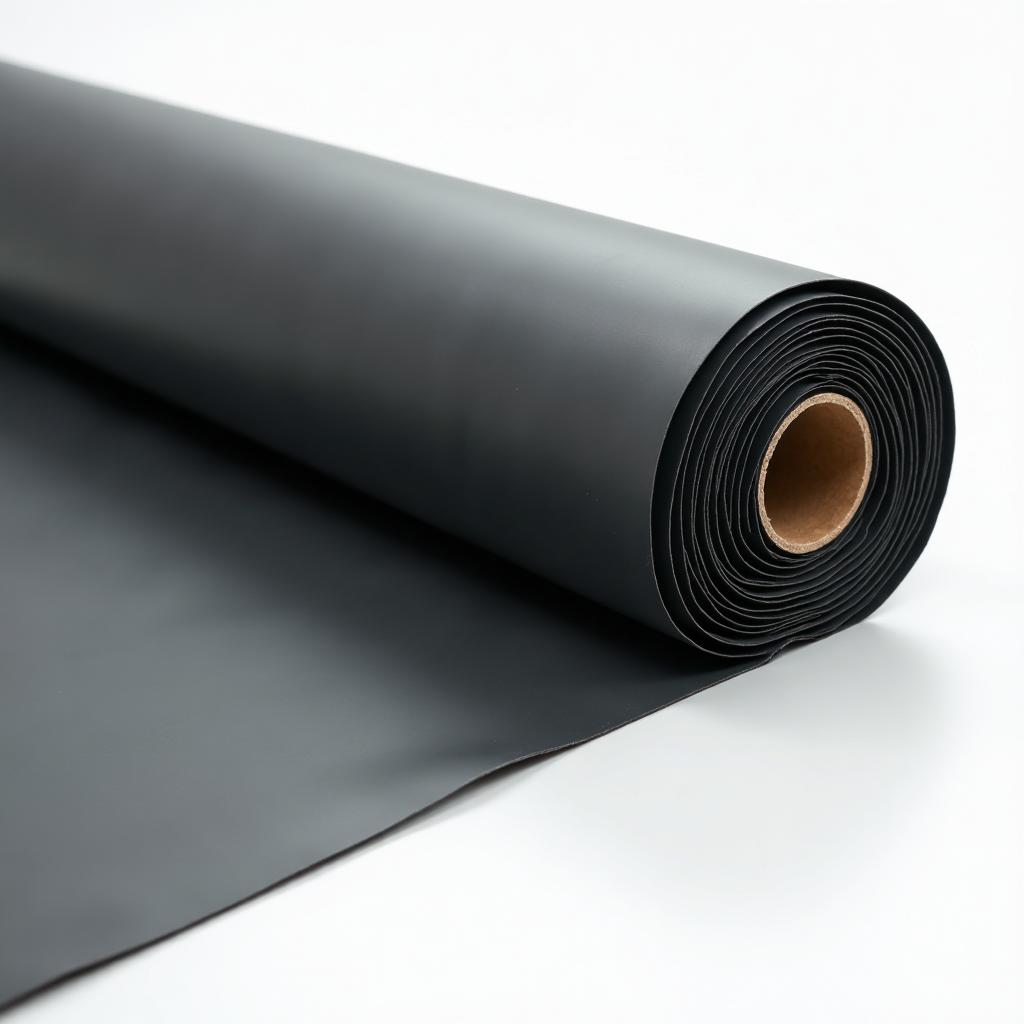
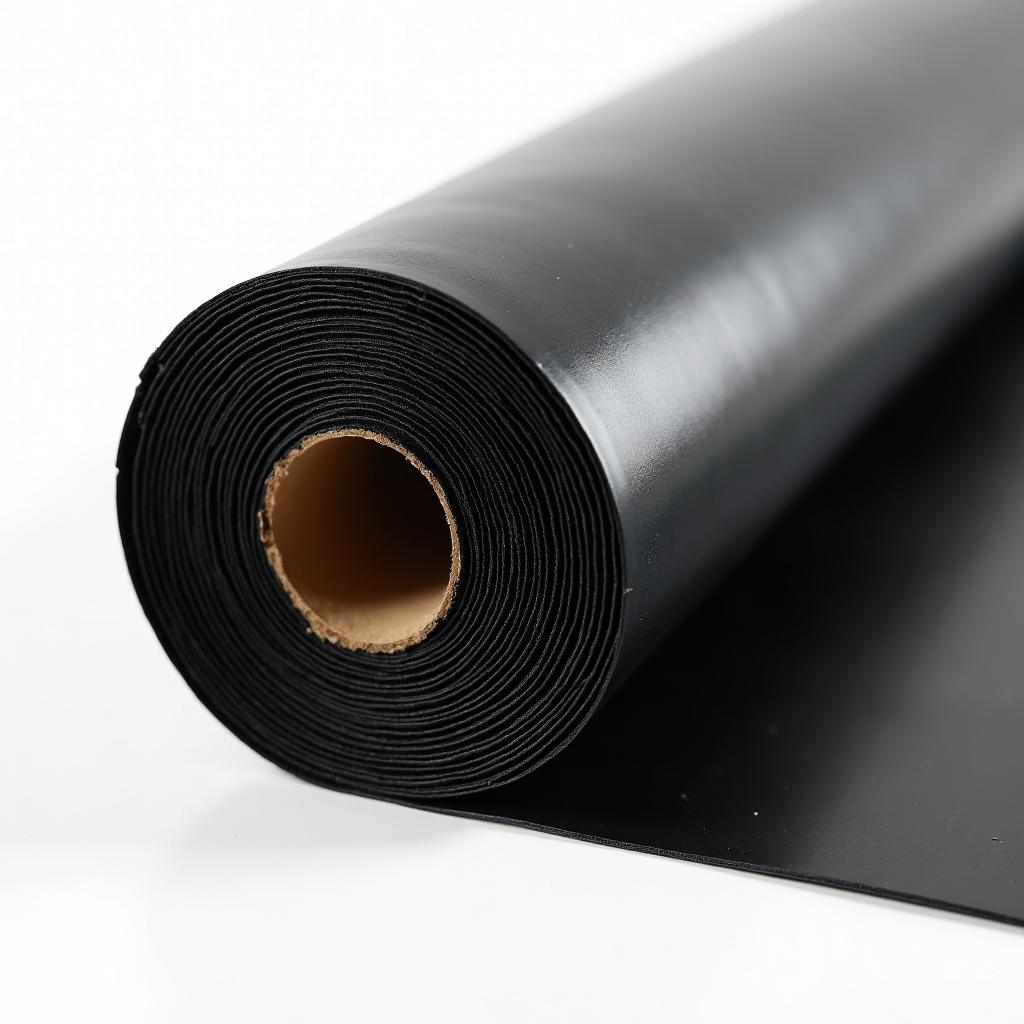
    What to use instead: A single layer of 1/8-inch MLV provides 6-7 STC points of improvement and costs about $1.50-2.00 per square foot. It adds more mass in one layer than 20 coats of soundproof paint.

    65. Moving Blankets on Walls

    The myth: Hanging heavy moving blankets on walls creates effective soundproofing.
    The reality: Moving blankets weigh 5-8 lbs each and cover roughly 6 x 8 feet. That translates to about 0.10-0.17 lbs per square foot — far too light to meaningfully block sound. They absorb some mid-to-high frequency echo (NRC approximately 0.25-0.40 when hung with an air gap), which can help tame room reverb, but they provide effectively zero STC improvement.
    The appeal is understandable: they are cheap ($15-30 each), easy to hang, and feel substantial in your hands. But mass per square foot is what matters for sound blocking, and blankets spread that mass over too large an area.
    When they help: As temporary recording booth treatment to reduce room reflections. Hanging a blanket behind a microphone reduces early reflections and tightens vocal recordings — a legitimate use, though purpose-built reflection filters work better.
    What to use instead: For temporary or renter-friendly sound blocking, consider removable MLV curtain panels or mass loaded vinyl barriers hung from ceiling hooks, which provide 15-20x the mass per square foot.

    76. Spray Foam Insulation (for Soundproofing)

    The myth: Filling wall cavities with spray foam insulation will create soundproof walls.
    The reality: Closed-cell spray foam is an excellent thermal insulator but a mediocre acoustic material. It rigidly couples the two wall surfaces together, which can actually increase sound transmission at certain frequencies by creating a direct vibration path between the drywall layers. Open-cell spray foam performs slightly better because it is less rigid, but it still underperforms compared to mineral wool or fiberglass batts that fit loosely in the cavity.
    The cost difference makes this worse. Spray foam insulation runs $1.50-3.50 per square foot installed, while mineral wool batts (Rockwool Safe'n'Sound) cost $0.60-1.00 per square foot and deliver STC improvements of 4-8 points when combined with proper wall assembly techniques.
    What to use instead: Fill cavities with mineral wool batts (which decouple naturally because they do not bond to surfaces), then add MLV to one side of the wall assembly for maximum STC gains.

    87. Rubber Floor Mats (as Wall Treatment)

    The myth: Gym rubber mats or horse stall mats nailed to walls provide affordable mass-based soundproofing.
    The reality: This one is partially legitimate but ultimately impractical. Rubber mats do add mass — 3/4-inch horse stall mats weigh about 4.5 lbs per square foot, which is substantial. However, rubber is an elastic material that bounces vibration rather than damping it. Its STC performance per pound is significantly lower than limp mass materials like MLV, which are specifically engineered to convert sound energy into heat through internal friction.
    Rubber mats are also extremely heavy (a 4x6 mat weighs 100+ lbs), difficult to cut and install on walls, produce a strong odor for weeks, and look industrial at best. They are designed for impact absorption on floors — not acoustic transmission loss through walls.
    What to use instead: Mass loaded vinyl provides superior STC performance at one-quarter the weight, installs with a utility knife and screws, has no odor, and hides cleanly behind drywall.

    9What Actually Works Instead

    Now that we have cleared the field of products that waste your money, here is what the acoustic science actually supports. Effective soundproofing uses mass, decoupling, damping, and absorption — ideally in combination.
    MaterialWhat It DoesSTC ImprovementCost/sq ft
    Mass Loaded Vinyl (1 lb)Adds limp mass barrier+5-7 points$1.50-2.00
    Mineral Wool BattsCavity absorption+4-8 points$0.60-1.00
    Resilient ChannelsDecouples drywall+5-10 points$0.75-1.25
    Green Glue CompoundConstrained layer damping+5-9 points$0.50-0.75
    Additional Drywall LayerAdds mass + damping (with compound)+3-5 points$0.40-0.65
    Acoustic SealantSeals air gaps+1-5 points$0.10-0.25
    The best budget approach: Seal all air gaps with acoustic sealant ($8 per tube), add mineral wool batts in the wall cavity, and install a layer of 1 lb MLV behind new drywall. This combination costs $3-5 per square foot and can take a standard STC 33 wall to STC 50 or higher — enough to block normal conversation completely.
    The bottom line: Every dollar you spend on egg cartons, cheap foam, soundproof paint, or carpet-as-soundproofing is a dollar that could have gone toward MLV, mineral wool, or acoustic sealant — materials with proven, measurable, and dramatic noise reduction performance. Stop chasing myths. Invest in physics.

    11Conclusion

    Soundproofing myths survive because they promise cheap, easy solutions to an expensive, physics-driven problem. Egg cartons, thin foam, carpet alone, soundproof paint, moving blankets, spray foam, and rubber mats all fail the fundamental test: do they add meaningful mass, create decoupling, or damp structural vibration? The answer, in every case, is no — or not enough to matter. Real soundproofing requires real materials: mass loaded vinyl for limp-mass barriers, mineral wool for cavity absorption, resilient channels for decoupling, and acoustic sealant for air gap sealing. These products are proven, affordable, and available today. Save your money, skip the gimmicks, and build walls that actually block sound.

    FAQs: Soundproofing Materials Waste of Money

    Need Expert Soundproofing Advice?

    Our team of soundproofing specialists is here to help you choose the right products and installation methods for your museum or gallery project.