Restaurant Soundproofing with Mass Loaded Vinyl (MLV)
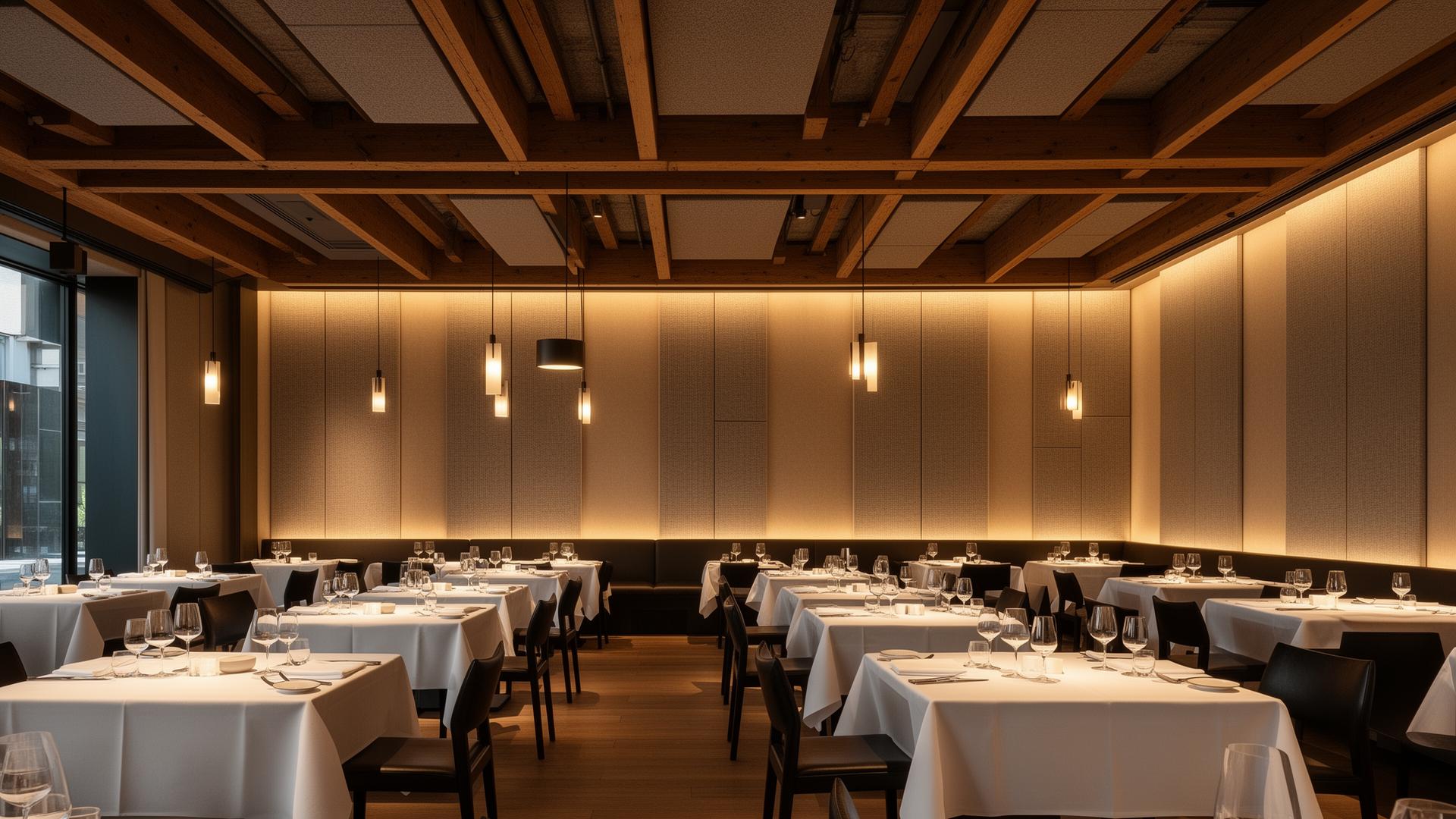
1Why Restaurants Need Soundproofing
• Online reviews: Noise is mentioned in 25%+ of negative restaurant reviews. A single star improvement can increase revenue by 5-9%
• Neighbor complaints: Restaurants in residential buildings face noise complaints that can result in operating hour restrictions, fines, or lease termination
• Staff health: Kitchen and service staff in loud environments experience hearing damage, stress, and communication errors that affect service quality
• Regulatory compliance: Many municipalities have noise ordinances that restaurants must meet, especially for outdoor seating and late-night operations
2Understanding Restaurant Noise Sources
• Kitchen operations: Ventilation hoods (65-75 dB), dishwashers (70-80 dB), food processors, and verbal communication between staff
• Bar service: Ice machines, blenders, glassware handling, and conversations at the bar
• Background music: Often turned up to compete with conversation, creating a noise escalation spiral
• HVAC systems: Large commercial systems generate significant low-frequency noise
• Impact noise: Footsteps, dropped items, chair movement on hard floors
Sound travels through walls to adjacent businesses or residences, through ceilings to upstairs apartments, through floors to spaces below, through windows and doors to outdoor areas, and through ductwork connecting multiple spaces.
3How Mass Loaded Vinyl Works in Restaurants
• Broad frequency performance: Blocks conversation-range frequencies (250-4,000 Hz) where restaurant noise concentrates
• Flexible installation: Conforms to walls, wraps around ductwork, and integrates with architectural finishes
• Fire rated: MLV meets fire code requirements for commercial occupancies
• Durable: Unaffected by moisture, temperature changes, and cleaning chemicals common in food service
Adding 1 lb/sf MLV to a standard wall assembly typically increases STC rating by 5-8 points. Combined with decoupled drywall and proper sealing, restaurant walls can achieve STC 50-60, reducing perceived noise by 75-90% to neighboring spaces.
4Wall Assemblies for Restaurant Soundproofing
Suitable for most restaurant-to-commercial separations:
• 2x4 or 2x6 wood/metal studs
• R-13 or R-19 mineral wool insulation
• 1 lb/sf MLV applied over studs
• 5/8" Type X drywall
• Acoustic sealant at all perimeters and penetrations
For walls adjacent to residential units or noise-sensitive neighbors:
• 2x6 studs or staggered stud construction
• Full-depth mineral wool insulation
• 1 lb/sf MLV over studs
• Resilient channels perpendicular to studs
• Double 5/8" drywall with damping compound
• All electrical boxes sealed with acoustic putty
For existing restaurants needing improved isolation:
• Install MLV directly over existing drywall
• Add new layer of 5/8" drywall over MLV
• Seal all edges with acoustic sealant
• This approach adds minimal thickness while providing meaningful improvement
5Ceiling Treatments for Noise Control
• Install MLV above ceiling joists or below floor deck above
• Add mineral wool insulation in ceiling cavity
• Use resilient channels for ceiling drywall attachment
• Seal all penetrations for lights, sprinklers, and HVAC
• Target STC 50+ for assemblies below residential units
In addition to MLV for isolation, restaurants benefit from sound-absorbing ceiling treatments:
• Acoustic ceiling tiles or panels (NRC 0.70+)
• Suspended acoustic baffles or clouds
• Fabric-wrapped acoustic panels integrated into design
• These reduce reverberation, making conversation easier at lower volumes
Many modern restaurants feature exposed ceilings. In these cases:
• Install MLV above any dropped soffit areas
• Add acoustic spray or panels to exposed deck
• Use suspended acoustic elements for absorption
• Treat HVAC ductwork with MLV wrap
6Floor Soundproofing Solutions
• Rubber underlayment: Add resilient mat under MLV for impact isolation (footsteps, dropped items, chair movement)
• Floating floor systems: Decouple finished floor from structure for maximum isolation
• Structural subfloor
• 3-5mm rubber acoustic mat
• 1 lb/sf MLV
• Plywood underlayment
• Finished floor (tile, hardwood, etc.)
• Perimeter isolation strip to prevent floor-wall contact
Entry vestibules, bar areas, and server stations see concentrated foot traffic. Consider heavier assemblies (2 lb/sf MLV, thicker rubber) in these zones.
7Kitchen and Bar Area Considerations
• Build kitchen walls to STC 50+ minimum
• Install MLV in kitchen ceiling assembly
• Use acoustic door assemblies (STC 40+) for kitchen entries
• Treat pass-through windows with acoustic glazing
• Wrap ventilation ductwork with MLV to prevent noise transmission
• Isolate ice machine and refrigeration compressors with MLV enclosures
• Install rubber mats behind bar for dropped items
• Use acoustic panels on bar back walls
• Consider separate HVAC zone for bar area
Open kitchens are popular but challenging acoustically:
• Install acoustic hood liner to reduce fan noise
• Use sound-absorbing ceiling treatment above kitchen area
• Add acoustic panels to available wall surfaces
• Design layout to direct noise away from dining areas
8HVAC and Mechanical Noise Control
• Wrap supply and return ducts with MLV where they pass through walls
• Install duct silencers at air handler connections
• Use flexible duct connections to isolate vibration
• Line duct interiors with acoustic insulation
• Mount RTUs on vibration isolators
• Install MLV barriers around equipment
• Use acoustic curbs for roof penetrations
• Route ductwork to minimize transmission paths
Kitchen hoods are major noise generators:
• Specify low-noise fan options
• Install inline silencers
• Isolate exhaust duct from structure
• Consider variable speed drives for off-peak noise reduction
FAQs: Restaurant Soundproofing
Related Guides in Industry Solutions
Continue exploring with these hand-picked articles

School Soundproofing with Mass Loaded Vinyl (MLV)
Complete guide to soundproofing schools, classrooms, and educational facilities with mass loaded vinyl. Meet ANSI S12.60 standards, improve speech intelligibility, and create optimal learning environments for students.
Courthouse Soundproofing with Mass Loaded Vinyl (MLV)
Complete guide to soundproofing courthouses, courtrooms, and legal facilities with mass loaded vinyl. Ensure speech privacy for attorney-client communications, protect witness identities, and create optimal acoustics for judicial proceedings.
Industrial Factory Soundproofing with Mass Loaded Vinyl (MLV)
Complete guide to soundproofing manufacturing plants, production facilities, and industrial factories with mass loaded vinyl. Control machinery noise, meet OSHA regulations, and protect workers from hearing damage.
Our Complete Product Line
Professional-grade soundproofing materials for any application
Need Expert Soundproofing Advice?
Our team of soundproofing specialists is here to help you choose the right products and installation methods for your museum or gallery project.