Office Building Soundproofing with Mass Loaded Vinyl (MLV)
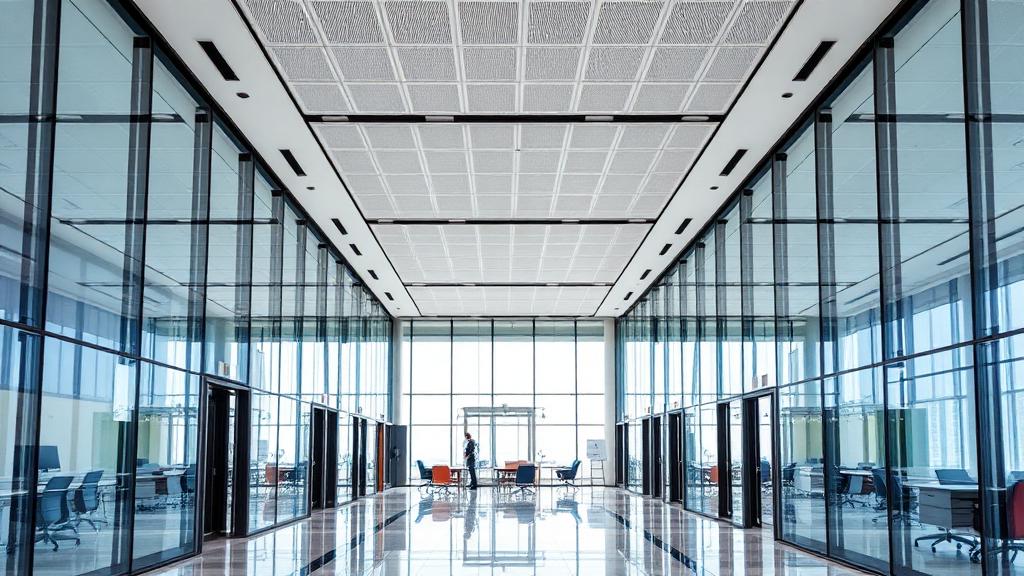
1#1 Why Office Buildings Need Soundproofing
The Business Case for Office Soundproofing
• Speech privacy violations: HIPAA, attorney-client privilege, and corporate confidentiality requirements mandate that sensitive conversations cannot be overheard. Inadequate sound isolation creates legal liability
• Talent retention: Surveys consistently rank noise as a top workplace complaint. Companies with poor acoustics face higher turnover costs
• Meeting effectiveness: Conference rooms with sound leakage reduce meeting productivity and discourage honest discussion of sensitive topics
• Real estate value: Buildings with documented acoustic performance command premium lease rates
Acoustic Performance Standards
• Private offices: NC 35-40, STC 45-50 walls
• Conference rooms: NC 30-35, STC 50-55 walls
• Executive suites: NC 25-30, STC 55-60 walls
• Open offices: NC 40-45, strategic absorption and masking
• Call centers: NC 45-50, high absorption, speech privacy systems
2#2 Understanding Office Acoustic Challenges
The Open Office Problem
• Reflective surfaces: Hard floors, glass walls, and gypsum ceilings reflect and amplify sound energy
• Inconsistent background: Quiet periods make individual conversations audible across greater distances
• Focus work impossibility: Tasks requiring concentration become extremely difficult without acoustic intervention
Glass and Modern Materials
• Polished concrete: Highly reflective floor surfaces increase reverberation and footfall noise
• Exposed ceilings: Industrial aesthetics eliminate the absorption typically provided by acoustic ceiling tiles
• Minimalist walls: Thin partition systems prioritize flexibility over acoustic performance
HVAC and Building Systems
• Variable air volume (VAV) systems create air rush noise at diffusers
• Fan-coil units in ceilings generate continuous mechanical hum
• Ductwork transmits sound between spaces (crosstalk)
• Elevator and mechanical room noise penetrates adjacent offices
3#3 How Mass Loaded Vinyl Works in Office Environments
The Physics of MLV in Office Applications
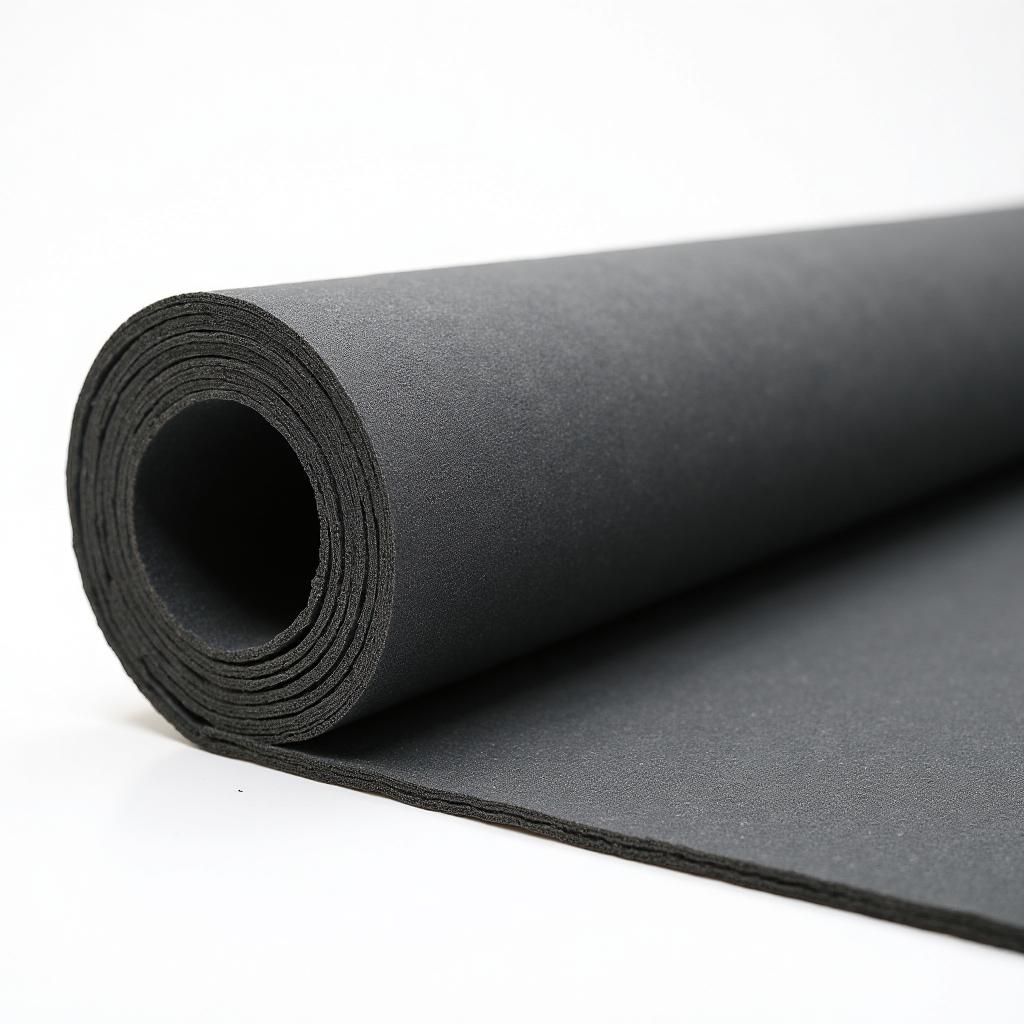
• Consistent density: Unlike drywall which has joints and fastener points, MLV provides uniform mass across entire surfaces
• Flexibility: Conforms to irregular surfaces, wraps ductwork, and integrates with existing construction during retrofits
• Invisible integration: Installed behind finish materials, MLV doesn't affect office aesthetics
Performance Specifications for Offices
• 1 lb/sf MLV: Standard specification for conference room walls, office-to-office separation, and HVAC duct wrapping
• 2 lb/sf MLV: Premium specification for executive suites, legal offices, medical facilities, and areas requiring enhanced speech privacy
• Reinforced MLV: For ceiling applications where material must span between supports
Speech Privacy Considerations
• MLV is particularly effective at blocking speech frequencies
• Combined with proper wall assemblies, achieves Speech Privacy Class (SPC) ratings of Confidential or better
• Articulation Index (AI) can be reduced to 0.05-0.15, ensuring conversations are unintelligible outside enclosed spaces
4#4 Conference Room and Meeting Space Isolation
Standard Conference Room Assembly (STC 50-55)
• Cavity treatment: Full-depth mineral wool insulation (minimum R-11)
• Mass layer: 1 lb/sf MLV applied continuously over studs with seams overlapped 2" and sealed with MLV tape
• Decoupling: Resilient channels at 24" on center on corridor side
• Finish layer: 5/8" Type X drywall, two layers on one side
• Perimeter sealing: Acoustic caulk at all edges and penetrations
High-Security Conference Room (STC 60+)
• Full insulation: Mineral wool in both cavities
• Dual MLV layers: 1 lb/sf MLV on each stud wall
• Triple-layer finish: Double drywall with damping compound between layers
• Acoustical doors: STC 45+ rated doors with full perimeter seals and automatic door bottoms
• Above-ceiling treatment: MLV barrier extending full height to structure above
Glass Wall Considerations
• Laminated acoustic glass: STC 35-40 for single pane, STC 45+ for double pane
• Full-height glass systems must include acoustic seals at floor and ceiling
• Consider switchable privacy glass that can also improve acoustics
• Budget for significant premium over standard glazing
5#5 Open Office and Workstation Acoustics
The ABCs of Open Office Acoustics
• Block: Workstation panels, partial-height partitions, and strategic placement of MLV-core panels reduce direct sound paths
• Cover: Electronic sound masking systems create consistent background that reduces the distance over which speech is intelligible
MLV-Core Workstation Panels
• Height: 54-65" panels provide seated privacy while allowing standing communication
• Performance: STC 20-25 at panel, effective speech privacy radius of 15-20 feet
• Integration: Can include power, data, and monitor mounts in acoustic framework
Strategic Partial-Height Walls
• 84" high partitions with MLV core block most direct sound paths
• Ceiling clouds above provide reflection control without full enclosure
• Creates visual openness while maintaining acoustic zones
• Useful for team neighborhoods within larger open floors
6#6 Executive Suite and Private Office Soundproofing
Executive Office Wall Assembly (STC 55-60)
• Insulation: Full-depth mineral wool (R-21 minimum)
• MLV layer: 2 lb/sf MLV for maximum speech privacy
• Resilient mounting: Resilient channels on both sides for maximum decoupling
• Finish: Double 5/8" drywall with damping compound on both faces
• Expected performance: STC 58-62, Speech Privacy Class: Confidential
Door and Sidelight Treatment
• Seals: Continuous head and jamb seals with automatic door bottom
• Frame: Acoustic door frames that accommodate seal compression
• Sidelights: Laminated acoustic glass, STC 40+ minimum
• Undercut elimination: No gap at door bottom—transfer grilles if HVAC requires
Ceiling and Floor Continuity
• Extend wall construction full height to deck above, not just to ceiling grid
• Install MLV barrier above ceiling in line with wall
• Seal floor penetrations and perimeter gaps
• Address raised access floor systems with below-floor barriers
7#7 Call Center and Customer Service Area Design
Call Center Acoustic Goals
• Improve speech clarity: Agents must hear customers clearly despite background noise
• Prevent crosstalk: Adjacent agents' conversations shouldn't be picked up by headset microphones
• Enable concentration: Supervisors and quality assurance personnel need quiet areas for focused work
Absorption-Heavy Design
• Walls: Fabric-wrapped acoustic panels on all available wall surfaces
• Workstations: MLV-core panels with absorptive faces between agents
• Flooring: Carpet with cushion backing for footfall and chair noise reduction
Breakout Room Isolation
• Build supervisor offices to STC 50+ standards with MLV integration
• Training rooms require STC 45+ to contain presentation audio
• Break rooms need STC 45+ to provide acoustic respite
• Server/equipment rooms require isolation from floor noise
8#8 HVAC and Mechanical System Noise Control
Duct-Borne Noise Control
• Silencers: Inline duct silencers at air handler discharge and before entering occupied spaces
• Flexible connections: Canvas or rubber flexible connectors at equipment interrupt structure-borne vibration
• VAV box isolation: Locate variable air volume boxes away from sensitive spaces or enclose in MLV-lined enclosures
Diffuser and Return Selection
• Perforated returns: Large open areas reduce air velocity and noise
• Plenum barriers: When ducted returns aren't used, MLV barriers in ceiling plenum prevent crosstalk
• Duct lining: Internal acoustic lining in final runs before diffusers
Mechanical Room Isolation
• Mechanical room walls: STC 55-60 with double drywall and MLV
• Floating equipment pads with spring or rubber isolators
• Flexible pipe and duct connections for all penetrations
• Sound locks at personnel doors (two doors with vestibule)
10Conclusion
FAQs: Office Building Soundproofing
Related Guides in Industry Solutions
Continue exploring with these hand-picked articles

School Soundproofing with Mass Loaded Vinyl (MLV)
Complete guide to soundproofing schools, classrooms, and educational facilities with mass loaded vinyl. Meet ANSI S12.60 standards, improve speech intelligibility, and create optimal learning environments for students.
Courthouse Soundproofing with Mass Loaded Vinyl (MLV)
Complete guide to soundproofing courthouses, courtrooms, and legal facilities with mass loaded vinyl. Ensure speech privacy for attorney-client communications, protect witness identities, and create optimal acoustics for judicial proceedings.
Industrial Factory Soundproofing with Mass Loaded Vinyl (MLV)
Complete guide to soundproofing manufacturing plants, production facilities, and industrial factories with mass loaded vinyl. Control machinery noise, meet OSHA regulations, and protect workers from hearing damage.
Our Complete Product Line
Professional-grade soundproofing materials for any application
Need Expert Soundproofing Advice?
Our team of soundproofing specialists is here to help you choose the right products and installation methods for your museum or gallery project.