Office Building Construction: MLV Requirements & Building Codes
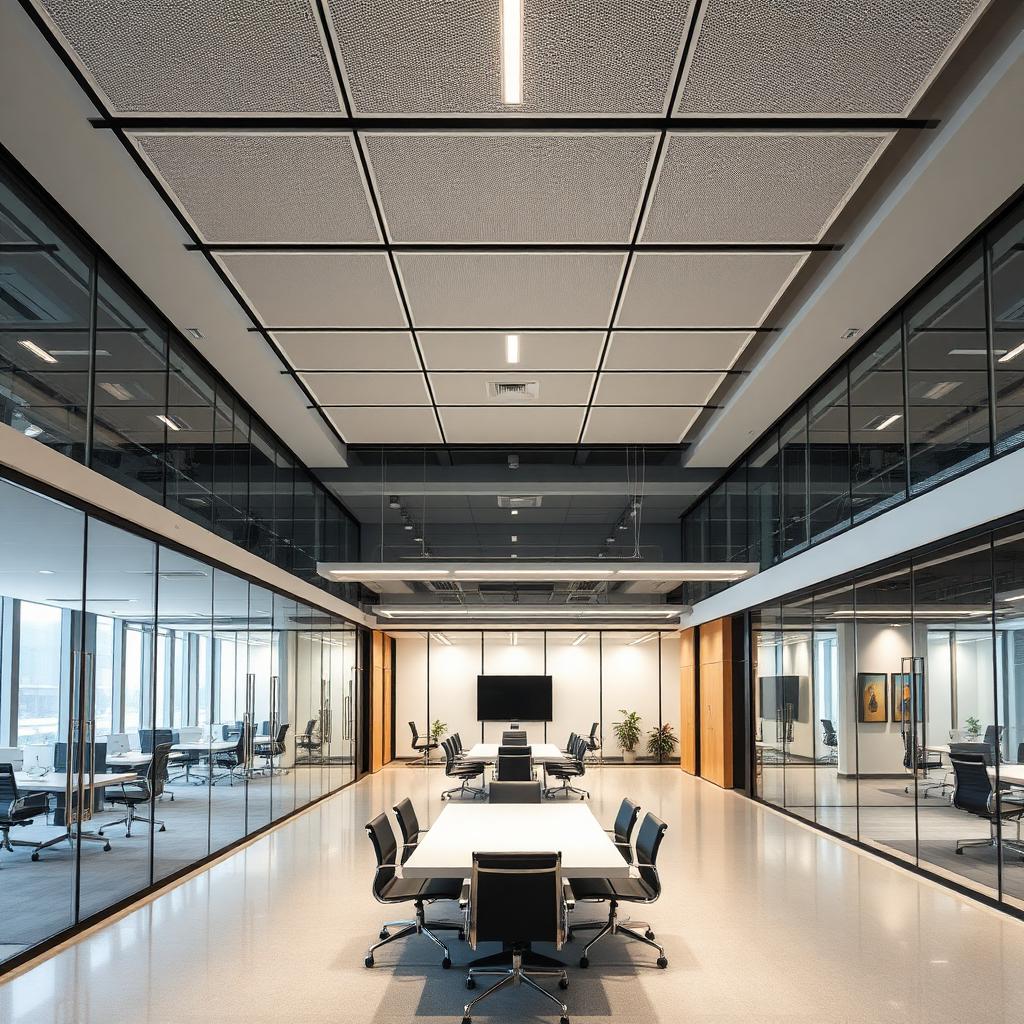
1Why Office Buildings Require Acoustic Planning
The Business Case for Office Acoustics
• Health impacts: Chronic noise exposure increases stress hormones by 34% and doubles the risk of cardiovascular issues
• Employee satisfaction: Acoustic quality ranks among the top three factors in workspace satisfaction surveys
• Lease premiums: Class A office buildings with superior acoustics command 8-15% higher rents than comparable properties
• Tenant retention: Buildings with noise complaints experience 23% higher tenant turnover rates
Common Office Acoustic Failures
• Insufficient demising walls: Walls between tenant spaces that fail to meet STC 45-50 allow neighboring businesses to overhear confidential discussions
• HVAC noise neglect: Mechanical systems producing NC 45+ in occupied spaces make speech communication difficult and mask nothing useful
• Floor vibration transmission: Impact noise from foot traffic and rolling chairs transmits between floors without proper isolation
• Conference room failures: Glass-heavy conference rooms with inadequate STC ratings that broadcast meetings to adjacent spaces
2Key Building Codes and Standards
IBC and Local Building Codes
• Separation requirements: Walls between different tenants must meet local code requirements, typically STC 45-50 for commercial spaces
• Mechanical room isolation: Walls and floors separating mechanical spaces from occupied areas require specific STC ratings based on equipment noise levels
• Accessibility considerations: ADA requirements for hearing loop compatibility and speech intelligibility in public areas influence acoustic design
GSA Facilities Standards (P100)
• Conference rooms: STC 50-55 for walls, NC 25-35 background noise, confidential speech privacy mandatory
• Open offices: Maximum NC 45, speech privacy through distance and masking rather than barriers
• Executive spaces: STC 55+, NC 25-30, secure speech privacy required
• SCIF requirements: STC 60+, specialized construction for classified spaces
WELL Building Standard
• Maximum Noise Levels: Open offices: NC 40, Private offices: NC 35, Conference rooms: NC 30
• Sound Barriers: Walls between enclosed rooms and open spaces must achieve STC 40+ minimum
• Sound Reducing Surfaces: Ceiling NRC 0.90+, wall panels with NRC 0.80+ for absorption requirements
• Sound Masking: Required in open offices to achieve consistent background noise levels
3Open Office Acoustic Challenges
The ABCs of Open Office Acoustics
• Block: Barriers including furniture systems, partial-height walls, and strategic MLV placement interrupt sound paths
• Cover: Sound masking systems produce consistent background noise that covers speech distractions
MLV Applications in Open Offices
• Furniture integration: High-performance workstation panels can incorporate MLV for enhanced privacy
• Demising walls: Full-height walls at zone boundaries use MLV to achieve STC 45-50
• Equipment enclosures: Printers, copiers, and coffee stations benefit from MLV-lined enclosures
• Phone booths: Prefab phone booth products use MLV in their construction for quick-install private spaces
Speech Privacy in Open Environments
• PI 60-80%: Transitional privacy, distracting but not fully intelligible
• PI 80-95%: Normal privacy, suitable for most open office areas
• PI 95%+: Confidential privacy, achievable only in enclosed spaces
• Open offices should target PI 80-85% through combined ABC strategies
4Conference Room Speech Privacy
STC Requirements by Conference Room Type
• Executive conference rooms: STC 50-55 ensures sensitive strategy and personnel discussions remain private
• Board rooms: STC 55-60 required for the most sensitive corporate communications
• Interview rooms: STC 45-50 with attention to corridor walls for HR privacy
• Legal/compliance conference: STC 55+ for attorney-client and regulatory discussions
Glass Wall Challenges
• Laminated glass: PVB interlayer laminated glass improves to STC 32-35
• Acoustic laminated: Specialized acoustic interlayers achieve STC 38-42
• Double glazed: Properly designed double-glazed systems with different glass thicknesses and adequate air gaps can achieve STC 42-48
• Solid walls: Remaining walls must compensate with higher STC ratings to achieve room average performance
Common Conference Room Failures
• Above-ceiling flanking: Sound travels through the ceiling plenum unless barriers extend to structure
• Electrical outlets: Back-to-back outlets create direct sound paths—offset by 24" minimum and seal boxes
• HVAC crosstalk: Shared ductwork between conference rooms and adjacent spaces transmits conversations
5Executive Office and Boardroom Requirements
Executive Office Wall Assemblies
• Staggered-stud walls: 2x4 studs on 2x6 plates, staggered to eliminate solid paths, with MLV and insulation achieves STC 55-58
• Metal stud systems: Resilient channel on one side, MLV sandwiched between drywall layers, insulated cavity achieves STC 55-60
• Demountable systems: High-performance demountable walls with MLV core panels can achieve STC 48-52 while maintaining flexibility
Boardroom Special Requirements
• Background noise: NC 25-30 maximum to ensure microphone clarity and participant comfort
• Balanced absorption: Wall and ceiling treatments must control reverberation without creating a "dead" room uncomfortable for extended meetings
• Variable acoustics: Some boardrooms incorporate motorized panels to adjust acoustics for presentations vs. discussions
6HVAC Noise Control
Noise Criteria (NC) by Space Type
• Private offices: NC 30-35 (quiet, normal conversation comfortable)
• Conference rooms: NC 25-35 depending on type and teleconference requirements
• Open offices: NC 40-45 (moderate, requires sound masking for speech privacy)
• Lobbies/corridors: NC 40-45 (can be slightly louder than occupied spaces)
MLV Applications for Mechanical Noise
• Mechanical room walls: MLV in mechanical room walls prevents equipment noise from reaching occupied spaces
• Duct silencer lining: MLV-lined silencer housings reduce both airborne noise and breakout through silencer walls
• Equipment platforms: MLV barriers around rooftop or penthouse equipment prevent noise transmission to floors below
• Shaft walls: Vertical shafts carrying ductwork benefit from MLV to prevent shaft resonance and transmission
Common HVAC Noise Failures
• Duct breakout: Thin-gauge ductwork vibrates and radiates noise, especially near fans
• Diffuser velocity: High discharge velocities create noise at the diffuser—specify appropriately sized diffusers
• Vibration isolation: Inadequately isolated equipment transmits structure-borne noise throughout the building
• Crosstalk: Ductwork connecting spaces creates paths for voice transmission—use lined elbows and silencers
7Floor-to-Floor Sound Transmission
Airborne Sound Control
• Enhanced systems: Adding MLV above the ceiling or at the deck level increases ratings to STC 55-60
• Gypcrete topping: Lightweight concrete toppings over steel deck improve STC ratings while adding mass
• Ceiling isolation: Resilient hangers for suspended ceilings break the vibration path and improve performance by 5-10 STC points
Impact Sound Control
• Hard surface floors: Luxury vinyl, wood, and tile require underlayment systems to achieve acceptable IIC ratings
• Raised access floors: Properly designed access floor systems with resilient pedestals can achieve IIC 50-55
• Ceiling treatments: Mass-loaded ceiling systems improve IIC ratings from the receiving space
Fitness Center and Amenity Considerations
• Cafeterias: High occupancy creates significant airborne noise requiring STC 50+ separations
• Conference centers: Large meeting spaces with A/V systems need both isolation and internal acoustic control
• Tenant stairs: Internal stairs transmit impact noise and require isolation from primary structure
8MLV Assemblies for Office Construction
Conference Room Wall Assembly (STC 55)
• 3-1/2" unfaced fiberglass insulation full cavity
• One layer 5/8" Type X drywall on each face
• 1 lb/sf MLV applied directly to stud face on one side before drywall
• Second layer 5/8" drywall on MLV side using offset seams
• Acoustic sealant at all perimeters and penetrations
• Tested STC: 55-57
Executive Office Wall Assembly (STC 60)
• 2-1/2" insulation in each stud cavity
• Two layers 5/8" Type X drywall on each face
• 1 lb/sf MLV between drywall layers on both faces
• Acoustic sealant at all perimeters
• Tested STC: 60-63
Tenant Demising Wall Assembly (STC 50)
• 3-1/2" unfaced fiberglass insulation
• One layer 5/8" Type X drywall on each face
• 1 lb/sf MLV on one face between studs and drywall
• Acoustic sealant at all perimeters and penetrations
• Tested STC: 50-52
Mechanical Room Wall Assembly (STC 55)
• 5-1/2" mineral wool insulation (higher density than fiberglass)
• One layer 5/8" Type X drywall on mechanical side
• Two layers 5/8" Type X drywall on occupied side
• 2 lb/sf MLV between drywall layers on occupied side
• Tested STC: 55-58
10Conclusion
Office building acoustic design requires careful attention to codes, standards, and practical performance requirements. From open office speech privacy to conference room confidentiality to HVAC noise control, mass loaded vinyl provides the thin-profile, high-performance solution that modern office construction demands.
Key success factors include designing wall assemblies that meet specific STC requirements for each space type, addressing HVAC noise at the source and along transmission paths, and ensuring that construction details like electrical boxes and ceiling plenums don't compromise carefully designed assemblies. When properly specified and installed, MLV enables office buildings to achieve WELL certification, GSA standards, and the acoustic quality that supports worker productivity and tenant satisfaction.
FAQs: Office Building Soundproofing
Related Guides in Building Codes
Continue exploring with these hand-picked articles
Airport Construction: MLV Requirements and Building Codes
Building code requirements for soundproofing in airports and aviation facilities. How MLV helps developers meet FAA acoustic standards, TSA security requirements, and create comfortable passenger environments.
Museum Construction: MLV Requirements and Building Codes
Building code requirements for soundproofing in museums and cultural institutions. How MLV helps developers achieve gallery-to-gallery isolation, protect collections from vibration damage, meet conservation standards, and create contemplative visitor experiences.
Hotel Construction: MLV Requirements & Building Codes
Building code requirements for soundproofing in hotels and hospitality construction. How MLV helps developers meet STC requirements, brand acoustic standards, and cost-effective wall/floor assemblies for hotel projects.
Our Complete Product Line
Professional-grade soundproofing materials for any application
Need Expert Soundproofing Advice?
Our team of soundproofing specialists is here to help you choose the right products and installation methods for your museum or gallery project.