Museum Construction: MLV Requirements and Building Codes
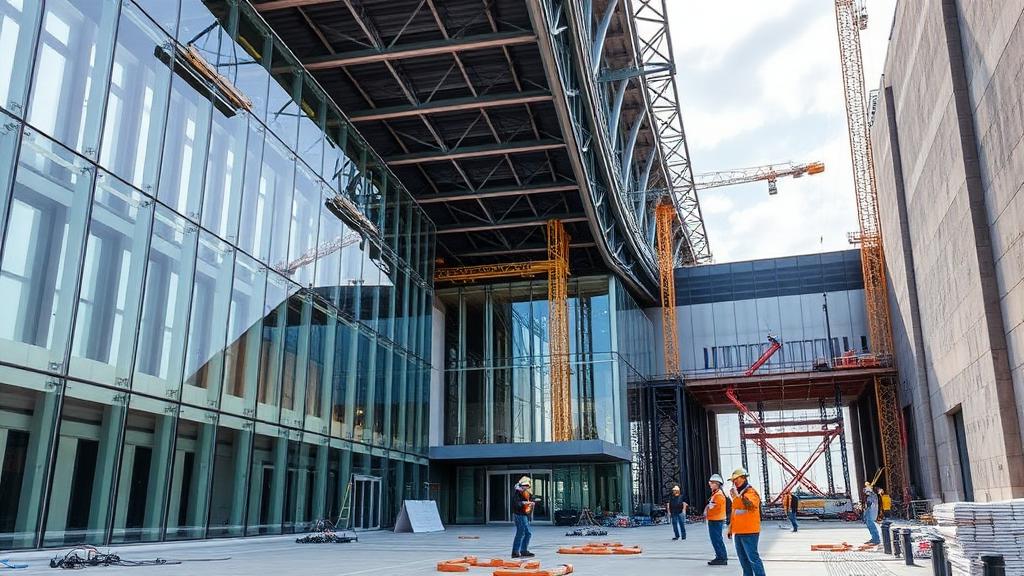
1#1 Building Code Overview for Museum Construction
Primary Codes Governing Museum Construction
• International Mechanical Code (IMC): Governs HVAC systems critical for climate control and noise generation
• NFPA 909: Code for the Protection of Cultural Resource Properties including museums, libraries, and places of worship
• ASHRAE Guidelines: Environmental standards for collection preservation including vibration limits
• ADA Standards: Accessibility requirements that increasingly include acoustic considerations for hearing-impaired visitors
State and Local Amendments
• California Building Code requires enhanced seismic design affecting acoustic isolation details
• New York City has specific requirements for cultural facilities in historic districts
• Chicago amendments address high-rise museum construction with additional fire ratings
• Local historic preservation codes may limit intervention in existing museum buildings
2#2 IBC Assembly Occupancy Requirements for Museums
Group A-3 Classification
• Construction type requirements: Large museums often require Type I or II construction (noncombustible), influencing wall assembly options
• Fire barrier ratings: Separations between occupancy types (museum shop, restaurant, parking) require 2-hour fire ratings
• Sprinkler requirements: Most museums require automatic sprinkler systems, creating penetrations that must be acoustically sealed
Mixed-Use Considerations
• Business (B occupancy): Administrative offices, conservation labs, and education spaces
• Restaurant (A-2 occupancy): Cafés and event catering require significant acoustic isolation
• Storage (S-1 occupancy): Collection storage areas with enhanced environmental controls
Fire Rating and Acoustic Performance
• 2-hour fire-rated walls typically achieve STC 50-55 minimum
• MLV enhances fire-rated assemblies without affecting fire rating when properly installed
• Fire-rated door assemblies can achieve STC 45-50 with acoustic seals
• Firestopping at penetrations must maintain both fire and acoustic performance
3#3 Acoustic Standards for Gallery Spaces
Recommended Background Noise Levels
• Interactive exhibits: NC 35-40 acceptable where exhibit sound is intentional
• Theaters and auditoria: NC 20-25 for film screenings and lectures
• Conservation labs: NC 35-40 balancing concentration needs with equipment noise
• Public circulation: NC 40-45 acceptable in lobbies and transition spaces
Sound Transmission Requirements
• Gallery to multimedia space: STC 60-65 to contain video and audio installations
• Gallery to mechanical room: STC 60+ with vibration isolation
• Gallery to event space: STC 65+ for after-hours programming without gallery impact
• Gallery to exterior: STC 45-55 depending on site noise conditions
Reverberation Time Standards
• Optimal RT60 for galleries: 0.8-1.2 seconds
• Lecture halls within museums: 0.6-0.8 seconds
• MLV doesn't affect reverberation but enables focused treatment by containing sound within intended spaces
4#4 Collection Conservation and Vibration Control Codes
ASHRAE Handbook Vibration Criteria
• VC-B (25 μm/s): Standard for museums with moderately sensitive collections
• VC-C (12.5 μm/s): Required for electron microscopy, photolithography, and highly sensitive artifacts
• VC-D (6 μm/s): Ultra-sensitive environments for nanotechnology and the most delicate conservation work
• VC-E (3 μm/s): Most stringent criterion, rarely required in museum applications
Vibration Sources in Museums
• Elevators: Passenger and freight elevators create intermittent but significant vibration events
• External traffic: Street traffic and especially rail/subway systems introduce ground-borne vibration
• Construction activity: Adjacent construction can cause temporary vibration requiring mitigation
• Footfall: Visitor circulation on hard floors creates footfall vibration affecting display cases
MLV's Role in Vibration Control
• Damping layer in floor assemblies reduces footfall transmission
• Duct wrapping prevents mechanical vibration from radiating as noise
• Wall integration adds damping to structure-borne noise paths
• Combined with resilient mounts, creates effective vibration breaks
5#5 HVAC Noise Requirements for Climate-Controlled Spaces
Climate Control Standards
• Relative humidity: 45-55% RH with ± 5% variation limits
• Air filtration: MERV 13-16 filtration for particulate and gaseous pollutant control
• Air change rates: 6-12 air changes per hour depending on pollutant loads
• These requirements create substantial airflow and equipment capacity with corresponding noise generation
Mechanical Code Noise Provisions
• Diffuser selection: NC 20-25 rated diffusers for gallery applications
• Silencer requirements: Inline silencers at air handlers and before entering occupied spaces
• Equipment isolation: Spring or rubber isolators for all rotating equipment
• Flexible connections: Required at equipment to interrupt structure-borne noise paths
Duct Lagging with MLV
• 1 lb/sf MLV over 1" fiberglass wrap reduces radiated duct noise 15-20 dB
• Applied to rectangular ducts in ceiling plenums above galleries
• Extends minimum 10' from equipment to capture breakout noise
• Critical for large ducts serving multiple zones through shared plenums
6#6 Fire and Life Safety Integration with Acoustic Systems
Fire-Rated Acoustic Assemblies
• 1-hour gallery partitions: Single 5/8" Type X drywall each side + MLV achieves STC 50-55
• MLV fire rating: Quality MLV products are Class A fire rated (ASTM E84) and don't affect assembly fire ratings when properly installed
• Penetration sealing: Fire-rated acoustic caulk at all penetrations maintains both fire and acoustic performance
NFPA 909 Requirements
• Collection storage: Enhanced protection for areas housing irreplaceable artifacts
• Vault construction: 2-hour rated enclosures for high-value storage with enhanced acoustic isolation
• Emergency communications: Fire alarm audibility must penetrate acoustically isolated spaces
Smoke and Fire Damper Acoustic Considerations
• Damper frames must be acoustically sealed to duct walls
• Blade assemblies create rattling if not properly specified
• Combination fire/smoke dampers preferred to minimize penetrations
• Specify low-leakage dampers to maintain both fire and acoustic performance
7#7 ADA Accessibility and Acoustic Considerations
ADA and Acoustic Accessibility
• Background noise: ANSI A117.1 recommends background noise below 35 dBA for hearing accessibility
• Reverberation: Excessive reverberation reduces hearing aid effectiveness
• Visual/acoustic cues: Emergency notification must include both visual and audible signals
Universal Design Principles
• Audio guide clarity: Reduced background noise improves audio guide intelligibility
• Docent tours: Low ambient noise allows docents to speak at comfortable levels
• Inclusive design documentation: Acoustic specifications increasingly required in accessibility plans
Signage and Wayfinding
• Quiet gallery designations at entries
• Hearing loop symbols where assistive systems are provided
• Sound level warnings for multimedia installations
• Emergency gathering area acoustics for voice instructions
8#8 MLV Specifications for Code-Compliant Museum Construction
Material Specifications
• Fire rating: Class A flame spread (≤25) and smoke development (≤450) per ASTM E84
• Composition: Non-hazardous formulation suitable for enclosed spaces with sensitive collections
• Outgassing: Low VOC emission for collection preservation environments
• Dimensional stability: Temperature and humidity stable for climate-controlled spaces
Installation Requirements for Code Compliance
• Seam treatment: 2" minimum overlap with acoustical tape or caulk
• Perimeter sealing: Continuous acoustic caulk at floor, ceiling, and wall intersections
• Penetrations: All electrical, plumbing, and HVAC penetrations sealed with fire-rated acoustic materials
• Support: Adequate fastening to prevent sagging that creates gaps
Documentation for Inspections
• Product submittals with fire rating certifications
• Shop drawings showing MLV placement in rated assemblies
• Installation photographs for concealed work
• Field acoustic testing to verify performance
• Certificates of compliance from acoustic consultant
10Conclusion
FAQs: Museum Construction Building Codes
Related Guides in Building Codes
Continue exploring with these hand-picked articles
Airport Construction: MLV Requirements and Building Codes
Building code requirements for soundproofing in airports and aviation facilities. How MLV helps developers meet FAA acoustic standards, TSA security requirements, and create comfortable passenger environments.
Hotel Construction: MLV Requirements & Building Codes
Building code requirements for soundproofing in hotels and hospitality construction. How MLV helps developers meet STC requirements, brand acoustic standards, and cost-effective wall/floor assemblies for hotel projects.
Hospital Construction: MLV Requirements & Building Codes
Building code requirements for soundproofing in hospitals and healthcare facilities. How MLV helps developers meet STC requirements for patient rooms, operating theaters, diagnostic imaging, and HIPAA-compliant speech privacy.
Our Complete Product Line
Professional-grade soundproofing materials for any application
Need Expert Soundproofing Advice?
Our team of soundproofing specialists is here to help you choose the right products and installation methods for your museum or gallery project.