Multifamily Soundproofing with Mass Loaded Vinyl (MLV)
1Why Soundproofing Matters in Multifamily Housing
Tenant Retention and Satisfaction
• 50% higher turnover rates in buildings with poor acoustic isolation
• Negative reviews mentioning noise are the most damaging to rental property reputation
• Premium rents (15-25% higher) are achievable in acoustically-superior buildings
• Reduced property management costs from fewer complaints and mediations
Building Code Requirements
• IIC 50 required for floor-ceiling assemblies in multifamily construction
• Field testing may show 5-point reduction from laboratory ratings
• Local amendments may require STC 55 or higher in some jurisdictions
• HOA/condo associations may establish additional requirements beyond code
Legal Liability and Warranty Claims
• Construction defect litigation when buildings fail to meet code requirements
• HOA disputes over noise transmission between condo units
• Lease termination requests when noise makes units uninhabitable
• Property devaluation when acoustic problems become known
2Common Noise Problems in Apartments and Condos
Airborne Noise
• Conversations: Speech privacy concerns—especially in bedroom and home office areas
• Pets: Barking dogs create intermittent high-level noise that disturbs neighbors
• Appliances: Dishwashers, washing machines, and HVAC equipment
• Instruments: Piano, guitar, and other practice causing neighbor complaints
Impact Noise
• Dropped objects: Items falling on floors transmit through structure
• Exercise equipment: Treadmills, weights, and jump rope activities
• Moving furniture: Chairs scraping and objects being repositioned
• Pet movement: Dogs running on hard floors create significant impact noise
Flanking Noise
• Plumbing chases: Pipe runs create acoustic short-circuits between floors
• Electrical boxes: Back-to-back outlets in party walls transmit significant sound
• Door undercuts: Corridor noise enters through gaps under entry doors
• Window assemblies: Exterior noise enters through glazing systems
3How Mass Loaded Vinyl Works in Multifamily Applications
The Mass Law in Action
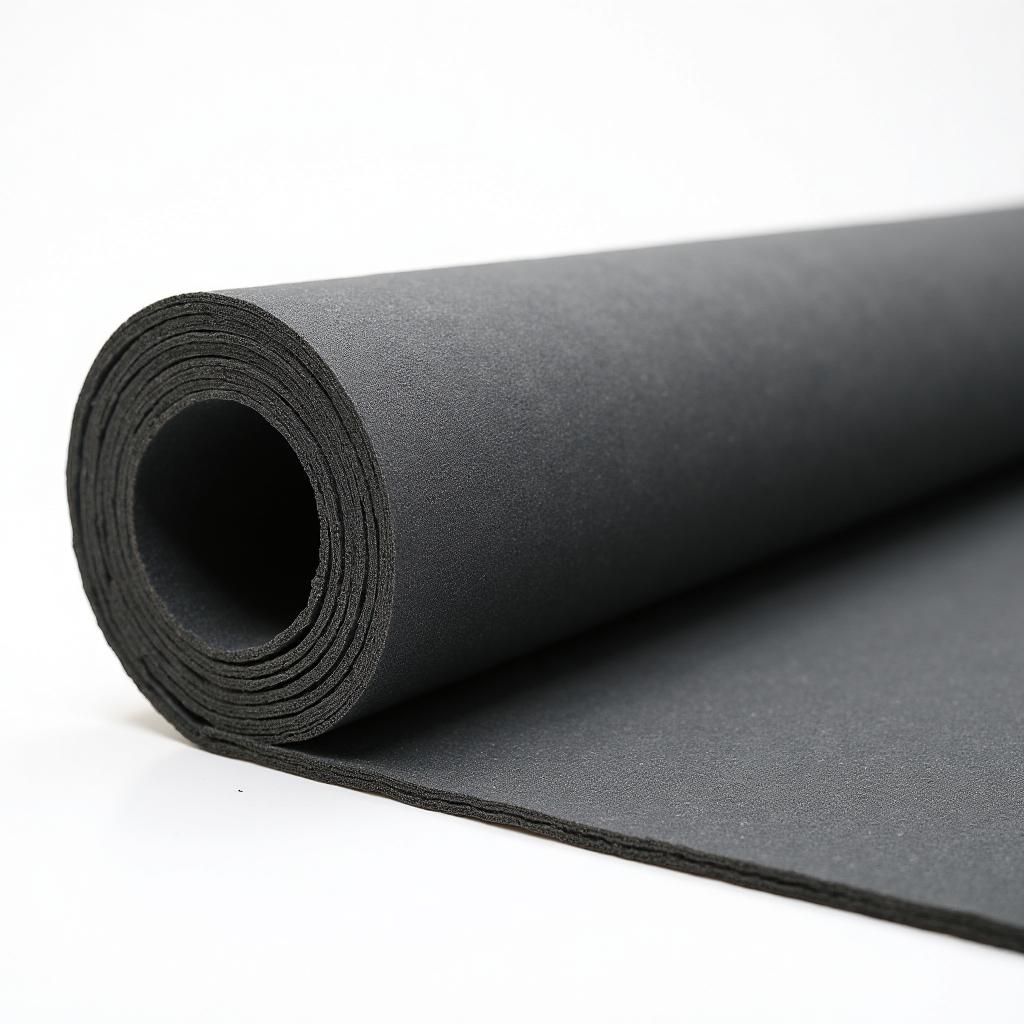
• 2 lb/sq ft MLV provides maximum mass addition for severe noise problems
• Thin profile (1/8" to 1/4") fits in standard wall cavities without losing space
• Flexible material conforms to framing and eliminates gaps
• Limp mass principle prevents efficient vibration transmission unlike rigid materials
STC Improvement with MLV
| Wall Assembly | Without MLV | With 1 lb MLV | With 2 lb MLV |
|---|---|---|---|
| Standard 2x4 stud wall, single drywall each side | STC 33-35 | STC 42-45 | STC 47-50 |
| 2x4 stud wall with insulation | STC 38-40 | STC 47-50 | STC 52-55 |
| Staggered stud wall with insulation | STC 45-48 | STC 52-55 | STC 57-60 |
| Double stud wall with insulation | STC 55-58 | STC 60-63 | STC 65+ |
Installation Methods for Multifamily
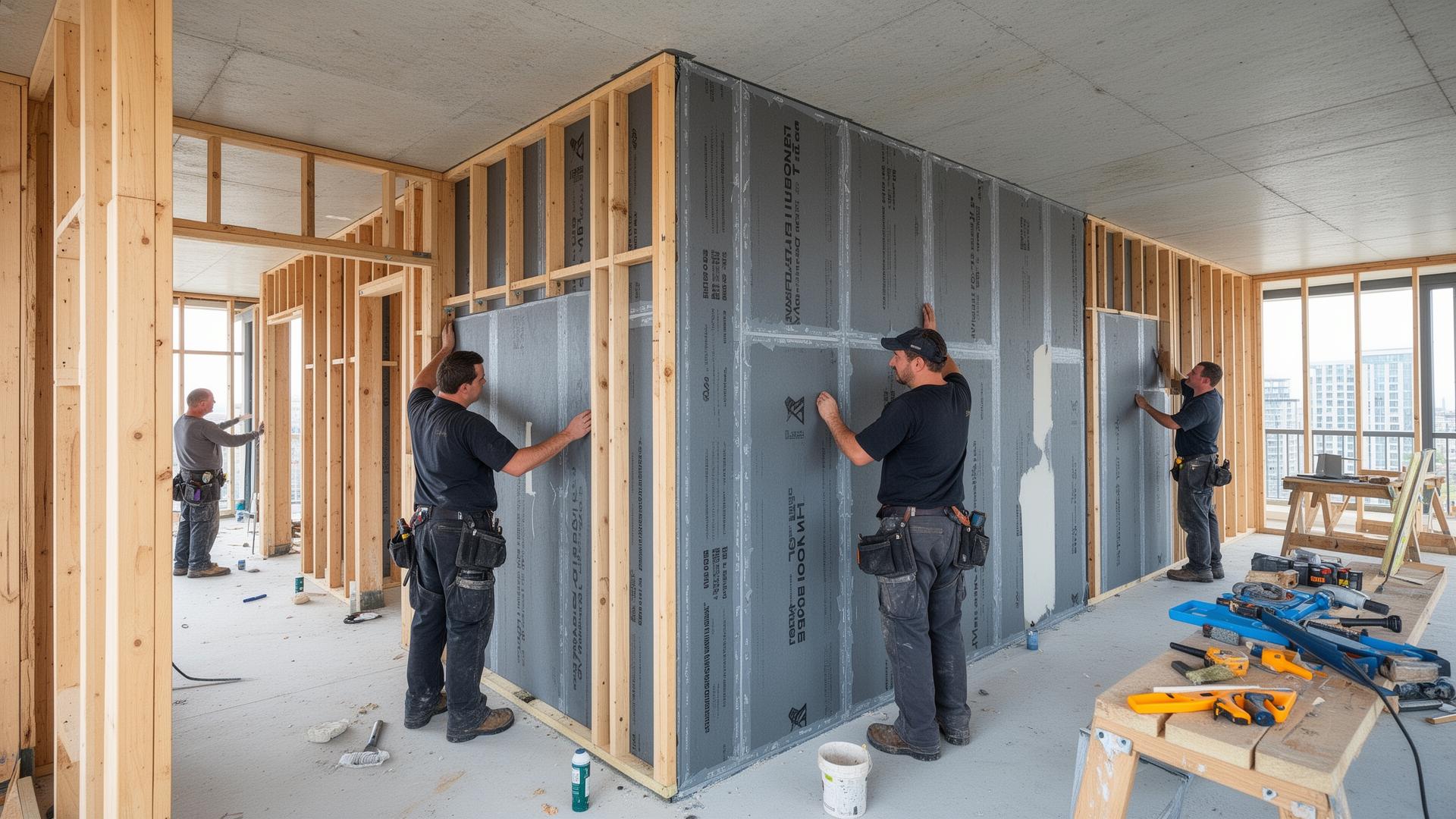
• Retrofit applications: Add MLV over existing drywall with furring strips and new drywall layer
• Ceiling applications: Hang MLV from joists or suspend below existing ceiling
• Floor underlayment: Place MLV under finish flooring for combined airborne and impact isolation
• Critical sealing: Overlap seams and seal with acoustic caulk for airtight barrier
4Wall Assemblies: Party Walls and Corridor Separations
Party Wall Requirements
• 1-hour fire rating typically required for party walls in multifamily construction
• Continuous construction from floor deck to underside of floor or roof deck above
• Penetration sealing required for all electrical, plumbing, and HVAC penetrations
• Field testing may be required to verify performance before certificate of occupancy
Recommended Party Wall Assembly with MLV
• Layer 2: 1 lb or 2 lb MLV attached to studs
• Layer 3: 2x6 or staggered 2x4 studs with R-19 fiberglass insulation
• Layer 4: 1 lb or 2 lb MLV attached to opposite studs
• Layer 5: 5/8" Type X drywall on opposite side
• Result: STC 55-60, exceeds code and provides excellent tenant satisfaction
Corridor Wall Considerations
• Mail slots: Traditional mail slots create direct acoustic paths—use sealed mailboxes in lobby
• Corridor noise: Foot traffic, deliveries, and building operations create intermittent noise
• HVAC: Corridor pressurization systems can drive noise under doors
• MLV application: Install MLV in corridor walls and consider acoustic door seals
5Floor-Ceiling Systems: Impact and Airborne Noise
Understanding IIC Requirements
• Hard flooring penalty: Tile, hardwood, and laminate reduce IIC significantly vs. carpet
• Underlayment critical: Resilient underlayments essential under hard flooring
• Structure matters: Concrete floors outperform wood-frame for impact isolation
• Combination approach: MLV + resilient underlayment addresses both airborne and impact
MLV in Floor-Ceiling Systems
• Underlayment layer: MLV beneath flooring adds mass for airborne sound reduction
• Combined with rubber: MLV + rubber underlayment maximizes both STC and IIC
• Retrofit option: Add MLV above existing ceiling without disturbing upper unit flooring
• Joist cavity: MLV draped between joists with insulation above
Recommended Floor-Ceiling Assembly
• Subfloor: 3/4" plywood or OSB subfloor
• MLV layer: 1 lb MLV over entire subfloor with sealed seams
• Joist cavity: R-19 or R-30 fiberglass insulation
• Resilient channels: Hat channels perpendicular to joists
• Lower unit ceiling: 5/8" Type X drywall on resilient channels
• Result: STC 55-58, IIC 52-55 with proper underlayment above
6Special Applications: Plumbing, Mechanical, and HVAC
Plumbing Noise Control
• Chase isolation: Line plumbing chases with MLV to prevent sound transfer between floors
• Isolation hangers: Use resilient hangers to suspend pipes from structure
• Valve selection: Specify quiet-fill valves and soft-close fixtures
• Water hammer: Install arrestors to eliminate pipe banging
Mechanical Room Isolation
• Equipment pads: Vibration isolation pads under all rotating equipment
• Flexible connections: Flex connectors on all ductwork and piping
• Door specifications: Solid-core acoustic doors with gaskets on mechanical rooms
• Distance buffer: Locate mechanical rooms away from bedroom walls when possible
HVAC Noise Control
• Duct wrapping: MLV wrap on ductwork prevents breakout noise
• Transfer ducts: Silenced transfer ducts prevent cross-talk between units
• Diffuser selection: Low-velocity diffusers reduce air noise in units
• Return air paths: Ducted returns preferred over transfer grilles for acoustic separation
7ROI for Property Managers and Developers
Cost Analysis
• Installation labor: $0.50-$1.50 per sq ft for professional installation
• Compared to double walls: MLV upgrade costs 30-50% less than building double stud walls
• Compared to specialty drywall: MLV provides better performance at similar cost
• Retrofit value: MLV can upgrade existing buildings without major demolition
Revenue Impact
• Reduced vacancy: Better retention means less turnover cost and lost rent
• Marketing advantage: "Soundproofed units" is a compelling differentiator
• Review improvement: Fewer noise complaints means better online ratings
• Referral generation: Satisfied tenants recommend properties to others
Cost Avoidance
• Mediation costs: Professional mediators may be needed for persistent disputes
• Legal fees: Defending against quiet enjoyment claims is expensive
• Construction defect: Remediation after building completion costs 3-5x initial installation
• Turnover costs: Each turnover costs $3,000-$5,000+ in lost rent and make-ready
Sample ROI Calculation
• Rent premium: $50/month premium × 100 units = $60,000/year additional revenue
• Reduced turnover: 5 fewer turnovers × $4,000/turnover = $20,000/year savings
• Total annual benefit: $80,000/year
• Payback period: 2.0-2.5 years
• 10-year NPV: $400,000+ net benefit
10Conclusion
Multifamily soundproofing with Mass Loaded Vinyl represents one of the smartest investments developers and property managers can make. Noise complaints drive tenant turnover, damage property reputations, and create legal liability—while adequate soundproofing commands premium rents and reduces operational costs. MLV's unique combination of high mass, thin profile, and flexible installation makes it the ideal solution for both new construction and retrofit applications in apartments, condos, and townhouses.
Whether you're meeting STC 50 building code requirements for party walls, addressing impact noise in floor-ceiling assemblies, or controlling flanking noise through plumbing and mechanical systems, MLV provides proven performance that lab testing and field experience confirm. The ROI is compelling: typical payback periods of 2-3 years followed by decades of premium rents, reduced turnover, and satisfied tenants who stay longer and refer others. For multifamily housing professionals serious about acoustic quality, Mass Loaded Vinyl isn't just a material choice—it's a business strategy.
FAQs: Multifamily Soundproofing MLV
Related Guides in Industry Solutions
Continue exploring with these hand-picked articles

School Soundproofing with Mass Loaded Vinyl (MLV)
Complete guide to soundproofing schools, classrooms, and educational facilities with mass loaded vinyl. Meet ANSI S12.60 standards, improve speech intelligibility, and create optimal learning environments for students.
Courthouse Soundproofing with Mass Loaded Vinyl (MLV)
Complete guide to soundproofing courthouses, courtrooms, and legal facilities with mass loaded vinyl. Ensure speech privacy for attorney-client communications, protect witness identities, and create optimal acoustics for judicial proceedings.
Industrial Factory Soundproofing with Mass Loaded Vinyl (MLV)
Complete guide to soundproofing manufacturing plants, production facilities, and industrial factories with mass loaded vinyl. Control machinery noise, meet OSHA regulations, and protect workers from hearing damage.
Our Complete Product Line
Professional-grade soundproofing materials for any application
Need Expert Soundproofing Advice?
Our team of soundproofing specialists is here to help you choose the right products and installation methods for your museum or gallery project.