Movie Theater Soundproofing with Mass Loaded Vinyl (MLV)
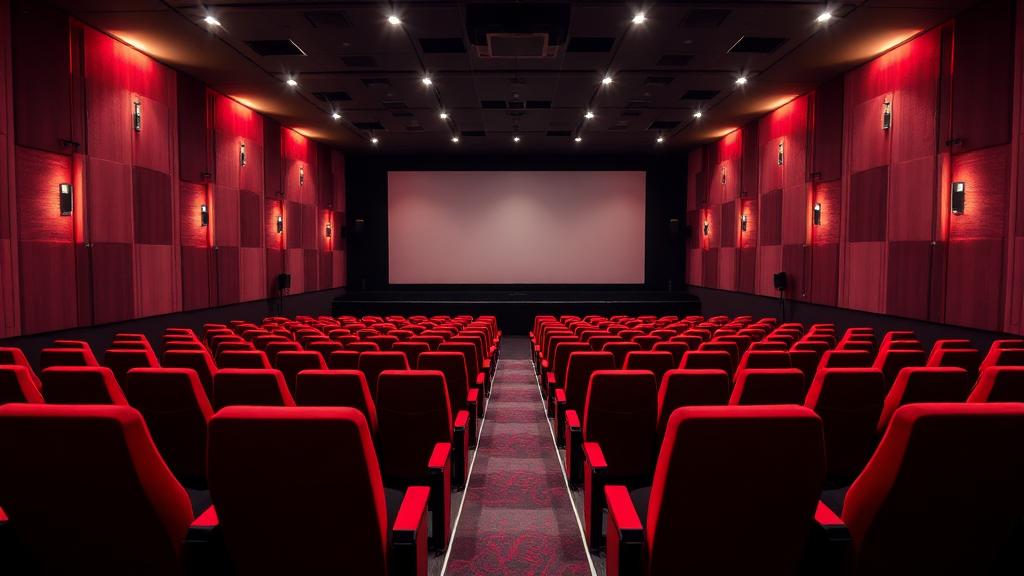
1Why Movie Theaters Need Superior Soundproofing
• Low-frequency transmission: Explosions, car chases, and musical bass travel through standard walls with minimal attenuation
• Reference level playback: THX and Dolby specifications call for 105 dB peaks with 115 dB headroom, far exceeding typical acoustic design assumptions
• Customer experience: Sound bleed complaints result in refund requests, negative reviews, and lost repeat business
• Tenant and neighbor relations: Theaters in mixed-use developments face complaints from adjacent retail, restaurants, and residential units
• Family coexistence: Movie viewing shouldn't force other household members to retreat or wear earplugs
• Late-night viewing: Without soundproofing, evening and nighttime use is restricted
• System investment: High-end audio systems are wasted if owners can't play them at reference levels
• Property value: Well-executed dedicated theaters add significant home value; poorly isolated rooms create liability
2Understanding Cinema Sound Characteristics
• Dialog normalization: 85 dB (Dolby standard)
• Peak transients: 105-115 dB (explosions, gunshots, crashes)
• Subwoofer content: 100-110 dB at 20-80 Hz
• Sustained loud sequences: 95-100 dB for extended periods
Modern cinema systems reproduce frequencies from 20 Hz to 20 kHz. The most challenging frequencies for soundproofing are the lowest octaves (20-80 Hz) where subwoofers operate. These frequencies:
• Require massive construction to block (mass law)
• Pass through standard walls with minimal reduction
• Create structure-borne vibration that bypasses airborne barriers
• Are felt as much as heard, increasing neighbor annoyance
Movie soundtracks feature:
• Sudden transients (explosions, impacts) that startle even when attenuated
• Extended loud sequences during action scenes
• Quiet dialog sections where any external noise intrusion is immediately noticed
• Predictable timing (trailers are loud, end credits are quiet) that doesn't align with adjacent auditorium schedules
Sound emanates from multiple directions: screen speakers (left/center/right), surround arrays on side and rear walls, overhead Atmos speakers, and subwoofers typically placed at the front. All wall surfaces, the ceiling, and the floor are potential transmission paths.
3How MLV Blocks Theater Sound
• Low-frequency performance: Unlike lightweight materials that only block high frequencies, MLV's mass effectively attenuates bass frequencies critical for cinema
• Limp mass behavior: MLV doesn't resonate at specific frequencies like rigid panels, providing consistent blocking across the spectrum
• Vibration damping: When coupled with drywall, MLV reduces panel resonance that can amplify certain frequencies
• Gap sealing: Flexible MLV wraps around penetrations and conforms to irregular surfaces where rigid materials leave gaps
A basic theater wall (2x6 studs, insulation, double drywall) might achieve STC 50-52. Adding 1 lb/sf MLV improves this to STC 56-60. With 2 lb/sf MLV and optimized assembly design (staggered studs, resilient channels), STC 65+ is achievable—necessary for commercial multiplex applications.
For theater applications, the OITC rating (Outdoor-Indoor Transmission Class) is often more relevant than STC because it weights low-frequency performance more heavily. MLV significantly improves OITC ratings, which is critical for blocking bass frequencies that characterize cinema sound.
4Auditorium Wall Assemblies
Adjacent screening rooms require maximum isolation:
• Double stud wall with 2" minimum air gap
• Full mineral wool insulation both cavities
• 2 lb/sf MLV on each stud wall
• Double 5/8" Type X drywall each side
• Resilient channels on at least one side
• Acoustic sealant at all perimeters and penetrations
• Total thickness: 12-14"
• Single stud or double stud depending on noise requirements
• 1-2 lb/sf MLV
• Double drywall with damping compound
• Acoustic doors rated STC 50+ minimum
• Vestibule entry design for additional isolation
• Staggered stud or double stud construction
• Full mineral wool insulation
• 1-2 lb/sf MLV
• Resilient clips and hat channel
• Double 5/8" drywall with damping compound
• All penetrations sealed with acoustic putty
• 2x6 studs at 16" o.c.
• Mineral wool insulation
• 1 lb/sf MLV
• Resilient channels
• Double 5/8" drywall
• Acoustic sealant throughout
• No electrical boxes back-to-back through walls
• Acoustic putty pads on all outlet boxes
• Flexible boot seals on all duct penetrations
• No rigid connections between isolated wall frames
• Continuous MLV without gaps at seams (overlap and seal)
5Floor and Ceiling Sound Isolation
The most effective approach for theater floors:
• Concrete slab or subfloor base
• Resilient floor isolators (rubber or neoprene pads)
• 2 lb/sf MLV layer
• Plywood subfloor (not attached to walls)
• Carpet and pad finish
• Perimeter isolation gap at walls (covered by baseboard)
• MLV directly over subfloor
• Additional plywood layer
• Mass-loaded floor underlayment
• Carpet and heavy pad
• Less effective than floating floor but significant improvement over standard construction
For theaters below other occupied spaces:
• Resilient ceiling clips attached to joists
• Hat channel spanning between clips
• 1-2 lb/sf MLV over hat channel
• Double 5/8" drywall
• Full insulation in joist cavity
• Seal all penetrations (lights, HVAC, speakers)
Commercial theaters often have concrete floor/ceiling structures between levels. While concrete provides good mass, flanking paths around the edges and through penetrations still require treatment. Install perimeter isolation strips and seal all floor penetrations.
In addition to room construction, isolate the subwoofers themselves:
• Subwoofer isolation platforms with rubber/spring mounts
• Placement away from shared walls when possible
• Multiple smaller subwoofers (smoother response, less localized energy) versus single large unit
6Projection Room and Equipment Noise
• Wall between projection room and auditorium: STC 55+ minimum
• Projection port: Acoustic glass or double-glazed assembly
• Cable penetrations: Sealed conduits with acoustic putty
• HVAC supply and return: Silenced ductwork
• Projector cooling: Quiet fan systems or remote cooling
• Modern digital cinema uses rack-mounted amplifiers generating heat and fan noise
• Locate equipment rooms away from auditorium
• Install MLV-lined doors and walls
• Use silenced ventilation
• Consider remote equipment locations with cable runs to auditorium
Theater HVAC systems must provide significant airflow while remaining inaudible:
• Maximum NC-25 to NC-30 background noise specification
• Oversized ductwork for low-velocity airflow
• Duct liner for absorption
• MLV wrapping on ducts passing through or near auditorium
• Silencers at fan connections
• Flexible duct connections to prevent vibration transmission
• Supply and return diffusers selected for quiet operation
Fire alarm speakers and emergency lighting must be integrated without compromising isolation. Coordinate with fire marshal on sealed penetrations and speaker locations.
7Home Theater Soundproofing
For home theaters with limited budgets, prioritize in this order:
1. Doors: Standard hollow-core doors leak enormous amounts of sound. Solid-core acoustic doors with seals provide immediate improvement
2. Shared walls: Walls adjacent to bedrooms or neighbors get MLV and additional drywall layers
3. Ceiling: If rooms are above, add MLV and resilient channels to ceiling
4. Floor: If rooms are below, add MLV layer under carpet
5. Non-adjacent walls: Lower priority unless neighbors are very close
Achievable in most residential construction:
• Existing 2x4 walls: add 1 lb/sf MLV + 5/8" drywall
• New walls: 2x6 studs, mineral wool, 1 lb/sf MLV, double drywall
• Ceiling: resilient channels + MLV + double drywall
• Solid-core door with acoustic seals and automatic bottom
• Seal all penetrations
For maximum isolation (STC 70+), build a completely decoupled inner room:
• Inner walls on separate floor structure (floating floor)
• No rigid connections to outer structure
• Double MLV layers
• Multiple drywall layers with damping compound
• Significant space loss (6-12" per wall)
• Professional design recommended
Perfect isolation may be impractical. Consider:
• Subwoofer limiters or bass management to reduce extreme LF content
• Viewing hour restrictions for late night
• Neighbor communication about occasional movie nights
• Good-but-not-perfect isolation that enables regular use without complaints
8New Construction vs Retrofit
• Design room geometry for optimal acoustics and isolation
• Specify proper assemblies from the start
• Integrate MLV during framing phase (lowest cost)
• Coordinate HVAC, electrical, and acoustic requirements
• Floating floor easily incorporated
• Proper door and penetration specifications included
• Budget for acoustics in overall construction cost
• Limited space for additional wall thickness
• Existing HVAC may be inadequate or noisy
• Door replacement may affect fire ratings
• Floor treatment limited by ceiling height below
• Unknown construction quality behind existing finishes
• Working around existing mechanical and electrical systems
• Higher cost per STC point improvement
• Survey existing construction before specifying
• Add MLV and additional drywall over existing walls
• Install resilient clips/channels for decoupling
• Replace doors with acoustic-rated assemblies
• Treat HVAC with silencers and MLV wrapping
• Focus on weakest links first (usually doors and HVAC)
• Accept some compromise versus new construction performance
• New construction: $5-15/sf premium for theater-quality acoustics
• Retrofit walls: $15-30/sf for MLV + resilient channel + drywall
• Acoustic doors: $1,500-5,000 per opening depending on rating
• Floating floor: $10-25/sf depending on approach
• HVAC silencing: $2,000-10,000 depending on system
Quality home theater soundproofing typically costs $5,000-25,000 depending on room size and performance targets. Commercial multiplex auditoriums budget $50,000-150,000+ per screen for acoustic isolation.
FAQs: Movie Theater Soundproofing with Mass Loaded Vinyl (MLV)
Related Guides in Industry Solutions
Continue exploring with these hand-picked articles
School Soundproofing with Mass Loaded Vinyl (MLV)
Complete guide to soundproofing schools, classrooms, and educational facilities with mass loaded vinyl. Meet ANSI S12.60 standards, improve speech intelligibility, and create optimal learning environments for students.
Courthouse Soundproofing with Mass Loaded Vinyl (MLV)
Complete guide to soundproofing courthouses, courtrooms, and legal facilities with mass loaded vinyl. Ensure speech privacy for attorney-client communications, protect witness identities, and create optimal acoustics for judicial proceedings.
Industrial Factory Soundproofing with Mass Loaded Vinyl (MLV)
Complete guide to soundproofing manufacturing plants, production facilities, and industrial factories with mass loaded vinyl. Control machinery noise, meet OSHA regulations, and protect workers from hearing damage.
Our Complete Product Line
Professional-grade soundproofing materials for any application
Need Expert Soundproofing Advice?
Our team of soundproofing specialists is here to help you choose the right products and installation methods for your museum or gallery project.