2Loudest NHL Arenas Ranked
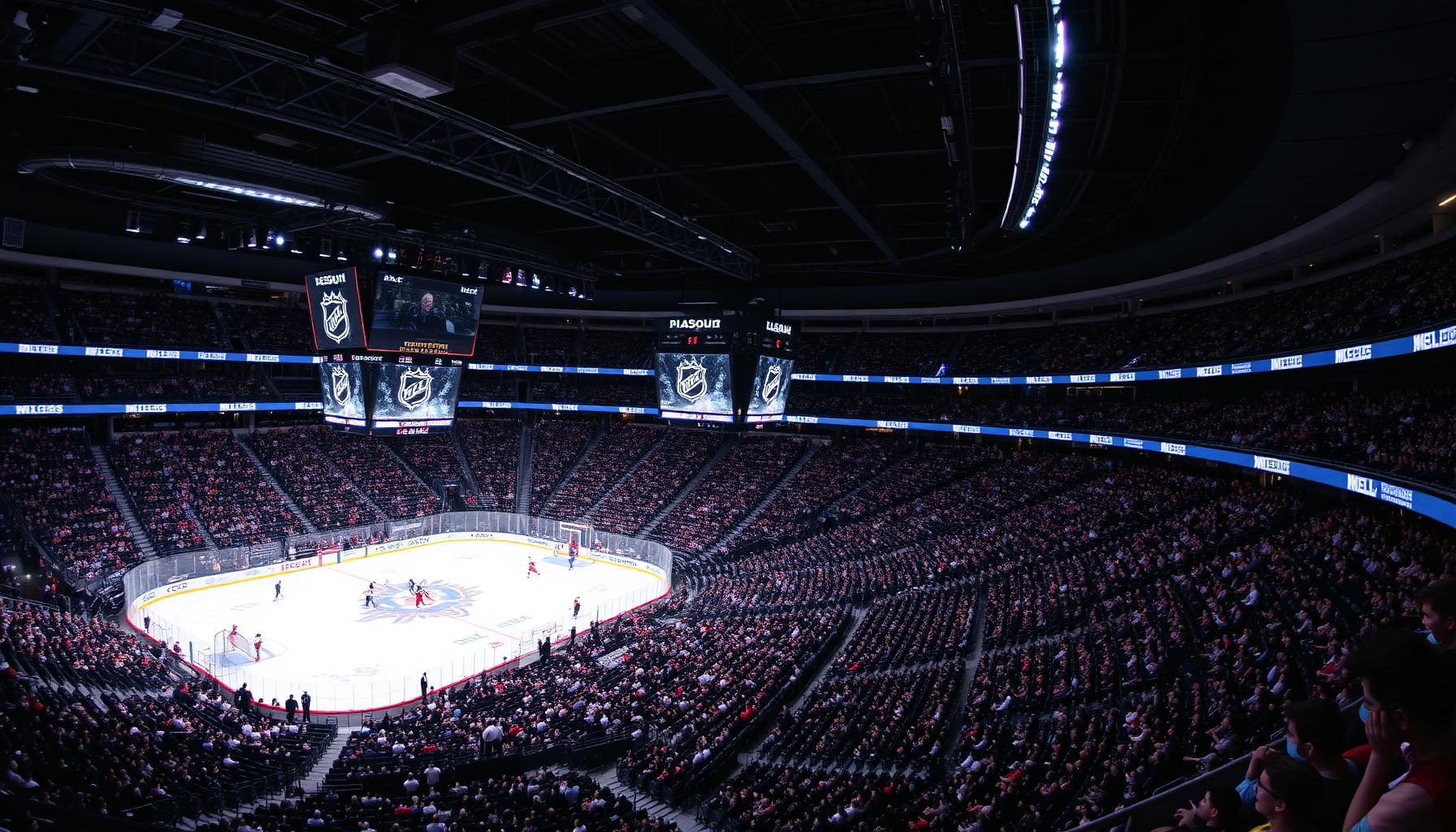
This comprehensive ranking covers all 32 current NHL home arenas. Each entry includes team, location, capacity, and what makes the venue uniquely loud or limiting.
1. Lenovo Center
Team: Carolina Hurricanes | Location: Raleigh, North Carolina | Capacity: 18,680 | Opened: 1999
Lenovo Center has earned the title "Loudest House in the NHL" and it is not hyperbole. Independent measurements have recorded sustained levels above 125 dB during playoff games, and the arena was voted the toughest place to play by NHL players themselves. The Hurricanes' Storm Surge tradition energizes the crowd before puck drop, and the building's compact bowl design keeps every decibel focused on the ice. Carolina's rise as a perennial contender has only made this building louder.
2. Canada Life Centre
Team: Winnipeg Jets | Location: Winnipeg, Manitoba | Capacity: 15,321 | Opened: 2004
Canada Life Centre is the smallest arena in the NHL by capacity, and that is exactly why it feels so intense. The Winnipeg Whiteout is one of the most famous crowd traditions in professional sports. Every seat is close, the bowl is steep, and the fan base treats every playoff game like a once-in-a-generation event. What the building lacks in total volume, it more than makes up for in density, passion, and acoustic concentration.
3. Bell Centre
Team: Montreal Canadiens | Location: Montreal, Quebec | Capacity: 21,302 | Opened: 1996
Bell Centre is the largest arena in the NHL and sounds like it. When 21,000 Canadiens fans erupt simultaneously, the sheer acoustic mass is unmatched anywhere in professional hockey. Montreal's crowd carries more than a century of hockey tradition into every game. The building's size could work against it acoustically, but the fan base compensates with raw intensity that has made visiting teams dread playing here for decades.
4. Scotiabank Arena
Team: Toronto Maple Leafs | Location: Toronto, Ontario | Capacity: 19,800 | Opened: 1999
Scotiabank Arena benefits from Toronto's massive, passionate hockey market. The Leafs have one of the most devoted fan bases in all of professional sports, and the arena consistently sells out regardless of the team's record. When Toronto is genuinely competitive in the playoffs, this building becomes one of the loudest in the league. The corporate crowd reputation is overstated — when the stakes rise, Scotiabank Arena delivers.
5. Amerant Bank Arena
Team: Florida Panthers | Location: Sunrise, Florida | Capacity: 19,250 | Opened: 1998
Amerant Bank Arena has surged in this conversation after the Panthers' Stanley Cup runs. A verified 130.9 dB reading during the 2025 Stanley Cup Finals puts hard data behind what the crowd already knew — this building gets absolutely deafening when the Panthers are in contention. South Florida's hockey culture has matured rapidly, and this arena is now one of the most hostile in the league during the postseason.
6. T-Mobile Arena
Team: Vegas Golden Knights | Location: Las Vegas, Nevada | Capacity: 17,368 | Opened: 2016
T-Mobile Arena was built for entertainment, and the Golden Knights' game-day experience reflects that. The pre-game show is the most elaborate in the NHL, and the crowd arrives early and stays loud. Vegas built a genuine hockey culture from scratch, and the arena's modern acoustic design helps concentrate the sound. Playoff atmospheres here have been legitimately intimidating since the franchise's inaugural season.
7. Bridgestone Arena
Team: Nashville Predators | Location: Nashville, Tennessee | Capacity: 17,159 | Opened: 1996
Bridgestone Arena is famous for its organized crowd chants, catfish throwing, and a fan section that has become a must-see experience in the NHL. Nashville proved during their 2017 Stanley Cup Final run that a non-traditional hockey market can produce one of the loudest buildings in the sport. The arena is compact, the crowd is engaged, and the chant culture keeps noise levels elevated throughout the entire game.
8. TD Garden
Team: Boston Bruins | Location: Boston, Massachusetts | Capacity: 17,565 | Opened: 1995
TD Garden earns its spot because Bruins games can feel nasty in the best possible way. Boston is a real Original Six hockey city, and the crowd gets loud early and stays loud late when the stakes rise. The building is compact, the fan base is knowledgeable, and deep playoff runs have produced some of the most intense atmospheres in NHL history.
9. Rogers Place
Team: Edmonton Oilers | Location: Edmonton, Alberta | Capacity: 18,347 | Opened: 2016
Rogers Place is one of the newer arenas in the NHL, and it was designed with fan experience in mind. Edmonton's hockey culture runs deep — this is the city that watched Wayne Gretzky build a dynasty — and the crowd has responded to the Oilers' recent playoff runs with sustained, deafening noise. The modern building traps sound effectively, and the steep upper bowl creates a wall-of-noise effect.
10. Madison Square Garden
Team: New York Rangers | Location: New York, New York | Capacity: 18,006 | Opened: 1968
Madison Square Garden is the most famous arena in the world, and Rangers playoff hockey is one of the best atmospheres in professional sports. The building's history, location, and the pressure of playing in New York give every big game a different kind of intensity. When the Garden is rocking during a playoff elimination game, it belongs in any top-10 loudest arena conversation.
11. United Center
Team: Chicago Blackhawks | Location: Chicago, Illinois | Capacity: 19,717 | Opened: 1994
The United Center is one of the largest arenas in the NHL, and the Blackhawks' dynasty years (2010, 2013, 2015) proved this building can produce championship-level noise. The Jim Cornelison national anthem tradition alone generates a wall of sound that sets the tone. When the Blackhawks are competitive, the United Center is one of the most formidable buildings in the league.
12. Scotiabank Saddledome
Team: Calgary Flames | Location: Calgary, Alberta | Capacity: 19,289 | Opened: 1983
The Saddledome is the oldest arena in the NHL, and its distinctive saddle-shaped roof creates unique acoustics that amplify crowd noise. Calgary's C of Red playoff tradition fills the building with red-clad fans creating a visual and acoustic wall of intensity. The age of the building is a feature, not a bug — the tighter concourses and lower ceiling height keep noise concentrated in the bowl.
13. Wells Fargo Center
Team: Philadelphia Flyers | Location: Philadelphia, Pennsylvania | Capacity: 19,543 | Opened: 1996
Philadelphia fans are loud, emotional, and demanding, and the Flyers' crowd reflects the city's broader sports identity. Wells Fargo Center has enough size to feel major and enough fan aggression to feel hostile. The Broad Street Bullies mentality has not gone anywhere, and when the Flyers are competitive, this building becomes one of the toughest road trips in the East.
14. PPG Paints Arena
Team: Pittsburgh Penguins | Location: Pittsburgh, Pennsylvania | Capacity: 18,387 | Opened: 2010
PPG Paints Arena has hosted five Stanley Cup championship teams across its history, and the crowd knows what big moments sound like. Pittsburgh's hockey culture is deep, and the relatively new building combines modern acoustics with a fan base that has been spoiled by generational talent. It is a consistent home-ice environment that rises noticeably in the postseason.
15. Amalie Arena
Team: Tampa Bay Lightning | Location: Tampa, Florida | Capacity: 19,902 | Opened: 1996
Amalie Arena has proven its loudness credentials during Tampa Bay's back-to-back Stanley Cup runs in 2020 and 2021. The Lightning's sustained excellence built a genuine hockey culture in Tampa, and the arena responds with real volume during playoff hockey. The Tesla coils, the thunder sticks, and the crowd energy create a uniquely loud environment for a Sun Belt market.
16. Climate Pledge Arena
Team: Seattle Kraken | Location: Seattle, Washington | Capacity: 17,151 | Opened: 2021 (renovated)
Climate Pledge Arena is one of the newest arenas in the NHL and was designed with sustainability and fan experience as priorities. Seattle embraced hockey quickly, and the arena's modern acoustic design helps maximize crowd noise. As the Kraken mature as a franchise and build playoff history, this building has serious loudness upside.
17. Enterprise Center
Team: St. Louis Blues | Location: St. Louis, Missouri | Capacity: 18,096 | Opened: 1994
Enterprise Center became a cathedral during the Blues' 2019 Stanley Cup championship run. The "Gloria" phenomenon showed how a city that had waited 52 years for a Cup could transform an arena into something special. St. Louis is a passionate hockey market, and the building responds when the team gives the crowd something to scream about.
18. Canadian Tire Centre
Team: Ottawa Senators | Location: Ottawa, Ontario | Capacity: 18,652 | Opened: 1996
Canadian Tire Centre is located outside the city center, which affects attendance on some nights, but the Senators' fan base shows up with energy when the team is competitive. The building is solid and can produce strong atmospheres during playoff runs. Its location is the main factor keeping it from ranking higher.
19. Ball Arena
Team: Colorado Avalanche | Location: Denver, Colorado | Capacity: 17,809 | Opened: 1999
Ball Arena has hosted multiple Stanley Cup champions, and the Avalanche's recent 2022 championship run showed that Denver's hockey crowd can still reach deafening levels. The altitude adds a physical edge for visiting teams, and the arena gets plenty loud in meaningful games. It does not always get the national recognition it deserves.
20. Xcel Energy Center
Team: Minnesota Wild | Location: St. Paul, Minnesota | Capacity: 17,954 | Opened: 2000
Xcel Energy Center is routinely praised as one of the best-designed arenas in the NHL. Minnesota is a hockey state through and through, and the Wild's fan base brings genuine passion. The State of Hockey identity means this crowd understands the game and knows when to get loud. It is a strong, consistent home-ice environment.
21. Rogers Arena
Team: Vancouver Canucks | Location: Vancouver, British Columbia | Capacity: 18,910 | Opened: 1995
Rogers Arena has produced some of the most memorable playoff atmospheres in Canadian hockey history, particularly during the Canucks' 2011 Stanley Cup Final run. Vancouver's market is hockey-obsessed, and the arena reflects that energy. It may not have the same buzz during rebuilding years, but when the Canucks are relevant, this building is dangerous.
22. Capital One Arena
Team: Washington Capitals | Location: Washington, D.C. | Capacity: 18,506 | Opened: 1997
Capital One Arena rode the wave of the Capitals' 2018 Stanley Cup championship, and the crowd during that run was as loud as any in the league. Washington's hockey culture has grown significantly, and the arena benefits from its downtown location. It is a strong building that peaks during meaningful stretches.
23. American Airlines Center
Team: Dallas Stars | Location: Dallas, Texas | Capacity: 18,532 | Opened: 2001
American Airlines Center has grown as a hockey venue as Dallas's fan base has matured. The Stars' recent playoff runs have brought the building to life, and the atmosphere during the 2024 Western Conference Final proved that Texas hockey fans can create a legitimate home-ice advantage.
24. Nationwide Arena
Team: Columbus Blue Jackets | Location: Columbus, Ohio | Capacity: 18,144 | Opened: 2000
Nationwide Arena has had moments of genuine loudness, particularly during the Blue Jackets' first-ever playoff series win. Columbus is building its hockey identity, and the arena has the bones to be a strong environment. Consistency is the main gap between Nationwide and the arenas ranked above it.
25. Little Caesars Arena
Team: Detroit Red Wings | Location: Detroit, Michigan | Capacity: 19,515 | Opened: 2017
Little Caesars Arena is a beautiful modern building, but it has not yet matched the legendary atmosphere of Joe Louis Arena. Detroit's hockey legacy is unquestionable — this franchise has 11 Stanley Cups — but the new arena still feels like it is finding its identity. When the Red Wings return to contention, this building has the capacity and the fan base to climb this list significantly.
26. KeyBank Center
Team: Buffalo Sabres | Location: Buffalo, New York | Capacity: 19,070 | Opened: 1996
KeyBank Center has a devoted fan base that sticks with the Sabres through thick and thin. Buffalo is a true hockey city, and the building can produce strong atmospheres when the team gives the crowd hope. Extended playoff drought has dampened the building's loudness reputation, but the potential is absolutely there.
27. Delta Center
Team: Utah Hockey Club | Location: Salt Lake City, Utah | Capacity: 17,125 | Opened: 1991
Delta Center is the newest franchise in the NHL (formerly the Arizona Coyotes, now the Utah Hockey Club/Utah Mammoth), and Salt Lake City embraced professional hockey with remarkable enthusiasm. The arena's basketball roots with the Jazz give it a proven acoustic foundation. Early home games showed genuine passion from a fan base eager to establish its identity.
28. SAP Center
Team: San Jose Sharks | Location: San Jose, California | Capacity: 17,562 | Opened: 1993
SAP Center — known as the Shark Tank — has a strong identity thanks to the team's famous player entrance through a giant shark head. The arena can produce real noise when the Sharks are relevant, and Silicon Valley's hockey community has proven its loyalty. Extended rebuilding has quieted the building, but the infrastructure for a hostile environment is still there.
29. Honda Center
Team: Anaheim Ducks | Location: Anaheim, California | Capacity: 17,174 | Opened: 1993
Honda Center has hosted Stanley Cup hockey and can produce playoff-level noise when Anaheim is competitive. The Ducks' fan base is committed but smaller than most markets, and the Orange County setting means the building relies more heavily on team performance to generate big atmospheres.
30. Prudential Center
Team: New Jersey Devils | Location: Newark, New Jersey | Capacity: 16,514 | Opened: 2007
Prudential Center is a solid modern arena that benefits from its proximity to Manhattan while maintaining its own identity. The Devils' fan base is loyal and knowledgeable, and the building can get loud during competitive stretches. Competing for attention in the New York metro market remains the biggest challenge.
31. UBS Arena
Team: New York Islanders | Location: Elmont, New York | Capacity: 17,113 | Opened: 2021
UBS Arena is still establishing its identity after replacing the legendary Nassau Coliseum, which was one of the loudest buildings in the NHL. The new arena is modern and well-designed, but it has not yet built the same atmospheric reputation as the old barn. Islanders fans are among the most passionate in the league, and this building should climb as playoff memories accumulate.
32. Crypto.com Arena
Team: Los Angeles Kings | Location: Los Angeles, California | Capacity: 18,230 | Opened: 1999
Crypto.com Arena is a premier entertainment venue that hosts everything from concerts to Lakers games, and the Kings share the space with a crowded calendar. LA has built a genuine hockey fan base — two Stanley Cups in 2012 and 2014 proved that — but the building's identity is not primarily hockey, and that affects the baseline atmosphere. When the Kings are in the playoffs, the building gets loud, but it does not carry the same sustained hockey-first energy as the arenas ranked above it.