3Loudest MLB Ballparks Ranked
1. Minute Maid Park
Team: Houston Astros | Capacity: 41,168 | Opened: 2000 | Roof: Retractable
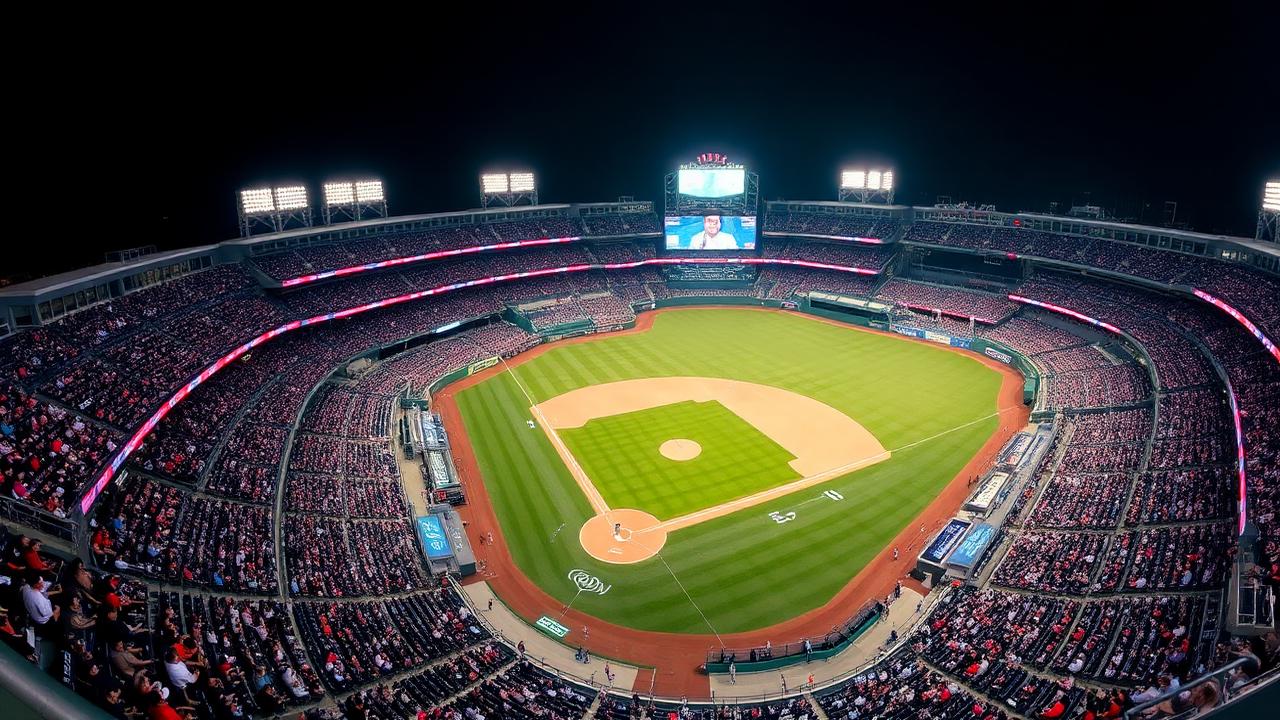
Minute Maid Park with the roof closed is the loudest environment in baseball, and it isn't particularly close. Houston's retractable roof transforms the ballpark into an enclosed space, and Astros fans have delivered some of the most intense postseason atmospheres in modern MLB history. During the 2017 and 2022 World Series runs, sustained crowd noise with the roof closed exceeded 100 dB — a remarkable number for a baseball stadium. The train horn adds a theatrical exclamation point, but the crowd does the real work.
2. Dodger Stadium
Team: Los Angeles Dodgers | Capacity: 56,000 | Opened: 1962 | Roof: Open Air
Dodger Stadium is the largest ballpark in MLB by capacity, and when 56,000 fans are engaged simultaneously, the acoustic mass is staggering. The steep, tiered seating bowl naturally directs sound downward toward the field. LA's fanbase has a deserved reputation for arriving late, but during October baseball, Dodger Stadium is transformed into one of the most hostile environments in the sport. The 2024 World Series atmosphere was legitimately deafening.
3. T-Mobile Park
Team: Seattle Mariners | Capacity: 47,929 | Opened: 1999 | Roof: Retractable
Seattle's 2022 playoff run — the franchise's first postseason appearance in 21 years — proved that T-Mobile Park can produce elite-level crowd noise. The retractable roof, when closed, creates an enclosed environment that traps sound, and the Mariners' fan base responded to October baseball with an intensity that surprised the rest of the league. Even in regular-season games, the ballpark's design and Seattle's growing baseball culture create a consistently energetic atmosphere.
4. Busch Stadium
Team: St. Louis Cardinals | Capacity: 44,383 | Opened: 2006 | Roof: Open Air
St. Louis is arguably the best baseball city in America, and Busch Stadium reflects that. The Cardinals consistently draw near-capacity crowds regardless of the team's record, and the fan base's knowledge of the game creates a crowd that reacts to situational baseball — not just home runs. The open-air design lets some sound escape, but 44,000 engaged, baseball-literate fans generate sustained noise that few ballparks can match.
5. Petco Park
Team: San Diego Padres | Capacity: 40,209 | Opened: 2004 | Roof: Open Air
Petco Park's transformation from a sleepy stadium to one of the loudest in baseball has been one of the best stories in recent MLB history. The Padres' 2022 playoff run — particularly the NLDS against the Dodgers — produced crowd noise that rivaled any stadium in the sport. San Diego's fan culture has genuinely changed, and the ballpark's compact design concentrates sound effectively.
6. Wrigley Field
Team: Chicago Cubs | Capacity: 41,649 | Opened: 1914 | Roof: Open Air
Wrigley Field's acoustic advantage comes from its age and design. The steep, enclosed grandstand and relatively small footprint keep fans close to the field and to each other. The 2016 World Series — ending a 108-year championship drought — produced some of the loudest moments in baseball history. Even on regular-season afternoons, the bleacher sections maintain an energy that most modern ballparks can't replicate.
7. Globe Life Field
Team: Texas Rangers | Capacity: 40,300 | Opened: 2020 | Roof: Retractable
Globe Life Field's retractable roof gives the Rangers a massive acoustic advantage when closed. During the 2023 World Series run, the enclosed atmosphere produced crowd noise that exceeded anything the franchise had experienced at their previous open-air stadium. The modern design with steep seating keeps sound concentrated on the field.
8. Citizens Bank Park
Team: Philadelphia Phillies | Capacity: 42,792 | Opened: 2004 | Roof: Open Air
Philadelphia fans are among the most intense in all of professional sports, and Citizens Bank Park during the 2022 and 2023 playoff runs was genuinely intimidating. Phillies fans don't just cheer — they create sustained, aggressive noise designed to rattle opposing players. The open-air design works against the acoustics, but Philly's fan culture more than compensates.
9. Fenway Park
Team: Boston Red Sox | Capacity: 37,755 | Opened: 1912 | Roof: Open Air
Fenway Park is the oldest active ballpark in MLB, and its compact, irregular design creates unique acoustics. The Green Monster and close-set grandstand walls reflect sound back into the seating bowl rather than letting it dissipate. At only 37,755 capacity, it's one of the smaller MLB venues, but the density and proximity of fans to the field make it feel far louder than the numbers suggest.
10. Chase Field
Team: Arizona Diamondbacks | Capacity: 48,519 | Opened: 1998 | Roof: Retractable
Chase Field with the roof closed during the 2023 NLCS and World Series was a revelation. The Diamondbacks' unexpected postseason run filled the stadium with fans who hadn't experienced October baseball in over a decade, and the enclosed environment amplified their energy dramatically. The swimming pool and quirky features add character, but it's the roof that makes the acoustics work.
11–15: The Strong Middle Tier
11. Yankee Stadium (New York Yankees) — The cathedral of baseball carries immense history and a fan base that turns hostile during October. The open-air design and wide concourses let sound escape, but 47,000 engaged Yankees fans produce serious volume. 12. Oracle Park (San Francisco Giants) — The waterfront location and compact seating bowl create an intimate atmosphere. Giants fans are knowledgeable and engaged, and postseason games here have been electric. 13. Progressive Field (Cleveland Guardians) — Cleveland's fan base punches above its weight, and the ballpark's design concentrates sound well for an open-air venue. The drumline in the bleachers adds a unique sustained rhythm. 14. Citi Field (New York Mets) — Mets fans bring chaotic, passionate energy that can make Citi Field feel like a college football stadium during big moments. The 2024 playoff run demonstrated genuine postseason-level noise. 15. American Family Field (Milwaukee Brewers) — The retractable roof creates an enclosed advantage, and Brewers fans bring blue-collar energy that sustains across full games.
16–20: Solid Atmospheres
16. PNC Park (Pittsburgh Pirates) — Widely considered the most beautiful ballpark in baseball, PNC Park's compact design also helps acoustics. When the Pirates are competitive, this crowd delivers. 17. Camden Yards (Baltimore Orioles) — The ballpark that launched the retro stadium movement has seen a fan culture revival with the Orioles' recent success. 18. Target Field (Minnesota Twins) — Cold-weather baseball fans who show up anyway tend to be passionate, and Target Field's design keeps them close to the action. 19. Great American Ball Park (Cincinnati Reds) — The riverfront setting and compact seating create good acoustics, and Reds fans are among the most loyal in the NL Central. 20. Angel Stadium (Los Angeles Angels) — A large-capacity venue that fills up for marquee matchups but struggles with consistency during losing seasons.
21–25: Inconsistent but Capable
21. Truist Park (Atlanta Braves) — The Battery development creates pre-game energy, but the ballpark itself can feel corporate during regular-season games. Playoff Truist Park is a different story. 22. Kauffman Stadium (Kansas City Royals) — The fountains are iconic and KC fans showed their potential during the 2014–2015 World Series runs, but sustained atmosphere depends heavily on team performance. 23. Comerica Park (Detroit Tigers) — A beautiful ballpark that can get loud when the Tigers are competitive, but Detroit's attendance challenges limit consistency. 24. Nationals Park (Washington Nationals) — The 2019 World Series proved DC can produce elite atmosphere, but the fan base is still relatively young. 25. loanDepot Park (Miami Marlins) — The retractable roof helps acoustics enormously, and the 2023 playoff atmosphere was surprisingly strong, but consistent attendance remains a challenge.
26–30: The Quiet End
26. Rogers Centre (Toronto Blue Jays) — The retractable dome helps trap sound, and Blue Jays fans are passionate, but the cavernous design disperses crowd noise. 27. Guaranteed Rate Field (Chicago White Sox) — The South Side fan base is loyal but small, and the large, flat stadium design doesn't concentrate sound. 28. Oakland Coliseum (Oakland Athletics) — The Coliseum's infamous vast foul territory and empty upper decks make it one of the quietest venues in professional sports. 29. Tropicana Field (Tampa Bay Rays) — The only fully enclosed MLB stadium should have an acoustic advantage, but chronically low attendance means there simply aren't enough fans to generate meaningful noise. 30. Oriole Park at Camden Yards II... — (Note: Camden Yards already listed at 17; the bottom tier is rounded out by whichever venues are struggling most with attendance in a given season.)
MLB Ballpark Comparison Table
| Rank | Ballpark | Team | Capacity | Roof Type | Key Factor |
|---|
| 1 | Minute Maid Park | Astros | 41,168 | Retractable | Enclosed postseason dominance |
| 2 | Dodger Stadium | Dodgers | 56,000 | Open Air | Sheer crowd mass |
| 3 | T-Mobile Park | Mariners | 47,929 | Retractable | Roof-closed intensity |
| 4 | Busch Stadium | Cardinals | 44,383 | Open Air | Best baseball city culture |
| 5 | Petco Park | Padres | 40,209 | Open Air | Fan culture explosion |
| 6 | Wrigley Field | Cubs | 41,649 | Open Air | Historic compact design |
| 7 | Globe Life Field | Rangers | 40,300 | Retractable | Modern enclosed acoustics |
| 8 | Citizens Bank Park | Phillies | 42,792 | Open Air | Aggressive fan intensity |
| 9 | Fenway Park | Red Sox | 37,755 | Open Air | Compact density |
| 10 | Chase Field | D-backs | 48,519 | Retractable | Roof-closed playoff surge |