Laundry Room Soundproofing 2026: Quiet Washer & Dryer Noise
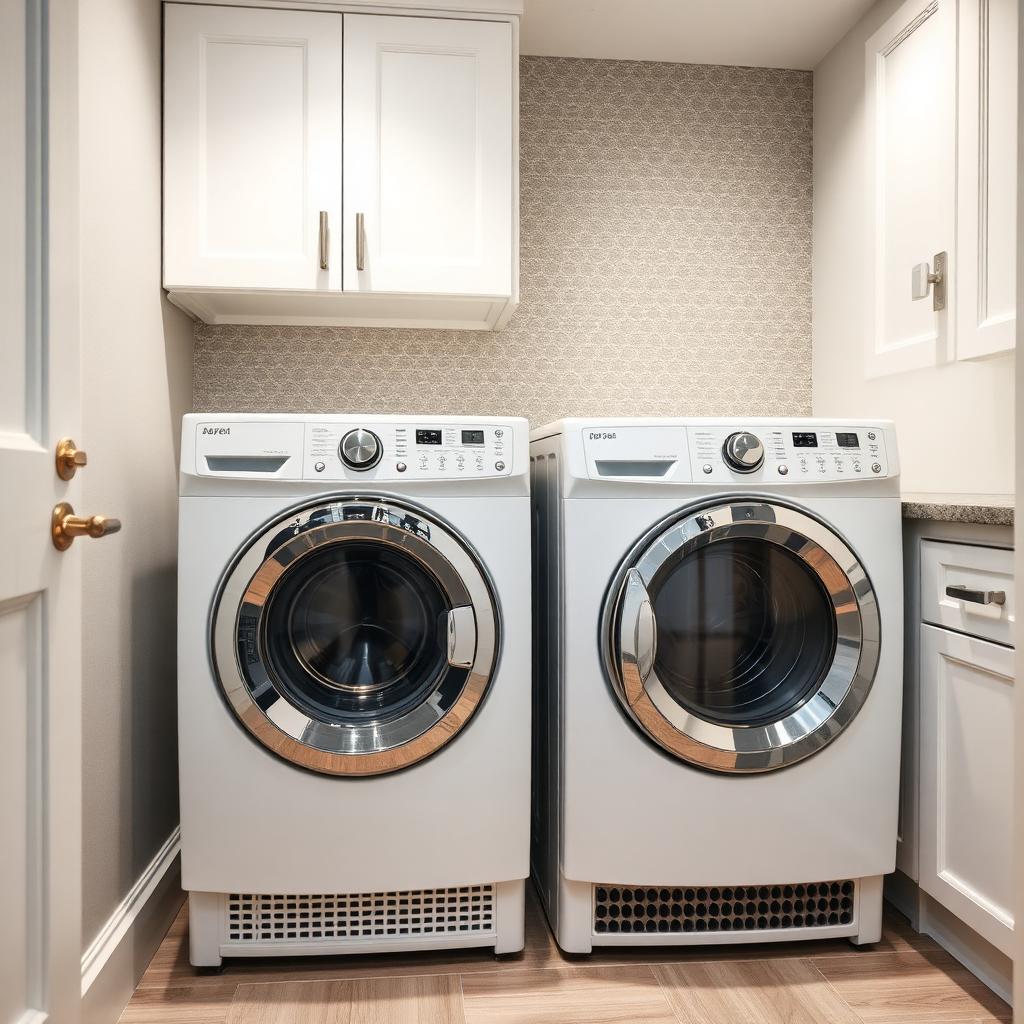
1Why Laundry Rooms Are So Loud
Primary Noise Sources
• Dryer tumbling: Drum rotation and items hitting the drum walls create rhythmic thumping
• Motor noise: Both machines contain motors that produce constant low-frequency hum
• Water filling/draining: Pipe hammer and water flow create sudden bursts of noise
• Door bangs and beeps: Modern appliances have loud electronic alerts and heavy doors
Why It Travels So Far
2Vibration vs. Airborne Noise
Structure-Borne Vibration
• Floor connections (appliance feet to subfloor to joists)
• Wall framing (vibrating walls transfer energy to adjacent rooms)
• Plumbing pipes (water hammer and pipe vibration)
Solution: Break the connection between the appliance and the structure using anti-vibration pads, pedestals, or floating platforms.
Airborne Noise
• Air gaps around doors and vents
• Thin walls and doors with low mass
• Ductwork acting as a sound tunnel
Solution: Add mass with MLV, seal air gaps, and treat doors and ductwork.
Why Both Matter
3The Spin Cycle Problem
Understanding Spin Speed
• High-efficiency (HE) washers: 1000-1200 RPM—significant vibration
• Front-load premium models: 1400+ RPM—intense vibration without proper isolation
Unbalanced Load Amplification
The Floor Factor
Machine Leveling
• Use a bubble level on top of each machine
• Adjust all four feet until level
• Most feet twist to raise/lower—check your manual
• Re-check after a few wash cycles as feet can settle
4Anti-Vibration Pads & Pedestals
Anti-Vibration Pads
• Basic rubber pads ($15-30/set): Reduce vibration 30-50%, easy DIY install
• Heavy-duty cork/rubber composite ($40-60/set): Better isolation, longer life
• Premium polymer isolation pads ($80-120/set): Maximum vibration reduction, frequency-tuned
Vibration-Damping Mats
• Rubber floor mats ($50-100): Basic protection, easy to install
• Specialized appliance mats ($100-200): Engineered for washer/dryer frequencies
• Combination cork/rubber mats: Cork provides stiffness while rubber absorbs
Pedestals & Platforms
• Manufacturer pedestals: Often primarily for storage, limited vibration benefit
• DIY floating platform: Build a platform on isolation pads—excellent results
• Commercial isolation platforms: Engineered for maximum vibration reduction
STC Performance Comparison
| Treatment Level | Vibration Reduction | Cost |
|---|---|---|
| Machine directly on floor | 0% (baseline) | $0 |
| Basic rubber pads | 30-50% | $15-30 |
| Heavy-duty composite pads | 50-70% | $40-60 |
| Premium isolation pads | 70-85% | $80-120 |
| Full isolation mat | 60-80% | $50-200 |
| DIY floating platform + pads | 80-90% | $100-200 |
5Wall & Ceiling Treatment
When MLV Makes Sense
• The laundry room shares a wall with bedrooms or living areas
• You can hear motor hum and tumbling through the wall
• Door sealing alone isn't sufficient
• You want permanent, high-performance results
Wall Treatment Options
• MLV over existing drywall: Attach MLV to existing walls, add second layer of drywall—achieves STC 42-48
• Decoupled walls: For severe cases, use resilient channels or staggered studs with MLV—achieves STC 50-55
Ceiling Treatment (Rooms Above)
• Add mass: Install 1 lb MLV to ceiling joists before drywall or over existing drywall
• Decouple: Use resilient channels to break the vibration path
• Insulate: Fill joist cavities with mineral wool for additional absorption
• Double drywall: Two layers of 5/8" drywall with damping compound between
Realistic Expectations
6Door Sealing Strategies
The Hollow-Core Problem
• Hollow-core door: STC 15-20 (you hear everything)
• Solid-core door: STC 28-32 (noticeable improvement)
• Solid-core + seals: STC 35-40 (significant noise reduction)
Door Sealing Steps
• Weatherstripping: Apply foam or rubber weatherstripping to the door frame ($10-20)
• Threshold seal: If there's a gap at the bottom, add an adjustable threshold
• Check the fit: Doors should seal on all four sides when closed
Door Upgrade Options
• Add MLV to hollow door: Attach 1 lb MLV to one or both faces—industrial look but effective
• Door insert panel: Install a layer of MLV between the door and a decorative panel
• Acoustic door: Commercial acoustic doors available for serious noise control ($500+)
Bi-Fold & Sliding Doors
• Replacing with a standard swing door
• Adding heavy curtains behind the doors
• Installing a curtain rod with mass-loaded vinyl acoustic curtains
7Ductwork & HVAC Noise
Dryer Vent Noise
• Short, straight runs: Less noise amplification than long, bent ducts
• Insulated flex duct: Provides some noise reduction but restricts airflow
• Duct silencers: Inline silencers reduce noise without restricting airflow significantly
HVAC Return Air
• Lined ductwork: Adding acoustic duct liner absorbs sound
• Duct silencers: Install inline silencers in the return duct
• Transfer grilles: If code allows, replace the return with a transfer grille to another space
Water Pipe Hammer
• Water hammer arrestors: Install on hot and cold lines to absorb the shock ($20-50 each)
• Secure loose pipes: Add pipe straps to eliminate rattling
• Pressure regulator: High water pressure worsens hammer—consider a regulator if pressure exceeds 60 PSI
8Renter-Friendly Solutions
Quick Wins
• Door sweep: Adhesive-backed sweeps install in minutes and peel off cleanly
• Weatherstripping: Foam strips on door frames are removable
• Heavy curtains: Hang mass-loaded or heavy fabric curtains over the laundry area
Machine Positioning
• Away from shared walls: Move machines toward exterior walls if possible
• On rubber mats: Place machines on thick rubber mats or yoga mats
• Level carefully: Uneven machines vibrate more—adjust feet frequently
Timing Strategies
• Run laundry during daytime hours when noise matters less
• Use shorter spin cycles (select "delicate" or reduce spin speed in settings)
• Avoid running machines when the adjacent room is in use
• Some smart washers allow scheduling—run cycles when no one's home
Portable Acoustic Panels
• Place between machines and the door
• Use heavy, dense materials—furniture blankets work as a budget option
• Combine with other solutions for cumulative effect
11Conclusion
Laundry room noise doesn't have to shake your whole house. The most important step is addressing vibration first—anti-vibration pads under your washer and dryer can reduce transmitted noise by 50-85% for under $100. From there, sealing doors and adding mass to shared walls with MLV provides additional reduction of airborne noise.
For most homes, a combination of quality anti-vibration pads ($40-120), door seals ($25-60), and MLV on the shared wall ($200-400) creates a dramatically quieter living environment. If your laundry room is above living spaces, ceiling treatment with MLV and decoupling is essential for serious noise control.
Start with vibration isolation and door sealing—these quick wins often solve 80% of the problem at 20% of the cost. Save extensive wall treatment for situations where airborne noise remains a problem after addressing the fundamentals.
FAQs: Laundry Room Soundproofing
Related Guides in Residential Soundproofing
Continue exploring with these hand-picked articles
Home Studio Soundproofing with Mass Loaded Vinyl (MLV)
Complete guide to soundproofing your home studio with Mass Loaded Vinyl. Achieve professional-grade STC 55-60 isolation for recording, mixing, and producing without disturbing neighbors or household members.
Apartment Soundproofing with Mass Loaded Vinyl (MLV)
Transform your apartment, studio, or loft into a peaceful retreat. Complete guide to using Mass Loaded Vinyl for blocking neighbor noise through walls, ceilings, and floors—solutions for renters and owners.
Home Theater Soundproofing with Mass Loaded Vinyl (MLV)
Keep your movie nights from disturbing the rest of the house or neighbors. Complete guide to using Mass Loaded Vinyl for containing loud movies, music, and gaming sound in your dedicated home theater room.
Our Complete Product Line
Professional-grade soundproofing materials for any application
Need Expert Soundproofing Advice?
Our team of soundproofing specialists is here to help you choose the right products and installation methods for your museum or gallery project.