How Porous Materials Absorb Sound (And Why That's Different From Blocking It)
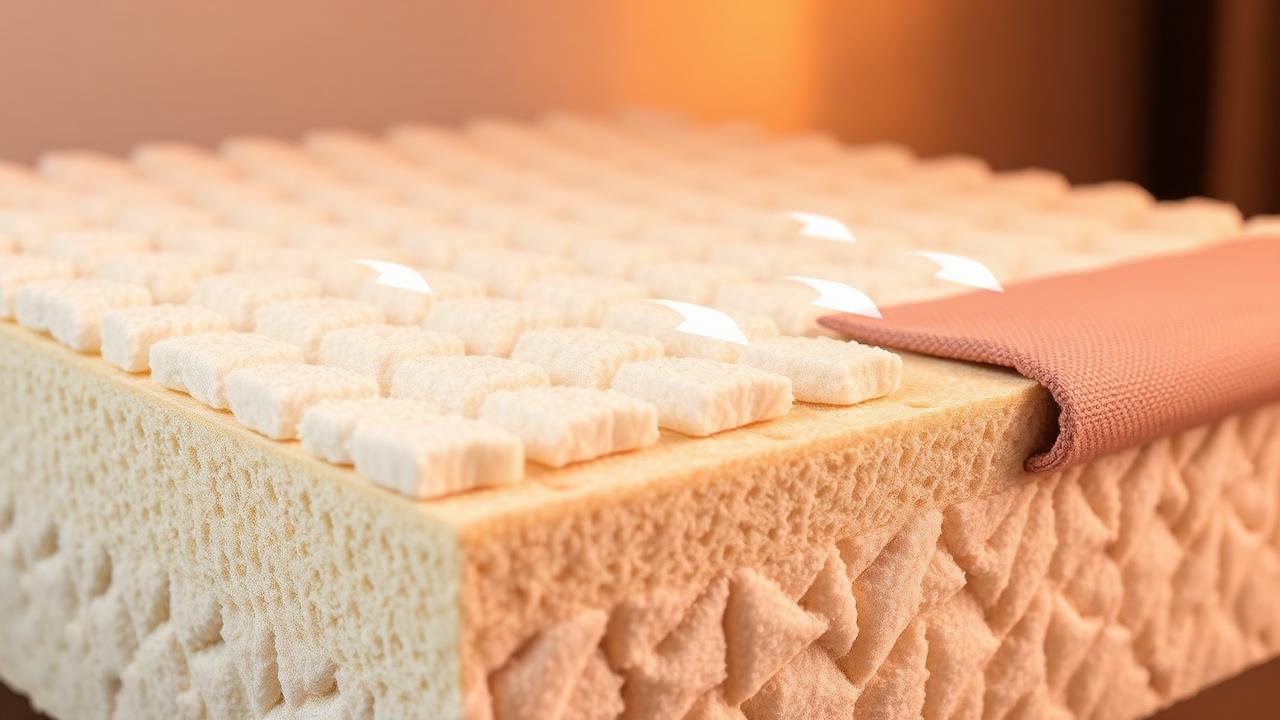
1What Makes a Material Porous
2How Porosity Converts Sound Into Heat
• Thermal exchange: As sound waves compress and expand air, tiny temperature fluctuations occur. When this happens inside a porous material, heat transfers between the moving air and the solid fiber surfaces. The fibers absorb thermal energy from the compressed (warmer) air and release it during expansion (cooler) phases, dissipating sound energy in the process.
• Structural vibration: The fibers themselves vibrate microscopically when hit by sound waves. This internal mechanical movement converts additional acoustic energy into heat through internal damping within the fiber material.
3Absorption vs. Blocking: The Critical Distinction
4Common Porous Absorbers Compared
| Material (2" thick) | NRC | Density (lb/ft³) | Best Frequency Range | Cost/sq ft |
|---|---|---|---|---|
| Fiberglass (OC 703) | 0.95 | 3.0 | 250 Hz+ | $0.80-1.50 |
| Mineral Wool (Rockwool) | 0.90 | 4.0-8.0 | 200 Hz+ | $1.00-1.80 |
| Recycled Cotton (UltraTouch) | 0.75 | 2.5 | 500 Hz+ | $1.00-1.80 |
| Open-Cell Melamine Foam | 0.80 | 0.5-0.7 | 500 Hz+ | $2.00-4.00 |
| Polyurethane Acoustic Foam | 0.55 | 1.5-2.0 | 1000 Hz+ | $0.50-2.00 |
| Sheep Wool | 0.85 | 1.5-2.5 | 300 Hz+ | $2.50-5.00 |
5Why Thickness Matters More Than You Think
6When Porous Materials Are Not Enough
7Choosing the Right Porous Material for Your Project
• For exposed panels (visible): Rigid fiberglass boards (OC 703 or equivalent) wrapped in acoustically transparent fabric deliver the highest NRC per dollar. Recycled cotton and sheep wool are premium alternatives for clients prioritizing sustainability and indoor air quality.
• For ceiling clouds and baffles: Fiberglass or mineral wool boards in fabric-wrapped frames. Thickness should be 2-4 inches depending on the frequency range you need to control.
• For quick DIY treatment: Melamine foam panels are lightweight, easy to cut, and require no protective equipment during handling. They cost more than fiberglass but eliminate the skin irritation factor that discourages DIYers.
9Conclusion
FAQs: Porous Materials Sound Absorption
Related Guides in Materials
Continue exploring with these hand-picked articles
15 Best Cheap Soundproofing Materials 2026 (That Actually Work)
The 15 best budget soundproofing materials for 2026, ranked by real STC data and cost per square foot. Compare MLV, weatherstripping, acoustic caulk, resilient channels, green glue, and more.
10 Best Sound Absorbing Materials for Flawless Acoustics
Discover the 10 best sound absorbing materials ranked by NRC rating. Compare fiberglass, mineral wool, acoustic foam, PET felt, perforated wood, cork, acoustic plaster, and moss walls with placement strategies.
What Is MLV Actually Made Of? (And Why the Ingredients Matter)
Learn exactly what mass loaded vinyl (MLV) is made of—barium sulfate, calcium carbonate, thermoplastic polymers—and the material science that makes it the most effective thin-profile sound barrier.
Our Complete Product Line
Professional-grade soundproofing materials for any application
Need Expert Soundproofing Advice?
Our team of soundproofing specialists is here to help you choose the right products and installation methods for your museum or gallery project.