Acoustics22 min readAuthorMass Loaded Vinyl DirectPublishedUpdated

    How Does Sound Travel in a Room? The Complete Physics of Indoor Acoustics
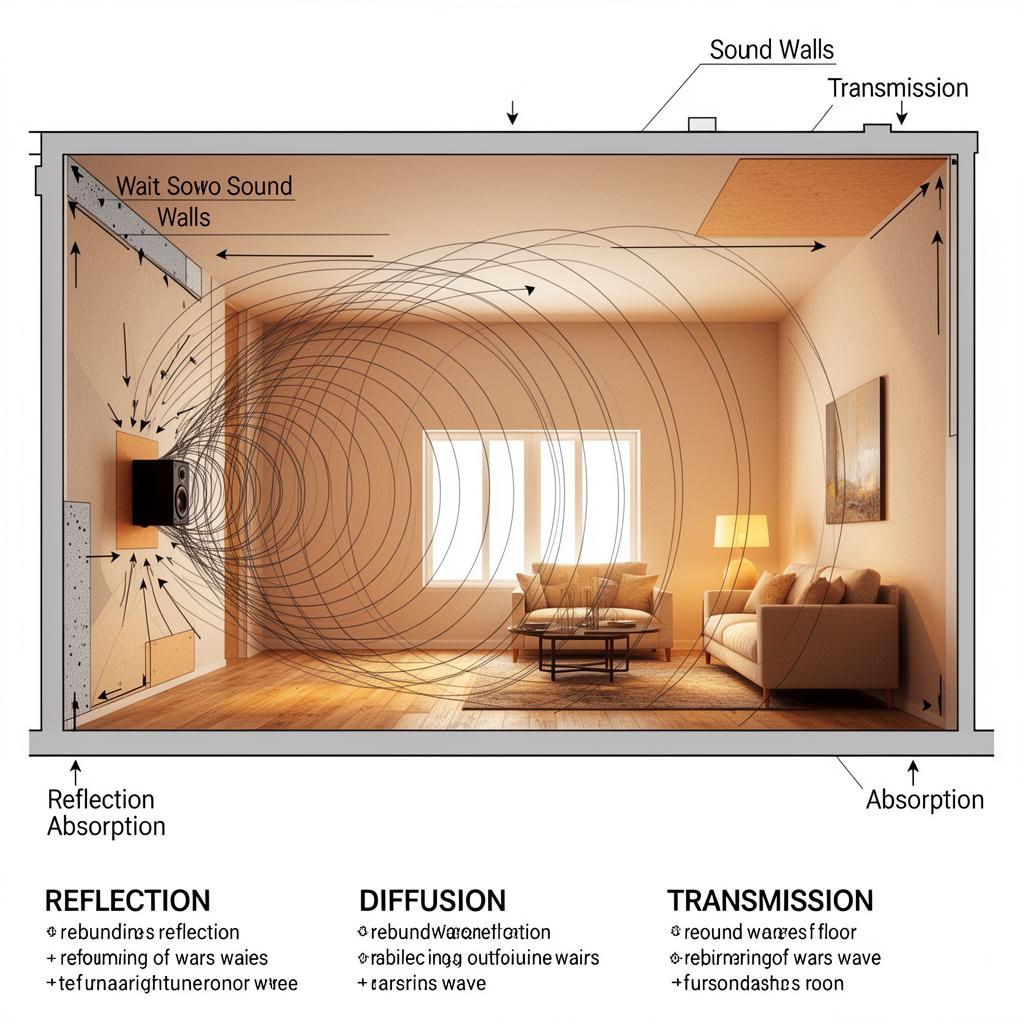
    Cross-section diagram of a room showing sound waves reflecting, absorbing, diffusing, and transmitting through walls, ceiling, and floor surfaces
    Cross-section diagram of a room showing sound waves reflecting, absorbing, diffusing, and transmitting through walls, ceiling, and floor surfaces

    1The Physics of Sound in Enclosed Spaces

    Sound is mechanical energy transmitted through vibrating particles. Unlike light, sound requires a physical medium—air, water, wood, steel, concrete—to propagate. In a room, air is the primary medium, but every wall, floor, ceiling, window, and piece of furniture also participates in sound transmission.

    Compression and Rarefaction

    When a sound source vibrates—a speaker cone, a human vocal cord, a dropped object—it pushes adjacent air molecules together (compression) and pulls them apart (rarefaction). These alternating zones of high and low pressure radiate outward from the source as longitudinal waves. The molecules themselves don't travel across the room; they oscillate back and forth, passing energy to their neighbors like dominoes.
    Speed of sound in air at 20°C: 343 meters per second (1,125 feet per second)
    Speed of sound in concrete: ~3,400 m/s (10x faster than air)
    Speed of sound in steel: ~5,960 m/s (17x faster than air)
    Speed of sound in water: ~1,480 m/s (4.3x faster than air)

    Frequency and Wavelength

    The frequency of a sound wave (measured in Hertz, Hz) determines its pitch. Human hearing spans approximately 20 Hz to 20,000 Hz. The wavelength of a sound wave is inversely proportional to its frequency: λ = v / f, where λ is wavelength, v is the speed of sound, and f is frequency.
    At 20°C in air:
    20 Hz (lowest audible): wavelength = 17.15 meters (56.3 feet)
    100 Hz (deep bass): wavelength = 3.43 meters (11.3 feet)
    1,000 Hz (mid-range speech): wavelength = 0.343 meters (13.5 inches)
    10,000 Hz (treble): wavelength = 0.034 meters (1.35 inches)
    20,000 Hz (highest audible): wavelength = 0.017 meters (0.67 inches)
    This massive range in wavelength—from 56 feet to less than an inch—is why different frequencies behave so differently inside rooms. Low frequencies have wavelengths larger than most rooms and wrap around obstacles effortlessly. High frequencies have tiny wavelengths and behave more like light, casting sharp acoustic shadows behind objects.

    2How Sound Waves Are Created

    Every sound in a room begins with a vibrating object transferring kinetic energy into the surrounding air. Understanding the source characteristics helps predict how sound will behave once it leaves the source.

    Direct Sound vs. Reflected Sound

    When you speak in a room, the listener receives two distinct types of sound. The direct sound travels in a straight line from your mouth to their ears. This arrives first and carries the clearest signal. Milliseconds later, reflected sound begins arriving—copies of the original wave that bounced off the ceiling, walls, floor, and furniture before reaching the listener.
    In a typical living room, the first reflection arrives within 5-15 milliseconds of the direct sound. The brain fuses these early reflections with the direct sound (the Haas Effect), making speech sound louder and fuller. Reflections arriving after approximately 50 milliseconds are perceived as separate echoes, which degrade speech intelligibility.

    Amplitude and the Decibel Scale

    The amplitude of a sound wave determines its loudness, measured in decibels (dB). The decibel scale is logarithmic: every 10 dB increase represents a 10x increase in sound intensity and approximately a 2x increase in perceived loudness.
    SourceDecibels (dB)Relative Intensity
    Threshold of hearing0 dB1x
    Quiet breathing10 dB10x
    Whisper at 5 feet30 dB1,000x
    Normal conversation60 dB1,000,000x
    Vacuum cleaner75 dB31,600,000x
    Lawnmower90 dB1,000,000,000x
    Rock concert110 dB100,000,000,000x

    3The Four Ways Sound Interacts with Surfaces

    When a sound wave strikes any surface in a room—wall, ceiling, floor, window, furniture—four things happen simultaneously. The proportion of energy allocated to each depends on the material's density, thickness, porosity, and surface texture.

    1. Reflection

    Sound reflects off hard, smooth, dense surfaces the same way light reflects off a mirror. The angle of incidence equals the angle of reflection. Hard materials like concrete, glass, tile, and hardwood reflect the vast majority of sound energy back into the room. A bare concrete wall reflects approximately 97-99% of incident sound energy across most frequencies.
    Reflection is responsible for echoes, flutter echoes (rapid repetitions between parallel walls), and reverberation (the gradual decay of reflected sound). In rooms with too many hard, parallel surfaces, reflections accumulate and make speech unintelligible.

    2. Absorption

    Porous, fibrous, and soft materials absorb sound energy by converting it into microscopic amounts of heat through friction. As air molecules vibrate inside the tiny interconnected pores of materials like fiberglass, mineral wool, acoustic foam, or heavy curtains, the friction between the moving air and the pore walls dissipates the acoustic energy.
    Absorption is measured by the Noise Reduction Coefficient (NRC), rated from 0.00 (perfectly reflective) to 1.00 (perfectly absorptive). Key NRC values:
    Bare concrete: NRC 0.01-0.02
    Painted drywall: NRC 0.05
    Carpet on concrete: NRC 0.30-0.55
    Heavy curtains: NRC 0.50-0.75
    2-inch acoustic panel: NRC 0.85-1.00
    4-inch fiberglass: NRC 0.95-1.00

    3. Diffusion

    Diffusion scatters sound waves in multiple directions simultaneously, breaking up concentrated reflections without removing energy from the room. Irregular surfaces—bookshelves filled with varying-sized books, architectural molding, textured wall panels, and purpose-built diffusers—create diffusion naturally.
    Good diffusion preserves the sense of spaciousness and liveliness in a room while eliminating problematic focused reflections. Concert halls, recording studios, and high-end home theaters use carefully designed quadratic residue diffusers (QRDs) and other mathematically optimized surfaces to achieve controlled scattering across specific frequency ranges.

    4. Transmission

    Transmission is what happens when sound passes through a barrier—wall, floor, ceiling, door, or window—and enters an adjacent space. This is the behavior that soundproofing specifically targets. The Sound Transmission Class (STC) rating measures a barrier's ability to block airborne sound transmission.
    Key STC benchmarks:
    STC 25: Normal speech clearly audible and understood
    STC 35: Loud speech audible but unintelligible
    STC 45: Loud speech barely heard as a faint murmur
    STC 50: Very loud sounds heard faintly—privacy threshold
    STC 60+: Excellent isolation—most sounds completely inaudible
    A standard interior wall with single drywall on each side and no insulation typically rates STC 33. Adding mass loaded vinyl (MLV) between the drywall layers can boost this to STC 45-55, depending on the MLV weight and additional treatments.

    4Room Modes and Standing Waves

    Room modes are one of the most misunderstood and impactful acoustic phenomena in enclosed spaces. When sound waves reflect between parallel surfaces, they create standing waves—stationary patterns where certain frequencies are dramatically amplified at some locations and nearly silent at others.

    How Standing Waves Form

    A standing wave forms when the wavelength of a sound frequency is an exact multiple of the distance between two parallel surfaces. The reflected wave perfectly overlaps the incoming wave, creating fixed points of maximum pressure (antinodes) and zero pressure (nodes). At an antinode, you hear the frequency much louder than it actually is. At a node, you hear almost nothing at that frequency.
    The fundamental room mode frequency between two walls is calculated as: f = v / (2 × L), where v is the speed of sound (343 m/s) and L is the distance between the walls in meters.

    Calculating Your Room's Modes

    Room DimensionFundamental Mode (Hz)2nd Harmonic (Hz)3rd Harmonic (Hz)
    10 ft (3.05 m)56 Hz112 Hz168 Hz
    12 ft (3.66 m)47 Hz94 Hz141 Hz
    15 ft (4.57 m)38 Hz75 Hz113 Hz
    20 ft (6.10 m)28 Hz56 Hz84 Hz
    Room modes are classified into three types: axial modes (between two parallel surfaces—most powerful), tangential modes (involving four surfaces), and oblique modes (involving all six surfaces). Axial modes carry the most energy and cause the most noticeable acoustic problems.

    5How Room Shape and Size Affect Sound

    The geometry of a room fundamentally determines its acoustic character. Two rooms with identical materials but different dimensions will sound dramatically different.

    Square Rooms: The Worst Case

    A perfectly square room is the worst possible shape for acoustics. When length equals width, the room modes for both dimensions overlap at the same frequencies, creating extremely powerful standing waves. A 12 × 12 foot room will have devastating bass buildup at 47 Hz and its harmonics, with certain listening positions experiencing 20+ dB of bass boost while others have near-complete bass cancellation.

    Rectangular Rooms: Better but Not Perfect

    Rectangular rooms distribute modes across more frequencies because the different dimensions produce different fundamental modes. The ideal ratio between length, width, and height has been studied extensively. The Bolt Area (named after acoustician Richard Bolt) defines the optimal range of room dimension ratios for even mode distribution. Commonly recommended ratios include 1:1.4:1.9 and 1:1.6:2.3.

    Irregular Rooms: Natural Diffusion

    Rooms with non-parallel walls, angled ceilings, alcoves, and bay windows naturally break up standing wave patterns and create diffuse sound fields. This is why many professional recording studios and listening rooms are deliberately designed with splayed walls (5-10° off parallel) and non-rectangular geometries.

    Ceiling Height Matters

    Standard 8-foot ceilings create a vertical fundamental mode at approximately 71 Hz—right in the critical bass range. This creates a strong standing wave between the floor and ceiling that manifests as a thick, boomy bass response. Higher ceilings (10-12 feet) push this mode lower, often below the critical listening range, resulting in cleaner bass reproduction.

    6The Role of Furniture and Soft Materials

    Every object in a room affects how sound travels. An empty room sounds dramatically different from a furnished one because furniture, curtains, rugs, and other soft objects all absorb and diffuse sound energy.

    How Common Items Affect Room Acoustics

    ItemAcoustic EffectFrequencies Most Affected
    Upholstered sofaAbsorbs mid and high frequencies500 Hz – 4,000 Hz
    Heavy curtainsAbsorbs mid-high frequencies, reduces flutter echo250 Hz – 8,000 Hz
    Thick area rugAbsorbs high frequencies, reduces floor reflections1,000 Hz – 10,000 Hz
    Filled bookshelfDiffuses sound, breaks up flutter echoes300 Hz – 5,000 Hz
    Glass windowReflects most frequencies, transmits some bassAll frequencies
    Hard wood tableReflects, creates comb filtering at table height1,000 Hz – 10,000 Hz
    A fully furnished living room typically has a reverberation time of 0.4-0.6 seconds—comfortable for conversation. The same room empty might measure 1.2-1.8 seconds—uncomfortably echoey and fatiguing for extended conversations.

    7Reverberation Time: RT60 Explained

    Reverberation time is the single most important metric in room acoustics. RT60 is defined as the time it takes for a sound to decay by 60 dB after the source stops. A clap in a tiled bathroom might reverberate for 2+ seconds. The same clap in a carpeted, furnished bedroom might decay in 0.3 seconds.

    The Sabine Equation

    Wallace Clement Sabine developed the first mathematical formula for predicting reverberation time in 1898. The Sabine equation remains the foundation of room acoustics design:

    RT60 = 0.161 × V / A

    Where V is the room volume in cubic meters and A is the total absorption in sabins (the sum of each surface's area multiplied by its absorption coefficient).

    Optimal RT60 for Different Room Types

    Room TypeOptimal RT60 (seconds)Why
    Recording studio (control room)0.2 – 0.4Critical listening requires minimal coloration
    Home theater0.3 – 0.5Dialog clarity with immersive surround
    Living room / bedroom0.4 – 0.6Comfortable conversation without echo
    Classroom0.4 – 0.7Speech intelligibility for students
    Concert hall (orchestral)1.8 – 2.2Musical warmth and envelopment
    Cathedral / church3.0 – 8.0+Majestic, reverberant atmosphere

    8Flanking Paths: How Sound Sneaks Around Barriers

    One of the most frustrating aspects of room acoustics is flanking transmission. Even if you build a perfect STC-60 wall, sound can bypass it entirely through indirect paths called flanking paths.

    Common Flanking Paths in Buildings

    Continuous floor slabs: Sound vibrates through a concrete floor that extends under the wall into the next room
    Shared ceiling plenums: In commercial buildings, the space above drop ceilings is often continuous, allowing sound to travel over the top of partition walls
    HVAC ductwork: Air ducts connecting rooms act as direct acoustic pathways—sound literally travels through the ductwork
    Electrical outlets: Back-to-back electrical boxes on shared walls create direct openings through the wall assembly
    Door gaps: A 1/8-inch gap under a door can leak up to 50% of the sound energy the door would otherwise block
    Pipe penetrations: Plumbing and conduit passing through walls create rigid mechanical connections that transmit vibration

    The 1% Rule of Acoustic Leaks

    The relationship between acoustic leaks and sound isolation is devastatingly non-linear. If just 1% of a wall's surface area is an open hole, the maximum achievable STC drops to approximately STC 20—regardless of how much mass the rest of the wall contains. This mathematical reality is why sealing is arguably more important than mass in practical soundproofing. A $500 MLV installation can be rendered nearly useless by a $2 gap left unsealed around an electrical outlet.
    This principle applies to every gap, crack, and penetration in a room. Acoustic caulk, putty pads over electrical boxes, door sweeps, and weatherstripping are essential components of any soundproofing project.

    9Impact Noise vs. Airborne Noise in Rooms

    Sound travels through rooms via two fundamentally different mechanisms, and each requires different solutions.

    Airborne Sound

    Airborne sound originates as pressure waves in the air. Voices, music, television, and barking dogs are all airborne sound sources. Airborne sound reaches a wall, sets it vibrating, and re-radiates as new airborne sound on the other side. Blocking airborne sound requires mass (heavy barriers like MLV, double drywall, concrete) and sealing (eliminating gaps).

    Structure-Borne (Impact) Sound

    Impact sound is created when an object physically strikes a building element—footsteps on a floor, a door slamming, a hammer hitting a wall. The impact creates vibrations that travel through the building's structure at high speed. Because solid materials transmit sound much faster than air (steel conducts sound at 17x the speed of air), impact noise can travel enormous distances through a building's frame.
    Impact sound is measured by Impact Insulation Class (IIC). Most building codes require IIC 50 or higher for floor/ceiling assemblies in multifamily buildings. Stopping impact noise requires decoupling (breaking the mechanical connection) and damping (converting vibration energy to heat).
    Noise TypeHow It TravelsRating SystemBest Solutions
    AirbornePressure waves through air → vibrates wall → re-radiatesSTC (Sound Transmission Class)Mass (MLV, drywall), sealing, insulation
    Impact / Structure-borneDirect mechanical vibration through building structureIIC (Impact Insulation Class)Decoupling (resilient channels, isolation clips), damping (Green Glue), underlayment

    10The Inverse Square Law and Distance

    In a free field (outdoors with no reflections), sound intensity decreases according to the inverse square law: every doubling of distance from the source reduces sound intensity by 6 dB. At 1 meter from a speaker producing 90 dB, you hear 90 dB. At 2 meters, 84 dB. At 4 meters, 78 dB. At 8 meters, 72 dB.

    Why the Inverse Square Law Breaks Down Indoors

    Inside a room, reflections from walls, ceiling, and floor add energy back to the sound field, preventing the clean 6 dB-per-doubling decay. The result is that sound levels remain much more consistent throughout the room than they would outdoors. Beyond a certain distance from the source—called the critical distance or reverberant radius—the reflected sound field actually dominates over the direct sound.
    The critical distance depends on the room's total absorption and volume. In a small, reflective room (bathroom), the critical distance might be less than 1 foot—meaning you're almost always hearing more reflected sound than direct sound. In a heavily treated recording studio, the critical distance might extend 6-10 feet from the speakers.
    This is why adding absorption panels to a room makes it feel more intimate and controlled—you're extending the critical distance, allowing the direct sound to dominate over the reverberant field for a larger listening area.

    11Temperature, Humidity, and Sound Speed Indoors

    Environmental conditions inside a room subtly but measurably affect sound propagation.

    Temperature Effects

    The speed of sound increases with temperature. At 0°C (32°F), sound travels at 331 m/s. At 20°C (68°F), it increases to 343 m/s. At 40°C (104°F), it reaches 355 m/s. The approximate relationship is: v = 331 + (0.6 × T), where T is temperature in Celsius.
    In rooms with significant temperature gradients—near windows in winter, near heating vents, or in rooms with poor insulation—sound waves can refract (bend) toward cooler air. This effect is minimal in most residential settings but becomes measurable in large, poorly climate-controlled spaces like warehouses and gymnasiums.

    Humidity Effects

    Humid air is actually less dense than dry air (water vapor molecules are lighter than nitrogen and oxygen molecules), causing sound to travel slightly faster in humid conditions. More significantly, high humidity reduces the absorption of sound by air itself, particularly at frequencies above 2,000 Hz. In a large room, this means high-frequency sounds carry further in humid conditions.
    For most residential room acoustics, temperature and humidity effects are secondary to the dominant factors of room geometry, surface materials, and furnishings. However, in precision environments like recording studios and concert halls, HVAC systems are designed to maintain consistent temperature and humidity specifically to preserve acoustic consistency.

    12Practical Room Acoustics: How to Control Sound

    Armed with the physics of how sound travels in a room, you can apply four fundamental strategies to control acoustic behavior in any space.

    Strategy 1: Add Mass to Block Transmission

    Mass is the primary weapon against sound transmission between rooms. The Mass Law of Acoustics states that doubling the mass of a barrier increases its sound transmission loss by approximately 6 dB. Heavy, dense materials like mass loaded vinyl, concrete, and multiple layers of drywall physically resist vibration, preventing sound energy from passing through.

    Strategy 2: Decouple Structures to Break Vibration Paths

    Decoupling physically separates the two sides of a wall, floor, or ceiling assembly so that vibrations on one side cannot mechanically transfer to the other. Techniques include resilient channels, sound isolation clips (like RSIC-1 clips), staggered stud walls, and double stud walls with an air gap. Decoupling is the most effective single strategy for reducing both airborne and impact sound transmission.

    Strategy 3: Add Absorption to Reduce Reflections

    Acoustic absorption panels, heavy curtains, carpet, and upholstered furniture all reduce reflected sound energy within a room. This lowers reverberation time, improves speech clarity, and creates a more comfortable listening environment. Absorption does not block sound from passing through walls—it only controls sound behavior within the room it's installed in.

    Strategy 4: Seal Every Gap and Penetration

    Given the 1% rule, sealing is the highest-ROI acoustic treatment you can perform. Acoustic caulk around all wall perimeters, putty pads behind electrical boxes, weatherstripping around doors, and door bottom sweeps collectively prevent sound from bypassing your expensive wall treatments through tiny gaps.
    The most effective projects combine all four strategies. A wall assembly featuring MLV (mass) + resilient channels (decoupling) + cavity insulation (absorption) + acoustic caulk (sealing) can achieve STC ratings of 55-65, representing near-complete acoustic isolation for residential applications.

    13Mass Loaded Vinyl: Stopping Sound Transmission

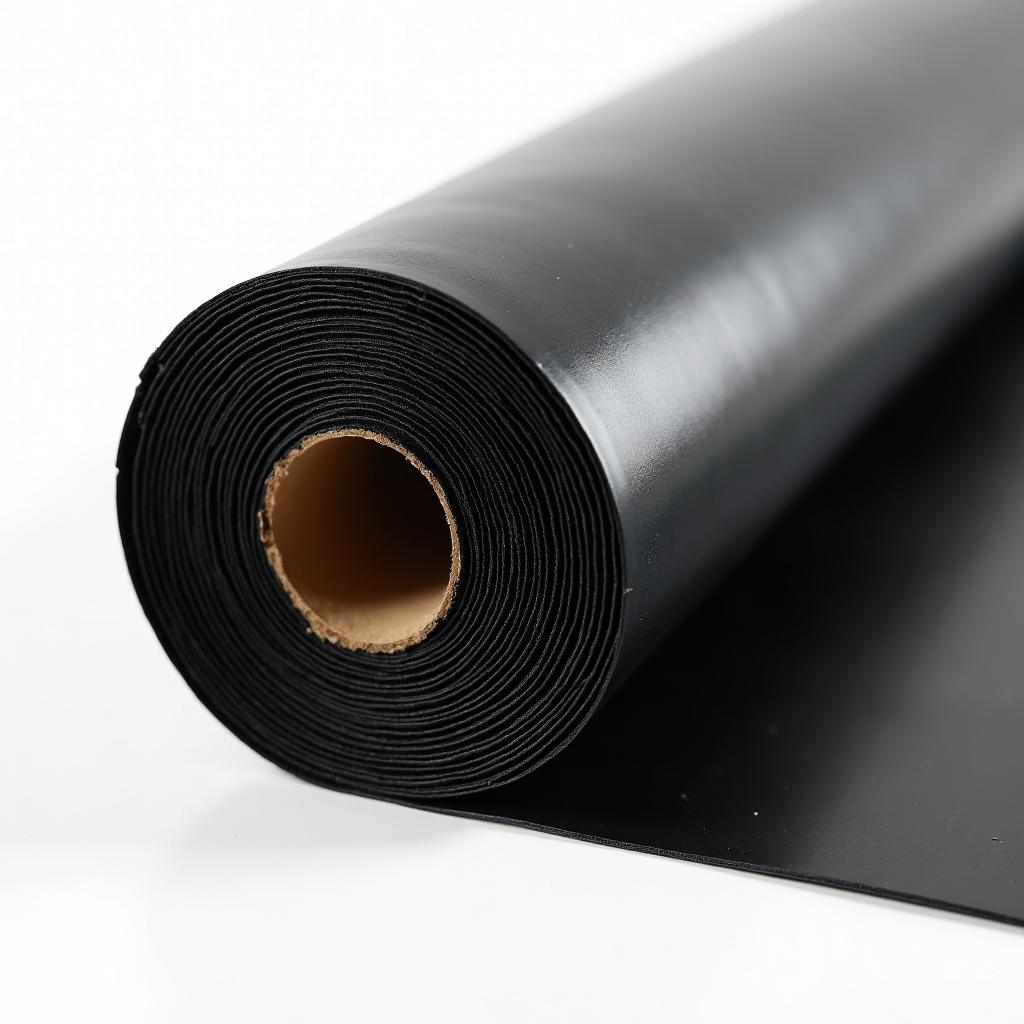
    Mass loaded vinyl (MLV) is specifically engineered to add maximum mass to wall, floor, and ceiling assemblies with minimum thickness. Understanding how MLV works within the context of room acoustics explains why it's become the material of choice for serious soundproofing projects.

    How MLV Blocks Sound

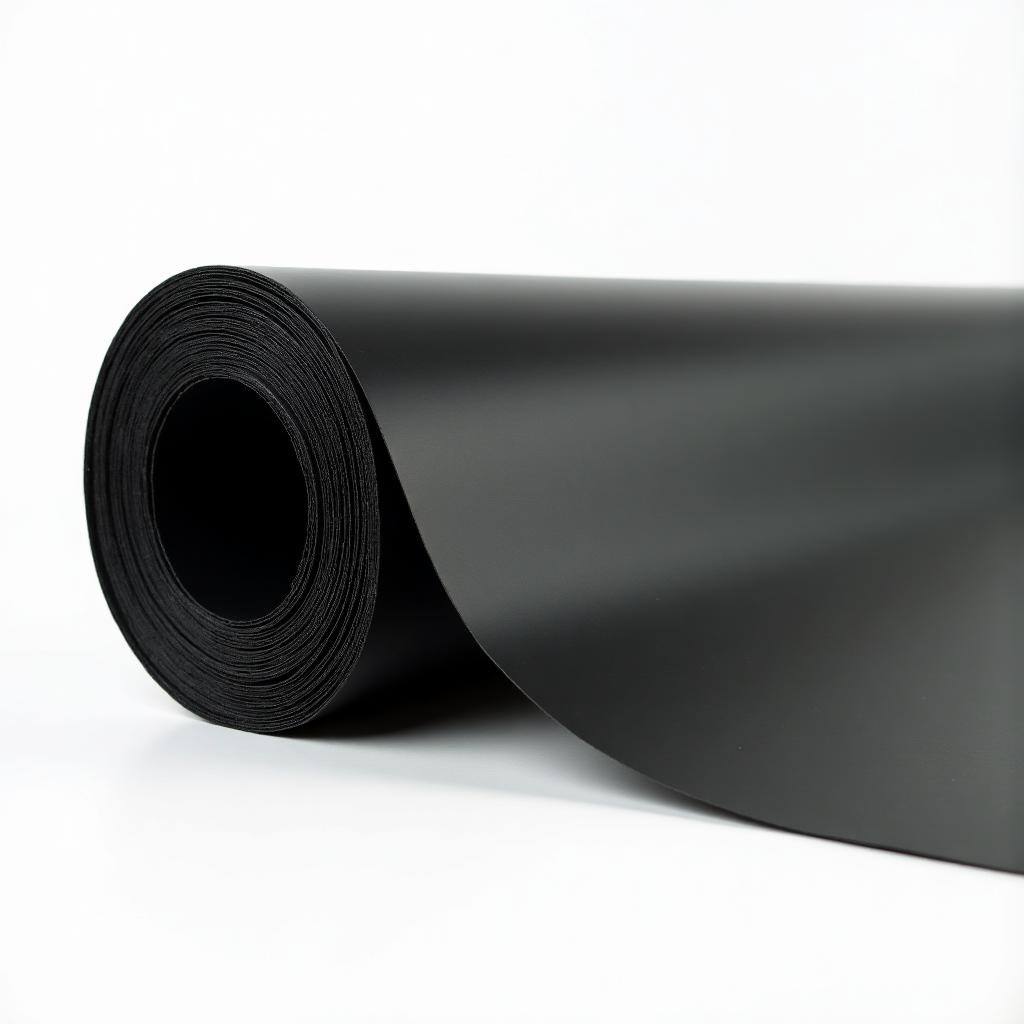
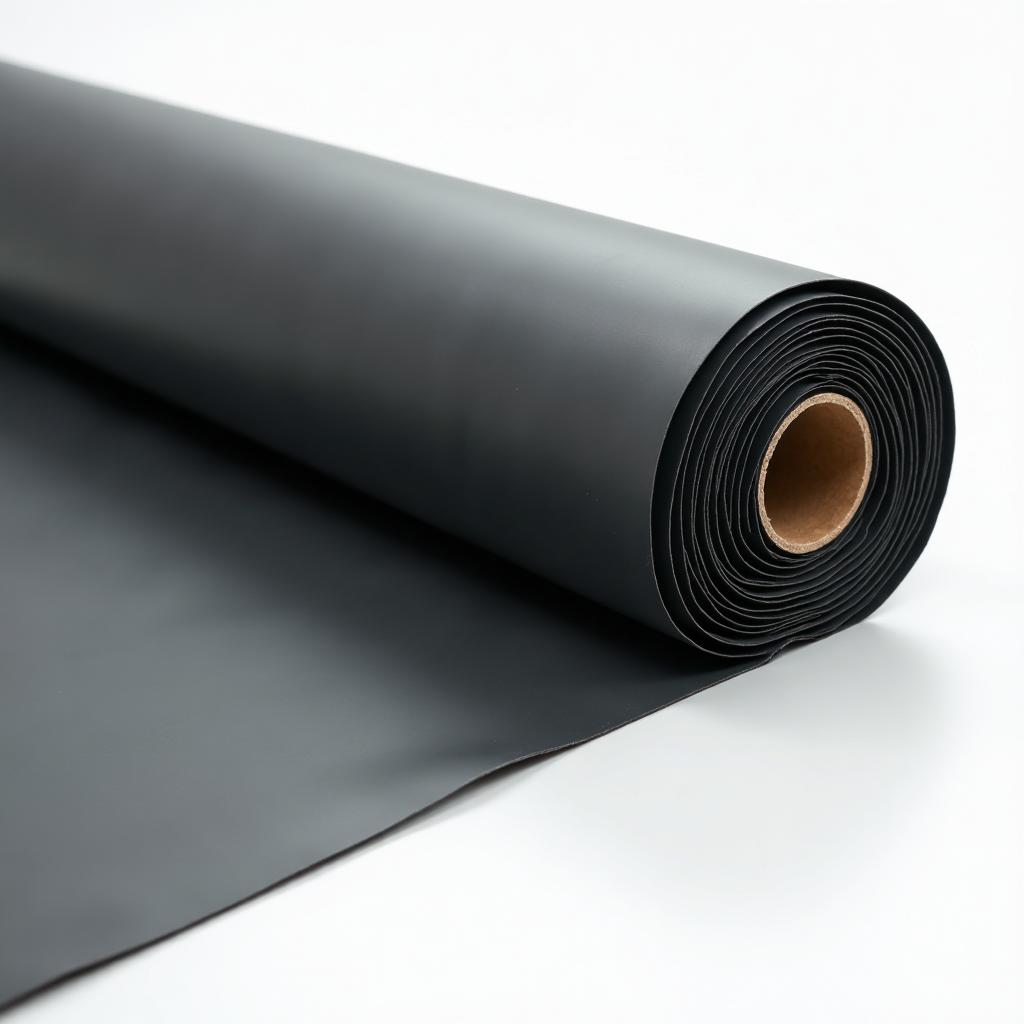
    MLV is a thin, dense, flexible barrier typically weighing 1-2 pounds per square foot. When installed within a wall assembly, MLV resists vibration due to its high mass-per-unit-area. Sound waves striking the wall attempt to vibrate the MLV, but the material's density prevents efficient energy transfer. The sound energy is either reflected back toward the source or converted to negligible heat through internal damping.

    MLV Performance Data

    MLV WeightThicknessSTC Rating (MLV alone)Best Application
    1/2 lb/sq ft1/16"STC 21Ductwork wrapping, pipe lagging
    1 lb/sq ft1/8"STC 27Standard wall, ceiling, floor applications
    2 lb/sq ft1/4"STC 32Maximum isolation: studios, theaters, commercial
    When combined with a standard wall assembly (drywall + studs + insulation + drywall), 1 lb MLV typically adds 8-12 STC points to the existing assembly. This is the equivalent of doubling the drywall thickness but at a fraction of the added depth.

    Where to Install MLV for Maximum Impact

    Shared apartment/condo walls: Install between drywall layers to block neighbor noise
    Ceiling assemblies: Layer over joists before drywall to stop upstairs footstep noise from entering as airborne sound
    Floor underlayment: Place under flooring to reduce sound transmission to rooms below
    Around HVAC ducts: Wrap ducts to prevent sound from traveling through the ventilation system
    Behind baseboards: Seal the gap between drywall and floor to eliminate a common flanking path

    14Conclusion

    Sound travels through a room in ways that are predictable, measurable, and controllable—once you understand the physics. Every surface reflects, absorbs, diffuses, or transmits sound energy. Room geometry creates standing waves that amplify certain frequencies. Flanking paths allow sound to bypass even the best barriers. Temperature and humidity subtly alter propagation speed.
    The practical takeaway is that controlling sound requires a multi-pronged approach. Mass blocks transmission. Decoupling breaks vibration paths. Absorption tames reflections. Sealing eliminates leaks. The most effective acoustic solutions combine all four strategies—and mass loaded vinyl delivers the highest mass-per-thickness ratio of any commonly available material, making it the cornerstone of modern soundproofing practice.

    FAQs: How Does Sound Travel in a Room

    Need Expert Soundproofing Advice?

    Our team of soundproofing specialists is here to help you choose the right products and installation methods for your museum or gallery project.