Education7 min readAuthorMass Loaded Vinyl DirectPublishedUpdated

    How Do Noise-Canceling Headphones Actually Work? The Science Explained
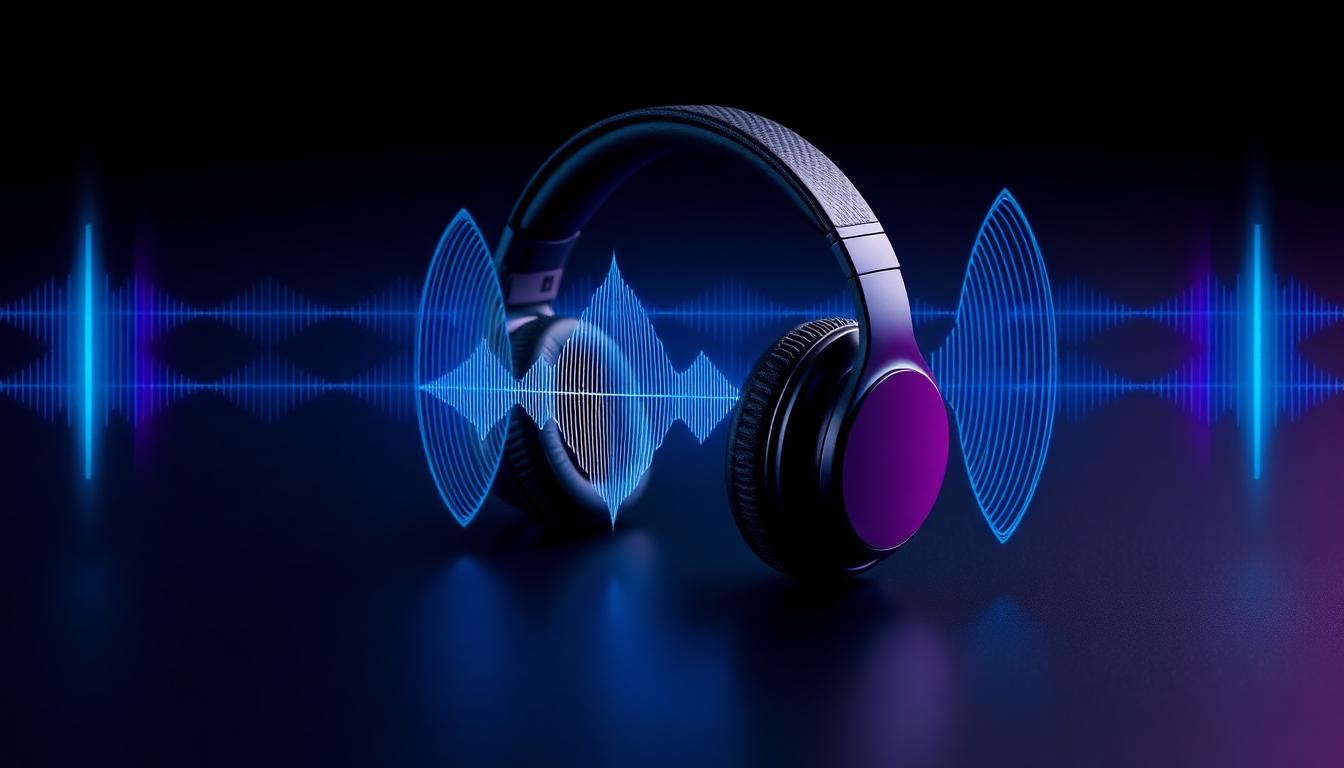
    Premium over-ear noise-canceling headphones with artistic sound wave visualizations showing active noise cancellation technology
    Premium over-ear noise-canceling headphones with artistic sound wave visualizations showing active noise cancellation technology

    1The Two Types of Noise Cancellation

    Every pair of noise-canceling headphones uses one or both of two fundamentally different approaches to reducing unwanted sound. Understanding the distinction is key to understanding why some headphones work better than others — and why no headphone can truly eliminate all noise.
    Passive noise cancellation relies on physical materials to block sound waves from reaching your ears. Active noise cancellation (ANC) uses electronics to generate sound waves that destructively interfere with incoming noise. Most premium headphones today combine both approaches, using physical isolation as the foundation and ANC to handle what leaks through.
    The physics behind each approach are completely different. Passive cancellation follows the same mass-law principles used in architectural soundproofing — denser materials block more sound. Active cancellation exploits the wave nature of sound itself, using the principle of superposition to create silence from noise.

    2Passive Noise Cancellation: The Physical Barrier

    Before any electronics get involved, the headphone itself acts as a physical sound barrier. Over-ear headphones with thick ear cushions create an acoustic seal around the ear, blocking external sound through mass and absorption — the same principles that make a solid wall quieter than a thin window.
    The ear cup shell (typically plastic or metal) reflects incoming sound waves. The foam padding absorbs mid- and high-frequency energy. The seal against the head prevents flanking paths where sound might sneak around the barrier. A well-designed passive headphone can reduce ambient noise by 15–25 dB across a broad frequency range without any battery or processing.
    In-ear monitors (IEMs) achieve passive isolation differently — by creating a tight seal inside the ear canal. A properly fitted silicone or foam ear tip can attenuate 20–30 dB of external noise, which is why many audiophiles prefer IEMs for noisy environments even without active cancellation.

    3Active Noise Cancellation: Fighting Sound With Sound

    Active noise cancellation is based on a principle called destructive interference. When two sound waves of equal amplitude and opposite phase meet, they cancel each other out — the peaks of one wave fill the valleys of the other, resulting in silence. This is the superposition principle, and it's the core physics that makes ANC possible.
    Here's the concept in simple terms: if an unwanted sound wave has a pressure peak of +1 Pascal at a given moment, the ANC system generates a wave with a pressure valley of -1 Pascal at exactly the same moment. The two waves combine to produce zero — no sound. The technical term for this generated wave is the 'anti-noise' or 'anti-phase' signal.
    The mathematical foundation is straightforward. If the noise signal is represented as N(t) = A·sin(2πft), the anti-noise signal must be A·sin(2πft + π), which equals -A·sin(2πft). When summed: N(t) + Anti-N(t) = A·sin(2πft) - A·sin(2πft) = 0. Perfect cancellation requires perfect amplitude matching and exact phase inversion — which is why real-world ANC is never 100% effective.

    4The ANC Pipeline: From Microphone to Anti-Noise

    The active noise cancellation process happens in four stages, all executing in microseconds. First, one or more external microphones continuously sample the ambient sound environment. These reference microphones capture the noise signal before it reaches the ear — airplane engine drone, subway rumble, office HVAC hum — as a digital waveform.
    Second, a dedicated digital signal processor (DSP) analyzes the incoming noise waveform in real time. The DSP identifies the frequency components, amplitude, and phase of the unwanted sound. Modern ANC chips perform this analysis using adaptive filter algorithms — most commonly the Filtered-x Least Mean Squares (FxLMS) algorithm — which continuously adjusts the anti-noise signal based on error feedback.
    Third, the DSP generates the anti-phase signal — an inverted copy of the detected noise — and sends it to the headphone drivers. The drivers reproduce this anti-noise signal simultaneously with whatever music or audio you're listening to. Fourth, an internal error microphone near the ear measures what actually reaches the eardrum, feeding residual noise data back to the DSP so it can refine its cancellation in real time.
    This entire feedback loop executes thousands of times per second. The latency from noise detection to anti-noise generation must be extremely low — typically under 1 millisecond — or the phase alignment will be wrong and the cancellation will fail. This is why ANC requires purpose-built DSP chips rather than general-purpose processors.

    5Why ANC Works Better on Low Frequencies

    If you've ever used noise-canceling headphones on a plane, you've noticed they dramatically reduce the low-pitched engine drone but barely touch the high-pitched sounds of conversation or the drink cart. This isn't a design flaw — it's a fundamental physics limitation.
    Low-frequency sounds have long wavelengths (a 100 Hz tone has a wavelength of about 3.4 meters). Long wavelengths change slowly in space, which means the noise signal detected by the external microphone is still very similar to the noise signal that reaches the ear a fraction of a second later. The DSP has time to compute an accurate anti-phase signal.
    High-frequency sounds have short wavelengths (a 4,000 Hz tone has a wavelength of about 8.5 centimeters). These waves change rapidly in both time and space. By the time the DSP detects, processes, and generates an anti-noise signal, the original wave has already shifted phase. Even a tiny timing error — a fraction of a millisecond — means the anti-noise arrives out of alignment, reducing or even worsening the cancellation.
    Most consumer ANC headphones achieve 20–30 dB of active noise reduction below 500 Hz, but only 5–10 dB above 1,000 Hz. Above 2,000 Hz, active cancellation contributes almost nothing — passive isolation from the ear cup does virtually all the work. This is why ANC headphones excel in environments dominated by low-frequency noise: airplane cabins, trains, buses, and air conditioning systems.

    6Feedforward vs. Feedback vs. Hybrid ANC

    Not all ANC systems are designed the same way. The three main architectures — feedforward, feedback, and hybrid — differ in microphone placement and how they handle the noise signal. Each has trade-offs in performance, cost, and latency.
    Feedforward ANC places the reference microphone on the outside of the ear cup, facing the noise source. The microphone captures sound before it reaches the ear, giving the DSP a preview of what's coming. This provides more processing time and works well for predictable, steady-state noise. The downside: feedforward systems can't detect sounds that bypass the external mic or leak through the ear cup seal.
    Feedback ANC places the microphone inside the ear cup, near the ear. It measures the actual sound at the listener's ear — including any noise that leaked past the passive isolation. The DSP then generates cancellation based on what the listener is actually hearing. Feedback systems are self-correcting but can become unstable (producing audible artifacts) if the gain is too high.
    Hybrid ANC uses both external and internal microphones together. The feedforward mic provides early detection and broad cancellation, while the feedback mic fine-tunes the result by measuring residual noise at the ear. Hybrid systems deliver the best cancellation performance — typically 30–40 dB at low frequencies — but require more processing power and cost more to implement. Nearly all flagship headphones from Sony, Bose, and Apple use hybrid ANC.

    7What ANC Cannot Do

    Despite its impressive capabilities, active noise cancellation has real physical limits. It cannot effectively cancel sudden, impulsive sounds — a door slamming, a dog barking, a clap — because these transient events are over before the DSP can react. By the time the system detects the sound, computes the inverse, and outputs the anti-noise, the original sound has already passed.
    ANC also struggles with highly variable or complex noise environments. A steady airplane drone is relatively simple — a narrow band of frequencies that changes slowly. But a crowded restaurant with dozens of overlapping conversations, clinking glasses, and background music presents a constantly shifting noise profile that overwhelms the adaptive algorithms.
    Wind noise is another challenge. Turbulent airflow across the external microphones creates broadband, chaotic pressure fluctuations that don't follow predictable wave patterns. Many headphones include wind-noise detection that automatically reduces ANC sensitivity outdoors to prevent the system from amplifying wind artifacts.
    Finally, ANC introduces a small amount of its own noise — often described as a faint hiss or pressure sensation. This is the residual error signal from imperfect cancellation, combined with the noise floor of the microphones and amplifiers. In very quiet environments, this 'ANC hiss' can be more noticeable than the ambient noise it's trying to cancel, which is why most headphones allow you to disable ANC when it's not needed.

    8The Future of Noise Cancellation Technology

    ANC technology is advancing rapidly, driven by improvements in DSP chips, machine learning algorithms, and microphone arrays. Next-generation systems are moving beyond simple waveform inversion toward AI-driven noise classification — identifying specific noise sources (engine, voice, traffic) and applying optimized cancellation profiles for each.
    Spatial ANC is an emerging approach that uses beamforming microphone arrays to target noise from specific directions while allowing sounds from other directions to pass through. This enables selective cancellation — blocking the noise from a jet engine to your left while preserving the voice of a seatmate to your right.
    Bone conduction ANC is being researched for environments where traditional ear-cup headphones aren't practical. By generating anti-vibration signals through the skull bones, these systems could provide noise cancellation for industrial workers, military personnel, and others who need environmental awareness while still reducing harmful noise exposure.
    Perhaps most promising is the integration of ANC principles into architectural and automotive applications. Active noise cancellation is already used in some luxury vehicles to reduce road and engine noise inside the cabin. As processing power increases and costs decrease, the same principles behind your headphones may one day be applied to entire rooms, offices, and living spaces — effectively creating zones of silence without any physical barriers.

    10Conclusion

    Noise-canceling headphones represent one of the most elegant applications of acoustic physics in consumer technology. By combining passive isolation with active wave cancellation, they transform the noisy modern world into a quieter, more controlled listening environment. Understanding the science behind ANC — destructive interference, DSP processing, frequency-dependent performance — helps you appreciate both what these devices accomplish and where their physical limits lie. Whether you're choosing your next pair of headphones or simply curious about the technology in your ears, the principles are the same ones that govern all of acoustics: sound is a wave, and waves follow rules we can exploit.

    FAQs: How Do Noise-Canceling Headphones Work

    Need Expert Soundproofing Advice?

    Our team of soundproofing specialists is here to help you choose the right products and installation methods for your museum or gallery project.