Hospital Soundproofing with Mass Loaded Vinyl (MLV)
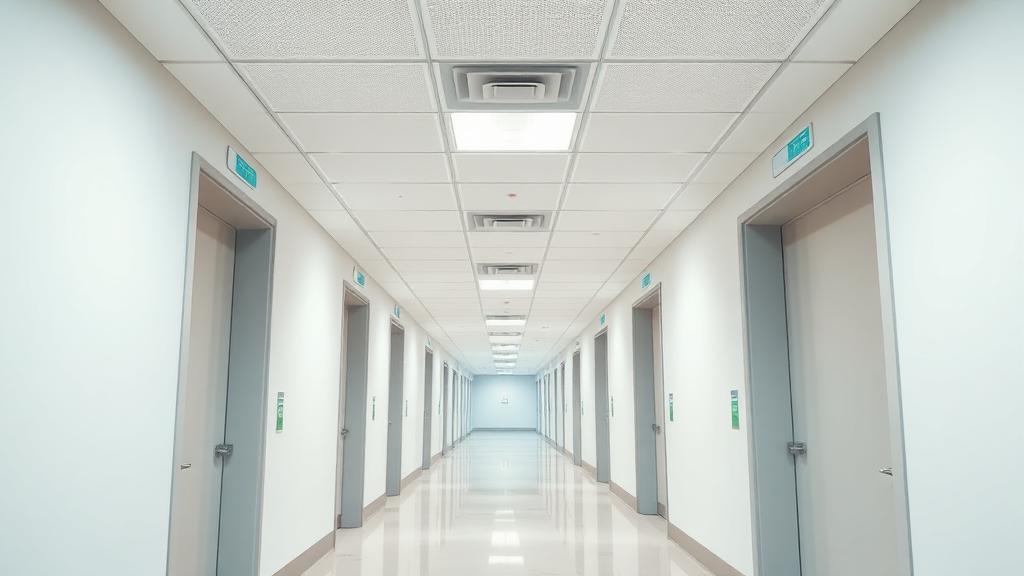
1Why Hospital Noise Control Matters
• Pain perception: Noise increases perceived pain levels and analgesic requirements by 20-50% in documented research
• Blood pressure: Noise spikes above 50-60 dB cause measurable cardiovascular stress responses in patients
• Healing rates: Quieter hospital environments correlate with 10-20% faster recovery and shorter stays
• Patient satisfaction: Noise is consistently the #1 or #2 complaint in patient satisfaction surveys
• Communication failures: Background noise causes misheard orders and instructions
• Burnout: Chronic noise exposure increases stress, fatigue, and turnover among nurses and physicians
• Concentration: Complex cognitive tasks (diagnosis, surgery, documentation) suffer in noisy environments
CMS (Centers for Medicare & Medicaid Services) now includes hospital noise in quality metrics that affect reimbursement. HCAHPS patient satisfaction surveys specifically ask about noise, and scores directly impact hospital revenue. Addressing noise proactively costs far less than the financial penalties and reputation damage from poor scores.
2Understanding Hospital Noise Sources
• HVAC systems running continuously
• Medical equipment (monitors, pumps, ventilators)
• Ice machines and refrigeration
• Pneumatic tube systems
• Elevators and hoists
• MRI and imaging equipment vibration
• Emergency generators
• Staff conversations and paging systems
• Patient call systems and alarms
• Visitor traffic and conversations
• Meal service and housekeeping
• Code response teams
• Shift changes and rounds
• Footfall impact from corridors above patient rooms
• Rolling carts and equipment on hard floors
• Door closures and latching
• Plumbing noise transmission
• Adjacent room activities (TV, conversations)
Not all noise sources require the same treatment. Focus soundproofing investments on:
• Patient room separations (highest priority)
• Operating room and procedure areas
• ICU and critical care units
• Psychiatric units requiring privacy
• Administrative areas requiring speech privacy
• Mechanical rooms adjacent to patient care
3How MLV Works in Healthcare Settings
• Cleanability: Smooth, non-porous surface can be wiped down and does not harbor pathogens
• Flexibility: Wraps around penetrations, pipes, and ductwork that are numerous in hospitals
• Fire performance: Available with Class A fire ratings required in healthcare occupancies
• Non-magnetic: Can be used near MRI suites without interference
• No outgassing: Quality MLV products are low-VOC, important for sensitive patient populations
A standard hospital patient room wall (metal studs, batt insulation, two layers of drywall) achieves approximately STC 45-48. Adding 1 lb/sf MLV improves this to STC 50-54. With optimized assemblies including resilient channels, STC 55-60 is achievable—meeting even the most stringent healthcare acoustic requirements.
Hospital walls often contain multiple barrier layers for various purposes. MLV can be combined with:
• Lead shielding for radiation protection
• Fire barriers for compartmentalization
• Moisture barriers in wet areas
• Electromagnetic shielding near imaging equipment
4Patient Room Wall Assemblies
Meets basic healthcare requirements:
• 3-5/8" metal studs at 16" o.c.
• 3" mineral wool insulation
• 1 lb/sf MLV applied over studs
• 5/8" Type X gypsum board each side
• Acoustic sealant at all perimeters and penetrations
For rooms requiring speech privacy (psychiatric, counseling, isolation):
• 3-5/8" metal studs at 16" o.c.
• Full-depth mineral wool insulation
• 1 lb/sf MLV over studs
• Resilient channels on one side
• Double 5/8" Type X on resilient channel side
• Single 5/8" Type X on opposite side
• Acoustic sealant throughout
For operating rooms, MRI suites, or sensitive psychiatric units:
• Staggered stud or double stud construction
• Full mineral wool insulation
• 2 lb/sf MLV
• Resilient clips and hat channel system
• Double 5/8" Type X each side
• Acoustic sealant and gaskets at all penetrations
• Seal all electrical boxes with acoustic putty pads
• Use acoustic door assemblies rated STC 40+ minimum
• Address ceiling plenum transfer with barriers above walls
• Coordinate with medical gas, electrical, and data penetrations
5Operating Room and ICU Soundproofing
• Equipment noise: Surgical equipment, suction, and monitors generate significant noise within the OR that should not transmit to adjacent areas
• Concentration: Surgeons performing complex procedures require minimal distraction from external noise
• Privacy: Patient information discussed during procedures requires HIPAA-compliant privacy
Target STC 55-60 minimum for OR perimeter walls. Use double-layer MLV (2 lb/sf total) with resilient mounting and double drywall. Include acoustic doors with automatic bottoms and perimeter seals. Address ceiling and floor assemblies to prevent flanking.
• Alarm audibility: Soundproofing must balance noise reduction with ensuring alarms are heard by staff
• Visual monitoring: Glass partitions common in ICU require acoustic glass or layered glazing
• Equipment density: Multiple monitors and devices per bed create cumulative noise
• Locate nursing stations to minimize sound transmission paths to patient rooms
• Use alcove designs to separate patient areas acoustically
• Specify low-noise medical equipment where available
• Install acoustic ceiling systems with high NRC and CAC ratings
• Consider single-patient rooms with STC 50+ wall assemblies
6Mechanical Room and Equipment Isolation
Walls separating mechanical spaces from patient areas should achieve STC 55-60 minimum:
• Double stud or staggered stud construction
• 2 lb/sf MLV
• Full insulation
• Double gypsum board with damping compound
• No shared penetrations (run utilities through dedicated chases)
MLV blocks airborne noise but does not address vibration. Mechanical equipment requires:
• Spring isolators under compressors, pumps, and fans
• Flexible connections at all duct and pipe penetrations
• Floating floor pads under heavy equipment
• Inertia bases for rotating equipment
HVAC ducts act as noise transmission paths throughout hospitals. Treatment includes:
• Duct liner for internal absorption
• MLV wrapping for duct breakout noise
• Silencers at fan discharges
• Flexible duct connections to break vibration paths
• Rooftop units above patient rooms (require isolated curbs and STC 50+ roof assemblies)
• Elevator machine rooms (vibration isolation and acoustic enclosures)
• Emergency generators (dedicated acoustic enclosures with ventilation silencers)
• Medical gas compressors (vibration isolation and room acoustic treatment)
7Healthcare Building Codes and Standards
The FGI Guidelines for Design and Construction of Hospitals are adopted by reference in most state hospital licensing regulations. Key acoustic requirements include:
• Patient room to patient room: STC 45 minimum (STC 50 recommended)
• Patient room to corridor: STC 40-45
• Operating rooms: STC 50-55
• Examination rooms: STC 45-50
• Speech privacy requirements in specific areas
While HIPAA does not specify STC values, it requires "appropriate administrative, technical, and physical safeguards" to protect patient health information. Acoustic privacy is a physical safeguard, and inadequate soundproofing that allows patient conversations to be overheard could constitute a HIPAA violation.
The Joint Commission (accreditation body) increasingly addresses acoustic environment in patient safety standards. Noise is linked to communication failures, a leading cause of sentinel events.
Many states have adopted modified versions of FGI guidelines with varying acoustic requirements. California (OSHPD) has particularly stringent requirements including field testing verification. Always verify local requirements before finalizing specifications.
• Specify acoustic assemblies with manufacturer-tested STC/IIC ratings
• Include acoustic details in construction documents
• Require mock-up testing for critical assemblies
• Consider field testing after construction
• Document compliance for licensing and accreditation
8New Construction vs Retrofit Projects
• Design floor plans to separate noisy and quiet areas
• Locate mechanical rooms away from patient areas
• Integrate MLV into wall assemblies before finishes
• Specify acoustic doors and hardware from the start
• Coordinate all penetrations for acoustic sealing
• Budget acoustic treatments into base construction cost
• Working around active patient care operations
• Limited access to wall cavities
• Existing fire ratings that cannot be compromised
• Unknown conditions behind existing finishes
• Infection control during construction
• Minimizing business interruption
• Add MLV and additional drywall layers over existing walls
• Replace doors with acoustic-rated assemblies
• Install ceiling-mounted acoustic barriers above walls
• Use acoustic sealant at all existing penetrations
• Address the highest-priority separations first
• Phase work to maintain operations
Healthcare construction requires Infection Control Risk Assessment (ICRA) procedures:
• Negative pressure containment
• HEPA filtration
• Sealed barriers
• Debris removal protocols
• Air quality monitoring
These requirements affect construction sequencing and cost but must not be compromised for acoustic work.
Return on acoustic investment in healthcare comes from:
• Improved HCAHPS scores affecting reimbursement
• Reduced average length of stay
• Lower medication costs from reduced analgesic needs
• Decreased staff turnover and recruitment costs
• Reduced liability exposure from communication failures
• Enhanced competitive position in healthcare market
FAQs: Hospital Soundproofing with Mass Loaded Vinyl (MLV)
Related Guides in Industry Solutions
Continue exploring with these hand-picked articles

School Soundproofing with Mass Loaded Vinyl (MLV)
Complete guide to soundproofing schools, classrooms, and educational facilities with mass loaded vinyl. Meet ANSI S12.60 standards, improve speech intelligibility, and create optimal learning environments for students.
Courthouse Soundproofing with Mass Loaded Vinyl (MLV)
Complete guide to soundproofing courthouses, courtrooms, and legal facilities with mass loaded vinyl. Ensure speech privacy for attorney-client communications, protect witness identities, and create optimal acoustics for judicial proceedings.
Industrial Factory Soundproofing with Mass Loaded Vinyl (MLV)
Complete guide to soundproofing manufacturing plants, production facilities, and industrial factories with mass loaded vinyl. Control machinery noise, meet OSHA regulations, and protect workers from hearing damage.
Our Complete Product Line
Professional-grade soundproofing materials for any application
Need Expert Soundproofing Advice?
Our team of soundproofing specialists is here to help you choose the right products and installation methods for your museum or gallery project.