Gym Soundproofing with Mass Loaded Vinyl (MLV)
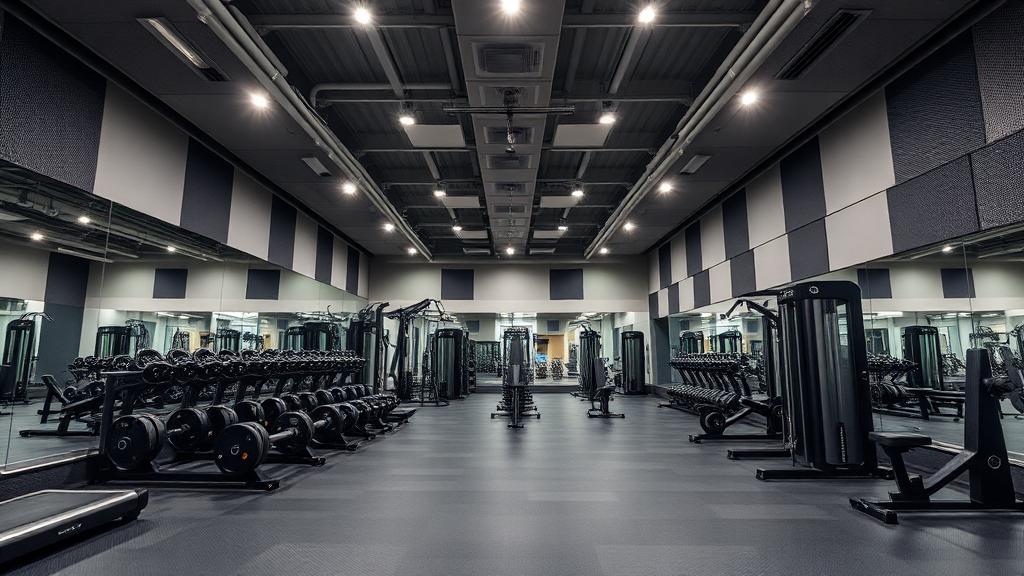
1Why Gyms and Fitness Centers Need Soundproofing
The Business Case for Gym Soundproofing
• 24-hour operations: Many gyms operate around the clock, but nighttime weight dropping creates immediate conflicts with sleeping residents above or below
• Lease requirements: Commercial leases increasingly include specific STC and IIC requirements that gyms must meet or face penalties
• Member experience: Excessive noise from adjacent fitness areas affects concentration in yoga studios and creates an unpleasant cacophony in common areas
• Staff health: Continuous high-volume music exposure puts fitness instructors at risk for hearing damage—OSHA limits apply
Common Complaint Scenarios
• Offices below gyms: Ceiling tiles in office spaces vibrate from treadmill activity, and bass from group fitness penetrates
• Adjacent retail: Music bleed from spin classes makes customer conversations impossible in neighboring stores
• Hotel proximity: Gyms in hotel buildings create guest complaints when early-morning workouts disturb sleeping guests
• Condo common areas: Building gyms adjacent to lobbies and meeting rooms create perception of poor building quality
2Understanding Gym Noise Sources
Impact Noise Sources
• Weight plate changes: Metal-on-metal contact when loading barbells creates high-frequency impacts
• Dumbbell drops: Free weight areas see continuous dumbbell impacts throughout operating hours
• Medicine ball slams: CrossFit-style exercises involve deliberate high-energy floor impacts
• Running and jumping: Plyometrics, box jumps, and running drills create repeated impact loading
Vibration Sources
• Ellipticals and stair climbers: Rhythmic motion creates steady-state vibration that travels through structure
• Rowing machines: Sliding seat mechanisms produce lateral vibration components
• Spin bikes: High-cadence pedaling creates vibration that couples through floors
• HVAC equipment: Large makeup air units required for ventilation add mechanical vibration
Airborne Noise Sources
• Instructor cues: Microphone systems for class instruction add to overall sound levels
• Member conversations: Dozens of simultaneous conversations create ambient noise floor
• Equipment noise: Cable machines, weight stacks, and cardio equipment motors contribute
• Television audio: Banks of TVs throughout cardio areas add to noise accumulation
3Weight Room and Free Weight Area Challenges
The Physics of Weight Drops
• Frequency content: Weight impacts contain energy from very low frequencies (20-60 Hz) through mid-range—difficult to block with lightweight materials
• Repetition: Unlike single events, gyms experience dozens of weight drops per hour during peak times
• Metal contact: Olympic plates on barbells create additional high-frequency noise from metal-on-metal contact
• Floor coupling: Without proper isolation, impact energy travels through concrete slabs, metal decking, and structural framing
Platform Design Requirements
• Thickness requirements: Effective platforms are typically 3-4 inches thick minimum—more for severe applications
• Rubber density: High-density rubber (recycled tire crumb) provides better impact absorption than foam
• Edge treatment: Platform edges must be secured to prevent lateral movement during lifts
• Replacement schedule: Heavy-use platforms degrade and require periodic rubber replacement
MLV Integration in Weight Areas
• Ceiling treatment: MLV above suspended ceilings prevents sound travel to floors above through plenum spaces
• Partition upgrades: Adding MLV to demising walls between weight rooms and quieter fitness areas improves internal acoustic separation
4Cardio Equipment Vibration Control
Treadmill Vibration Characteristics
• Belt slap: The running belt creates rhythmic noise as it contacts the deck
• User footfalls: Runners create impact loads at 2-3 Hz cadence with each foot strike
• Structural resonance: Equipment frames may resonate at certain speeds, amplifying vibration transmission
• Maintenance effects: Worn belts, unlubricated decks, and loose components increase noise and vibration
Isolation Approaches for Cardio Zones
• Floating floors: Isolated floor systems decouple the entire cardio area from building structure
• Mass loading: Adding mass to floor assemblies reduces vibration amplitude—MLV contributes here
• Equipment spacing: Adequate spacing prevents equipment from coupling vibrations
• Maintenance programs: Regular equipment service reduces noise from worn components
Floor Assembly Design
• Concrete topping: Additional concrete mass over metal decking improves low-frequency isolation
• Isolation materials: Neoprene pads or spring isolators between floor and structure for severe cases
• Continuous treatment: Cardio zones require consistent floor treatment—gaps create transmission paths
• Perimeter isolation: Floor edges isolated from walls prevent flanking through structure
5Group Fitness and Spin Class Isolation
Sound Level Reality
• Aerobics and dance: 90-100 dBA with significant low-frequency content from music
• Boxing and HIIT: 90-95 dBA plus impact noise from equipment strikes and jumping
• Yoga and Pilates: 65-75 dBA—quieter but still requiring isolation from adjacent loud areas
• Instructor systems: Wireless microphones add 5-10 dB above music levels for cueing
Wall Assembly Requirements
• Studio to exterior: STC 55-60+ when adjacent to offices, retail, or residential spaces
• Between studios: STC 50 prevents cross-talk between simultaneous classes
• To common areas: STC 45-50 for separation from lobbies and locker rooms
• MLV contribution: 1-2 lb/sf MLV in studio walls adds 5-10 STC points over standard construction
Floor Treatment for Studios
• Spin bike mounting: Bikes should be on vibration pads or continuous isolation flooring
• Subwoofer isolation: Bass speakers mounted on walls or floors transmit vibration—use isolating mounts
• Mirror mounting: Floor-to-ceiling mirrors on exterior walls create flanking paths—isolate mounting points
• Floating floor benefits: Isolated studio floors protect spaces above from both music bass and impact
6Floor and Ceiling Assemblies
Gyms Above Other Tenants
• Assembly options: Floating floors, isolated platforms, and heavy concrete toppings all contribute
• Weight room restrictions: Some buildings prohibit Olympic lifting or limit weight dropping to designated areas
• Structural considerations: Floor systems must handle both acoustic treatment weight and equipment loads
• Tenant coordination: Ceiling treatment in spaces below may also be required for complete solution
Gyms Below Other Tenants
• Direct-applied treatment: MLV attached to structure above provides mass loading
• Plenum barriers: Continuous MLV barriers prevent sound travel through ceiling plenum to adjacent spaces
• HVAC coordination: Ductwork, lighting, and sprinkler penetrations must maintain acoustic integrity
• Fire rating compliance: Ceiling assemblies typically require fire ratings that affect material selection
Recommended Assembly Approaches
• Enhanced floating floor: Adding MLV layer between plywood and rubber tile improves STC to 55-60
• Concrete topping: 2-3" lightweight concrete over isolation board achieves IIC 55-65
• Spring isolation: Equipment and platforms on spring isolators for severe impact applications
• Complete system: Floating floor above plus resilient ceiling below achieves IIC 60-70
7Mixed-Use Building Considerations
Residential Above or Adjacent
• STC requirements: STC 55-60 typically required between gyms and residential spaces
• IIC requirements: IIC 55-65 for floors between gym and residential—higher for weight areas
• Lease restrictions: Condo documents and leases may restrict equipment types, music levels, or operating hours
• Testing verification: Post-construction acoustic testing may be required to verify compliance
Office Space Proximity
• Vibration sensitivity: Sensitive equipment in medical or dental offices may be affected by gym vibration
• Operating alignment: Peak gym hours (early morning, lunch, evening) may conflict with office schedules
• Ceiling treatment: Offices below gyms typically need upgraded ceiling assemblies for both acoustic and aesthetic reasons
• HVAC coordination: Shared mechanical systems can transmit noise between gym and office areas
Retail and Restaurant Neighbors
• Retail sales: Staff and customer conversations must be possible despite gym music
• Medical and spa: Massage, acupuncture, and medical offices require exceptional quiet
• Childcare: Daycare facilities need nap-time quiet that conflicts with peak gym activity
• Theater and performance: Any performance venue requires complete isolation from gym operations
8MLV Installation Strategies for Gyms
Wall Applications
• Weight room separation: MLV in demising walls contains the significant airborne component of weight room noise
• Exterior walls: MLV upgrades exterior walls to reduce noise impact on outdoor areas and neighboring buildings
• Seam treatment: Butyl tape or specialized MLV seam tape ensures continuous barrier without gaps
• Penetration sealing: All electrical, plumbing, and HVAC penetrations through MLV must be sealed for performance
Ceiling Applications
• Continuous barriers: Full coverage of ceiling plane ensures no flanking paths around edges
• Hanger isolation: Resilient clips or isolation hangers combine with MLV for comprehensive treatment
• HVAC integration: MLV-wrapped ductwork near ceilings prevents duct breakout noise
• Fire rating considerations: Select MLV products with appropriate fire ratings for ceiling applications
Floor Integration
• Under rubber tile: MLV beneath rubber gym flooring enhances impact isolation
• Platform construction: Olympic lifting platforms can incorporate MLV for improved performance
• Perimeter treatment: MLV wrapped up walls at floor edges prevents flanking at wall/floor junction
• Weight considerations: Floor assemblies must account for MLV weight in structural calculations
Specialty Applications
• Speaker isolation: MLV backing behind wall-mounted speakers prevents transmission through structure
• Door upgrades: MLV-cored doors or surface-applied MLV on studio doors improves weak points
• Window treatments: MLV-backed curtains over studio windows reduce transmission during classes
• Temporary barriers: Portable MLV panels can create acoustic zones for personal training or stretching areas
10Conclusion
FAQs: Gym Soundproofing
Related Guides in Industry Solutions
Continue exploring with these hand-picked articles

School Soundproofing with Mass Loaded Vinyl (MLV)
Complete guide to soundproofing schools, classrooms, and educational facilities with mass loaded vinyl. Meet ANSI S12.60 standards, improve speech intelligibility, and create optimal learning environments for students.

Courthouse Soundproofing with Mass Loaded Vinyl (MLV)
Complete guide to soundproofing courthouses, courtrooms, and legal facilities with mass loaded vinyl. Ensure speech privacy for attorney-client communications, protect witness identities, and create optimal acoustics for judicial proceedings.
Industrial Factory Soundproofing with Mass Loaded Vinyl (MLV)
Complete guide to soundproofing manufacturing plants, production facilities, and industrial factories with mass loaded vinyl. Control machinery noise, meet OSHA regulations, and protect workers from hearing damage.
Our Complete Product Line
Professional-grade soundproofing materials for any application
Need Expert Soundproofing Advice?
Our team of soundproofing specialists is here to help you choose the right products and installation methods for your museum or gallery project.