The Role of Decoupling Materials in a Soundproof Wall Assembly
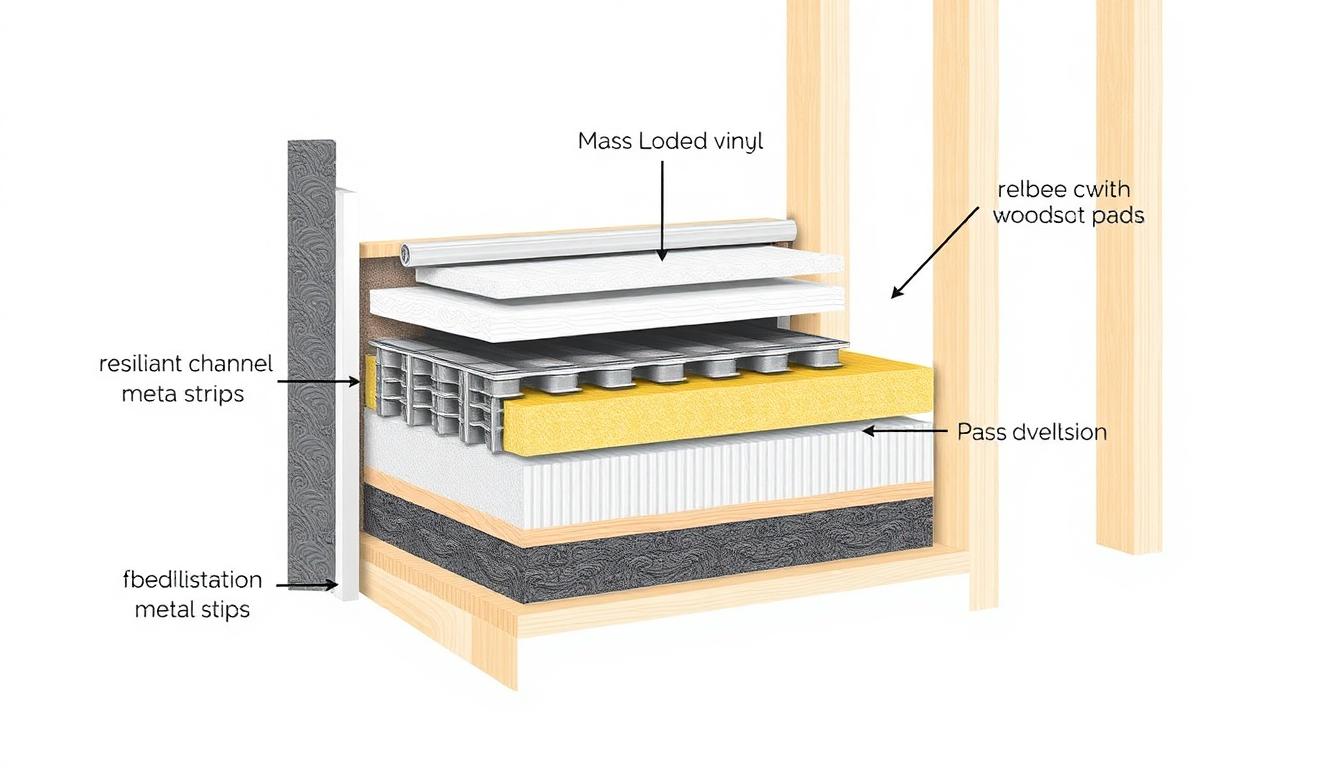
1What Decoupling Means in Soundproofing
2Why Decoupling Matters More Than Adding Mass Alone
3The 4 Main Decoupling Materials
1. Resilient Channel (RC-1)
• Cost: $0.50-1.50 per linear foot
• Installation: Screw to studs every 24 inches on center, horizontally. Drywall screws go into the channel only — never into the stud behind it
• Best for: Budget-friendly residential projects where moderate improvement is acceptable
2. Sound Isolation Clips (e.g., RSIC-1, WhisperClip)
• Cost: $3-6 per clip (spaced 24-48 inches on center) plus hat channel at $1-2/linear foot
• Installation: Clip to studs at specified spacing, snap hat channel into clips, screw drywall to hat channel only
• Best for: Home studios, home theaters, shared walls in multifamily, any application requiring serious sound isolation
3. Staggered Stud Walls
• Cost: Additional framing lumber ($50-150 per wall) plus wider plates
• Installation: Frame with 2×6 plates; alternate studs at 12-inch spacing, each stud touching only one side's drywall
• Best for: New construction where wall depth is not a constraint; cost-effective for long walls
4. Double Stud Walls
• Cost: Double the framing material, plus lost floor space (total wall depth 8-12 inches)
• Installation: Build two separate 2×4 walls with a 1-2 inch air gap between them; no mechanical connections
• Best for: Professional recording studios, home theaters with high-powered subwoofers, extreme isolation requirements
4Performance Comparison Table
| Decoupling Method | STC Gain | Cost (per 8ft wall) | Wall Depth Added | DIY Difficulty |
|---|---|---|---|---|
| Resilient Channel | +5 to +8 | $15-40 | ~0.5" | Moderate |
| Sound Isolation Clips | +12 to +20 | $60-150 | ~1.5" | Moderate |
| Staggered Studs | +10 to +15 | $50-150 | ~2" | Advanced |
| Double Stud Wall | +20 to +30 | $150-400 | 4-6" | Advanced |
5How Decoupling Fits Into a Complete Wall Assembly
Layer 2: Mass loaded vinyl (1 lb or 2 lb/sq ft) — adds dense, limp mass that damps vibration
Layer 3: Decoupling element (clips + hat channel or resilient channel) — breaks the vibration path
Layer 4: Stud framing with cavity insulation (mineral wool or fiberglass) — absorbs airborne sound within the cavity
Layer 5: Second drywall layer (5/8" Type X) — the other room's surface
6Common Decoupling Mistakes That Kill Performance
7When Decoupling Alone Is Not Enough
9Conclusion
FAQs: Decoupling Materials Soundproofing
Related Guides in Materials
Continue exploring with these hand-picked articles
15 Best Cheap Soundproofing Materials 2026 (That Actually Work)
The 15 best budget soundproofing materials for 2026, ranked by real STC data and cost per square foot. Compare MLV, weatherstripping, acoustic caulk, resilient channels, green glue, and more.
10 Best Sound Absorbing Materials for Flawless Acoustics
Discover the 10 best sound absorbing materials ranked by NRC rating. Compare fiberglass, mineral wool, acoustic foam, PET felt, perforated wood, cork, acoustic plaster, and moss walls with placement strategies.
What Is MLV Actually Made Of? (And Why the Ingredients Matter)
Learn exactly what mass loaded vinyl (MLV) is made of—barium sulfate, calcium carbonate, thermoplastic polymers—and the material science that makes it the most effective thin-profile sound barrier.
Our Complete Product Line
Professional-grade soundproofing materials for any application
Need Expert Soundproofing Advice?
Our team of soundproofing specialists is here to help you choose the right products and installation methods for your museum or gallery project.