Courthouse Construction: MLV Requirements & Building Codes
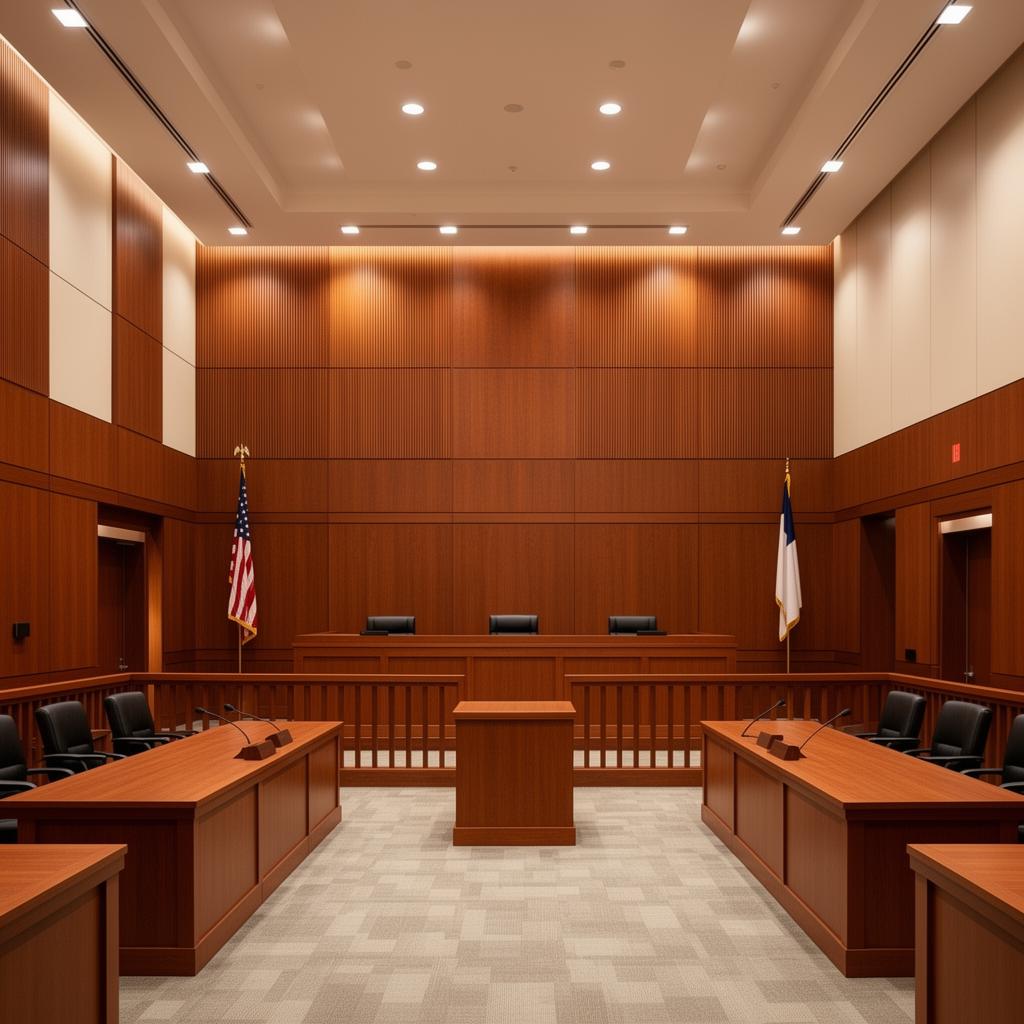
1Why Courtroom Acoustics Are Critical to Justice
Constitutional and Legal Requirements
• Attorney-client privilege: Confidential communications at counsel table must not be audible to jurors, gallery, or opposing counsel
• Witness protection: Grand jury rooms, witness waiting areas, and protected testimony rooms require complete sound isolation
• Jury deliberation: Deliberation room conversations must be completely private from all parties
• Appellate record: Court reporters must capture clear audio; background noise creates incomplete records that can trigger appeals
Security and Safety Concerns
• Jury tampering: Audible deliberations create opportunities for improper influence
• Judicial security: Judge's chambers conversations overheard in public areas compromise safety
• Holding cell privacy: Attorney consultations with incarcerated clients must be confidential
Operational Impacts
• HVAC interruptions: Judges frequently halt proceedings due to mechanical noise, delaying dockets
• Amplification costs: Poor room acoustics require expensive sound reinforcement systems
• Retrofit expenses: Post-construction acoustic failures in government buildings require lengthy procurement processes and taxpayer expense to remediate
2What Building Codes Require for Legal Facilities
U.S. Courts Design Guide Requirements
• Judge's chambers: STC 50-55 for walls, speech privacy at chamber doors
• Jury deliberation rooms: STC 55-60 to prevent any sound transmission to adjacent spaces
• Attorney-client conference: STC 50-55 with specific speech privacy requirements
• Background noise: NC 25-30 (Noise Criteria) for courtrooms during proceedings
GSA P100 Facilities Standards
• Secure areas: Enhanced acoustic isolation for U.S. Marshals offices and holding areas
• SCIF requirements: Sensitive Compartmented Information Facilities in courthouses require STC 60+
State and Local Court Standards
• New York: State court facilities require acoustic consultant review for major projects
• Texas: County courthouse construction guidelines include specific STC requirements
• Historic courthouses: Renovation must achieve modern acoustic standards while preserving historic character
| Courthouse Space | Typical STC Requirement | Speech Privacy Level | MLV Recommended |
|---|---|---|---|
| Courtroom to Courtroom | STC 55-60 | Confidential | 2 lb/sf MLV |
| Courtroom to Corridor | STC 50-55 | Normal | 1-2 lb/sf MLV |
| Jury Deliberation Room | STC 55-60 | Confidential | 2 lb/sf MLV |
| Judge's Chambers | STC 50-55 | Confidential | 1-2 lb/sf MLV |
| Attorney Conference | STC 50-55 | Confidential | 1-2 lb/sf MLV |
| Witness Waiting/Prep | STC 55-60 | Confidential | 2 lb/sf MLV |
| Grand Jury Room | STC 60+ | Secure | 2 lb/sf MLV (both sides) |
| Holding Cells | STC 50-55 | Confidential | 1-2 lb/sf MLV |
3Speech Privacy & Confidentiality Standards
Speech Privacy Classifications
• Confidential privacy: Speech inaudible; required for attorney-client areas, jury rooms, and chambers
• Secure privacy: No sound transmission detectable; required for grand jury and SCIF spaces
Articulation Index (AI) and Privacy Index (PI)
• Privacy Index: PI = 100 - AI; confidential spaces require PI >90
• Testing requirements: Many federal projects require post-construction speech privacy verification
Why STC Alone Isn't Sufficient
• Door and window performance: Entry doors are typically the weakest acoustic link
• Background noise: Very quiet receiving rooms make even slight sound transmission audible
• Frequency content: Male voices with low-frequency energy require different treatment than female voices
Design Strategies for Confidential Spaces
• Sound masking: Electronic sound masking in corridors and adjacent spaces raises background noise to cover any transmission
• Complete enclosure: Walls extending slab-to-slab, not just to ceiling grid
• Acoustic doors: STC 45-50 rated door assemblies with full perimeter seals
4Is MLV Required by Code for Courtrooms?
Why MLV Appears in Courthouse Specifications
• Field performance margin: Lab-tested assemblies lose 5-10 STC points in the field; MLV provides essential buffer
• Historic renovation: Adding MLV to existing walls is far more practical than demolition in historic courthouses
• Consistent results: MLV delivers predictable acoustic performance regardless of contractor skill level
• Value engineering protection: Specifying MLV prevents cost-cutting that removes acoustic performance during procurement
When MLV Becomes Essential
• Jury deliberation rooms: Confidential speech privacy requirements demand high-mass assemblies
• Grand jury rooms: Secure privacy levels require MLV on both sides of wall assemblies
• Historic courthouse renovation: Existing structures cannot be fully reconstructed, making MLV overlays the practical solution
• SCIF adjacencies: Sensitive areas require STC 60+ that standard construction cannot achieve
5Critical Legal Facility Areas Requiring MLV
Courtrooms
• Courtroom to lobby: STC 50-55 with acoustic vestibule doors controls public area noise intrusion
• Courtroom to chambers: STC 50-55 maintains judge privacy during recesses
• Ceiling treatment: Courtrooms require both sound isolation and proper internal acoustics for speech intelligibility
• MLV solution: 2 lb/sf MLV in demising walls, 1 lb/sf for corridor walls, ceiling barriers over suspended ceilings
Jury Deliberation Rooms
• Door assemblies: STC 45-50 acoustic doors with automatic bottoms and full perimeter seals
• Ceiling isolation: Extend walls to structure or install ceiling barriers
• Sound masking: Often combined with wall treatment to ensure confidentiality
• MLV solution: 2 lb/sf MLV, resilient mounting, double drywall layers
Attorney-Client Conference Rooms
• Conference rooms: STC 50-55 walls prevent opposing counsel from overhearing strategy
• Holding area consultations: Attorney visits to detained clients must be private
• MLV solution: 1-2 lb/sf MLV depending on adjacencies, focus on door seals
Judge's Chambers and Judicial Offices
• Conference areas: Judicial conferences require confidential privacy
• Adjacent to courtroom: Direct access to courtroom must not compromise privacy
• MLV solution: 1-2 lb/sf MLV, acoustic door assemblies, sound masking in corridors
Grand Jury and Witness Protection Spaces
• Witness waiting areas: Protected witnesses must not be visible or audible to defendants
• Video testimony rooms: Remote testimony facilities require acoustic isolation
• MLV solution: 2 lb/sf MLV on both sides of studs, full-height construction, acoustic doors with vestibules
6MLV & Fire Code Considerations for Courthouses
Fire Rating Requirements for Courthouses
• Corridor walls: 1-hour fire rating minimum, often 2-hour in larger facilities
• Judicial offices: 1-hour fire rating to corridors
• Holding areas: 2-hour fire rating for security and safety
• Mechanical rooms: 2-hour fire rating to occupied spaces
MLV Fire Performance
• Low smoke development: Smoke development index typically <450, critical for public building evacuation
• UL tested assemblies: Many fire-rated wall assemblies include MLV in their tested configuration
• GSA approval: Federal courthouse construction requires materials meeting GSA specifications
Security System Integration
• Ballistic protection: High-security courtrooms may combine acoustic MLV with ballistic panels
• Access control: Electric strikes and card readers in acoustic door frames
• Firestopping: All penetrations require proper firestop treatment for both fire rating and acoustic performance
7Example Courtroom Assemblies Using MLV
Courtroom-to-Courtroom Demising Wall (STC 58-60 Field)
• Full cavity mineral wool insulation both stud cavities
• 2 lb/sf MLV on one face of each stud row
• 5/8" Type X drywall (double layer) both sides
• Acoustic sealant at all perimeters
• Full-height construction to structure above
• Result: STC 60-63 lab, STC 56-60 field, confidential speech privacy
Jury Deliberation Room (STC 58 Field, Confidential Privacy)
• Full cavity mineral wool insulation
• 2 lb/sf MLV on interior (deliberation room) side
• Resilient channels on corridor side
• Double 5/8" Type X drywall both sides
• STC 48 acoustic door with full perimeter seals
• Sound masking in adjacent corridor
• Result: STC 58-62 lab, STC 54-58 field, PI >95
Judge's Chambers to Corridor (STC 52-55 Field)
• 3" mineral wool insulation in cavity
• 1 lb/sf MLV attached to studs
• Resilient channels on corridor side
• 5/8" Type X drywall both sides
• STC 40-45 acoustic door assembly
• Result: STC 54-56 lab, STC 50-54 field
Grand Jury Room (STC 60+ Field, Secure Privacy)
• Full cavity mineral wool insulation both stud cavities
• 2 lb/sf MLV on both faces of stud assembly (4 lb/sf total)
• Triple 5/8" Type X drywall both sides
• Full-height construction to structure
• Acoustic vestibule with two STC 50 doors
• Result: STC 65-68 lab, STC 60-65 field, secure privacy classification
Attorney-Client Conference Room (STC 52-55 Field)
• 3" mineral wool insulation in cavity
• 1 lb/sf MLV attached to studs
• 5/8" Type X drywall both sides
• STC 42 acoustic door with perimeter seals
• Sound masking in room and corridors
• Result: STC 54-56 lab, STC 50-54 field, confidential speech privacy with masking
9Conclusion
FAQs: Courthouse MLV Building Codes
Related Guides in Building Codes
Continue exploring with these hand-picked articles
Airport Construction: MLV Requirements and Building Codes
Building code requirements for soundproofing in airports and aviation facilities. How MLV helps developers meet FAA acoustic standards, TSA security requirements, and create comfortable passenger environments.
Museum Construction: MLV Requirements and Building Codes
Building code requirements for soundproofing in museums and cultural institutions. How MLV helps developers achieve gallery-to-gallery isolation, protect collections from vibration damage, meet conservation standards, and create contemplative visitor experiences.
Hotel Construction: MLV Requirements & Building Codes
Building code requirements for soundproofing in hotels and hospitality construction. How MLV helps developers meet STC requirements, brand acoustic standards, and cost-effective wall/floor assemblies for hotel projects.
Our Complete Product Line
Professional-grade soundproofing materials for any application
Need Expert Soundproofing Advice?
Our team of soundproofing specialists is here to help you choose the right products and installation methods for your museum or gallery project.