Cork Underlayment vs MLV: Natural Charm or Acoustic Performance?
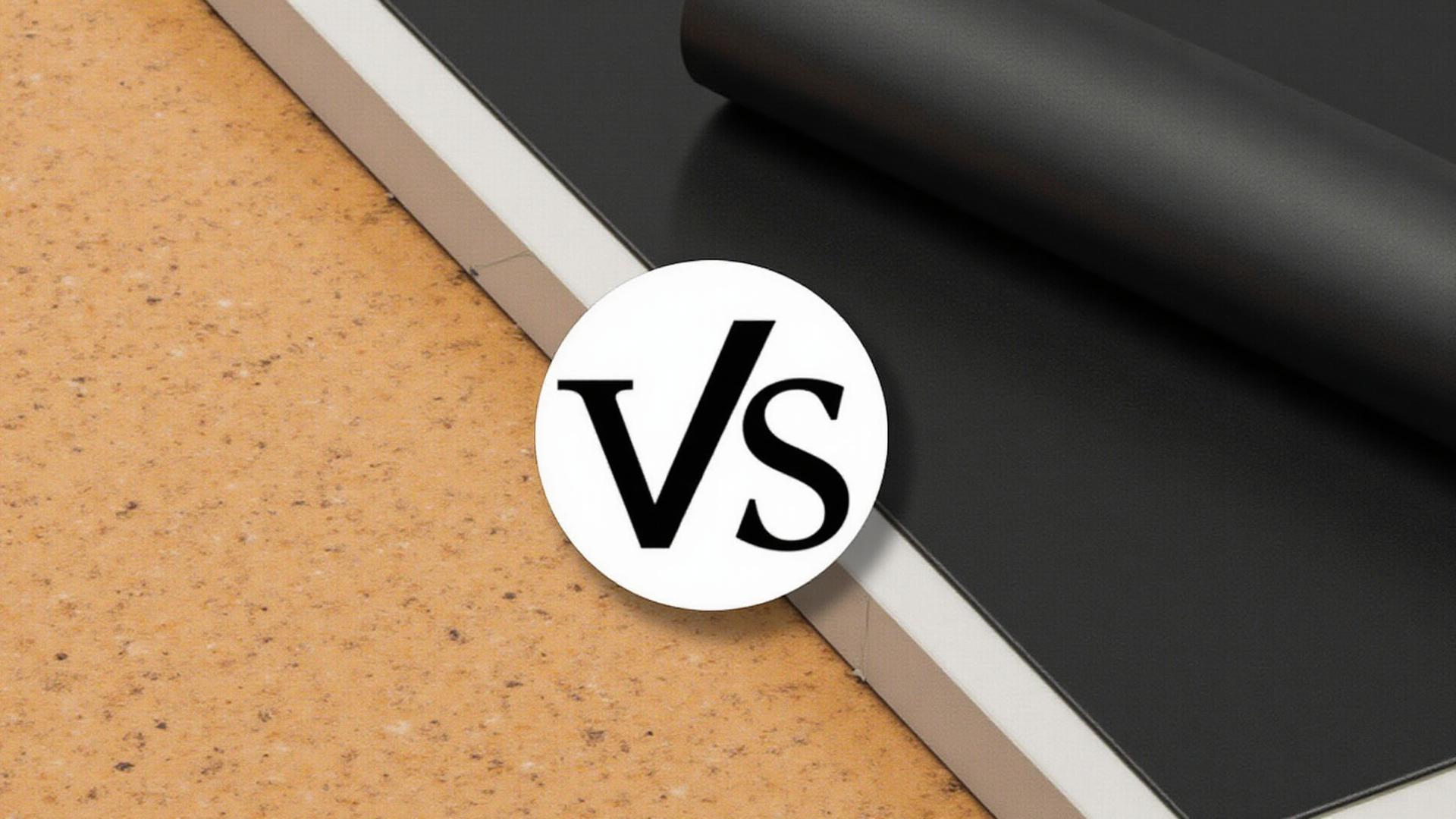
1Two Different Philosophies
Cork: The Natural Choice
• Natural composition: No petroleum products, VOC-free, biodegradable
• Cellular structure: Millions of air-filled cells provide cushioning and thermal insulation
• Comfort underfoot: Natural resilience creates a 'softer' walking surface
• Market appeal: Eco-conscious branding resonates with environmentally-minded buyers
MLV: The Performance Choice
• Limp mass behavior: Flexible material doesn't resonate like rigid barriers
• Engineered consistency: Uniform density throughout with no weak spots
• Dual functionality: Blocks both airborne sound (STC) and contributes to impact reduction (IIC)
• Professional standard: Used in commercial, studio, and high-performance residential applications
2How Each Material Works
Cork's Acoustic Mechanism
2. Energy conversion: Mechanical energy converts to heat through internal friction
3. Resilience: Material springs back to original shape, ready for the next impact
4. Decoupling effect: Soft layer partially isolates flooring from subfloor
MLV's Acoustic Mechanism
2. Limp mass behavior: Flexible material can't vibrate efficiently, preventing re-radiation
3. Full-spectrum blocking: Mass is effective across low, mid, and high frequencies
4. Cumulative effect: Adding MLV to any assembly increases total mass significantly
3Performance Comparison
| Material | Thickness | Mass | IIC Improvement | STC Improvement |
|---|---|---|---|---|
| Cork 3mm | 3mm (1/8") | 0.1 lb/sf | IIC +8 to +12 | STC +1 to +2 |
| Cork 6mm | 6mm (1/4") | 0.15 lb/sf | IIC +12 to +18 | STC +2 to +3 |
| Cork 12mm | 12mm (1/2") | 0.3 lb/sf | IIC +18 to +24 | STC +3 to +5 |
| MLV 1 lb/sf | 1/8" | 1.0 lb/sf | IIC +5 to +10 | STC +15 to +17 |
| MLV + Cork (combo) | ~3/8" | 1.1 lb/sf | IIC +18 to +25 | STC +16 to +19 |
| Rubber Underlayment 10mm | 10mm (3/8") | 0.8 lb/sf | IIC +28 to +35 | STC +8 to +12 |
Key Performance Insights
• Cork fails at airborne sound: With minimal mass, cork adds only STC +1 to +5—you'll still hear voices, TV, and music
• MLV excels at airborne sound: Dense mass loading achieves STC +15-17—the difference between hearing conversations and privacy
• MLV provides moderate impact reduction: Not designed primarily for IIC, but adds +5-10 points
• Combination approach wins: MLV + cork or MLV + rubber delivers both high IIC and high STC
4Durability and Lifespan
Cork Durability Factors
• Recovery rate: Quality cork recovers 90%+ after compression; lower grades may show permanent indentation
• Crumbling: Low-density cork can crumble at edges and seams, creating gaps
• Adhesive breakdown: Cork tiles may delaminate if adhesive fails in humid conditions
• Typical lifespan: 15-25 years for quality cork; less for thin or low-density products
MLV Durability Factors
• Chemical stability: PVC-based formula resists degradation, oils, and most chemicals
• UV sensitivity: Direct sunlight degrades MLV (not a factor when installed under flooring)
• Tear resistance: Thinner MLV can tear during installation if not handled carefully
• Typical lifespan: 50+ years with no performance degradation under flooring
Real-World Longevity
5Moisture and Environmental Factors
Cork and Moisture
• Absorption: Despite natural resistance, cork absorbs moisture over time if exposed
• Expansion: Cork swells when wet, potentially causing buckling and floor damage
• Mold risk: Organic material can support mold growth in persistently damp conditions
• Vapor barrier required: Cork over concrete always requires a vapor barrier underneath
MLV and Moisture
• Vapor barrier function: MLV can serve as the vapor barrier in floor assemblies
• No dimensional change: Won't swell, shrink, or warp from moisture exposure
• Mold resistant: Synthetic material doesn't support mold or mildew growth
• Easy cleanup: If water intrusion occurs, MLV dries quickly with no damage
Basement and Ground Floor Recommendation
6Cost Analysis
Cork Underlayment Costs
• 6mm cork tiles: $1.50-2.50/sq ft = $750-1,250
• 12mm premium cork: $3.00-5.00/sq ft = $1,500-2,500
• Installation: $0.50-1.00/sq ft = $250-500
• Total installed (6mm): $1,000-1,750
• IIC improvement: +12 to +18 points
• Cost per IIC point: $56-146
MLV Underlayment Costs
• Seam tape + caulk: $50-75
• Installation: $0.50-1.00/sq ft = $250-500
• Total installed: $800-1,325
• STC improvement: +15 to +17 points
• Cost per STC point: $47-88
Value Comparison
| Metric | Cork (6mm) | MLV (1 lb) |
|---|---|---|
| Total installed cost (500 sf) | $1,000-1,750 | $800-1,325 |
| IIC improvement | +12 to +18 | +5 to +10 |
| STC improvement | +2 to +3 | +15 to +17 |
| Expected lifespan | 15-25 years | 50+ years |
| Moisture suitable | No (needs vapor barrier) | Yes (is vapor barrier) |
7Best Applications for Each
When Cork is the Right Choice
• Top-floor condos: Where you're only affecting yourself, not neighbors below
• Low-traffic areas: Bedrooms, offices where furniture is stationary
• Eco-priority projects: When sustainability certification is required (LEED, WELL)
• Thermal goals: When floor insulation value is equally important as acoustics
• Budget constraints: When airborne sound isn't a concern and basic impact reduction is sufficient
When MLV is the Right Choice
• Floors over occupied spaces: Apartments, condos with neighbors below
• Home theaters: Subwoofer bass requires mass to contain
• Music practice rooms: Instrument sound must be blocked from other rooms
• Basements and ground floors: Where moisture resistance is required
• Commercial applications: Hotels, offices, healthcare where professional acoustics are expected
When to Combine Both
• Cork or rubber over MLV: Adds impact isolation and cushioning
• Floating floor on top: Completes the assembly with final decoupling
9Conclusion
The Verdict on Cork Underlayment vs MLV: These materials serve different acoustic purposes and shouldn't be viewed as direct competitors. Cork excels at impact isolation (IIC improvement) through elastic energy absorption, while MLV excels at airborne sound blocking (STC improvement) through concentrated mass.
For floors where only footstep noise matters—single-family homes, top-floor units—cork provides adequate performance with eco-friendly credentials. For floors requiring comprehensive soundproofing—multifamily buildings, home theaters, music rooms—MLV is essential for meaningful airborne sound reduction.
The optimal solution for demanding applications combines both: MLV for mass and moisture protection, topped with cork or rubber for impact absorption. This layered approach achieves the highest IIC and STC ratings, meeting professional acoustic standards while providing comfortable, quiet floors.
FAQs: Cork Underlayment vs MLV
Related Guides in Comparison
Continue exploring with these hand-picked articles
Drywall vs MLV: The Heavyweight Battle for Silence
Drywall is everywhere, but can stacking more of it compete with Mass Loaded Vinyl for soundproofing? Compare STC ratings, installation, and costs to find the best noise-blocking solution.
Green Glue vs MLV: The Damping Compound Showdown
Green Glue damping compound vs Mass Loaded Vinyl - which soundproofing material wins? Compare cost, STC performance, installation, and ideal use cases for each solution.
QuietRock vs MLV: The Engineered Drywall Duel
QuietRock engineered drywall vs Mass Loaded Vinyl - which soundproofing solution wins? Compare STC ratings, installation, cost, and when to use each for your project.
Our Complete Product Line
Professional-grade soundproofing materials for any application
Need Expert Soundproofing Advice?
Our team of soundproofing specialists is here to help you choose the right products and installation methods for your museum or gallery project.