Church Soundproofing with Mass Loaded Vinyl (MLV)
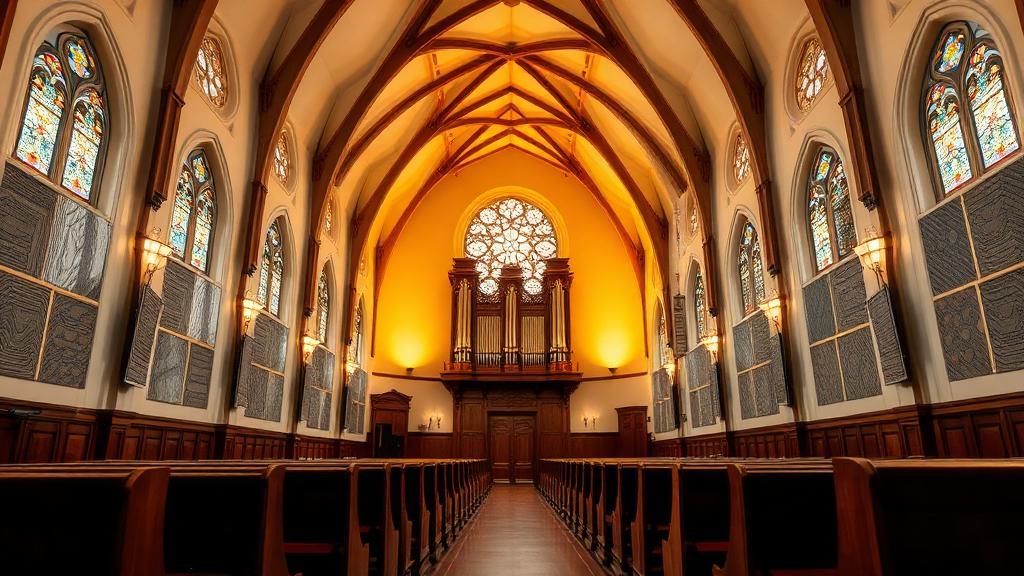
1Why Churches Need Soundproofing
• Multi-use facilities: Modern churches host everything from Sunday worship to Wednesday night youth groups, daycare programs, and community events. Each use has different acoustic needs
• Neighbor relations: Churches in residential areas face complaints about bells, amplified music, and parking lot noise. Good acoustic design maintains community harmony
• Simultaneous programming: Large churches run multiple services, children's programs, and meetings simultaneously. Sound isolation prevents activities from disturbing each other
• Recording and broadcast: Many churches now livestream or record services. Poor acoustics create audio quality problems that frustrate online viewers
2Understanding Church Acoustic Challenges
• Flutter echo: Parallel walls in rectangular sanctuaries create distinct echoes that distract speakers and musicians
• Low-frequency buildup: Bass from organs, drums, and bass guitars accumulates in corners and under balconies, creating muddy sound
• HVAC noise: Large air handling systems generate background noise that masks quiet passages and requires speakers to project louder
• Sound transmission: Thin walls between sanctuary and classrooms, nurseries, or fellowship halls allow sound to travel and disturb adjacent activities
Churches need enough reverberation to support congregational singing and create a sense of sacred space, while maintaining clarity for spoken word. MLV helps with isolation between spaces, while strategic absorption controls reverberation within spaces.
3How Mass Loaded Vinyl Works in Worship Spaces
• Flexible installation: Conforms to irregular surfaces, wraps around ductwork, and integrates with existing construction
• Broad frequency performance: Blocks speech frequencies (250-4,000 Hz) and music frequencies including bass (60-250 Hz) when properly installed
• Fire rated: Quality MLV meets Class A fire ratings required in assembly occupancies
• Aesthetically neutral: Installed behind finish materials, MLV is invisible in the completed space
Adding 1 lb/sf MLV to a standard wall assembly typically increases STC rating by 5-8 points. Combined with decoupled construction and proper sealing, walls between worship spaces and sensitive areas can achieve STC 55-65—reducing perceived sound by 90% or more.
4Wall Assemblies for Church Soundproofing
Standard assembly for separating worship from education spaces:
• 2x6 wood or metal studs
• Full-depth mineral wool insulation (R-19)
• 1 lb/sf MLV applied over studs
• 5/8" Type X drywall on resilient channels
• Acoustic caulk at all perimeters and penetrations
For walls adjacent to nurseries or between contemporary worship and traditional services:
• Double stud wall with 1" air gap
• Both cavities filled with mineral wool
• 1 lb/sf MLV on each stud wall
• Double 5/8" drywall with damping compound
• Solid core doors with full perimeter seals
When churches are close to residential properties:
• Add MLV layer to interior of exterior wall
• Install resilient channels before new drywall
• Upgrade windows to STC 35+ glazing
• Seal all penetrations including electrical and HVAC
5Ceiling and Roof Treatments
For churches with accessible ceiling spaces above classrooms or offices:
• Install MLV above ceiling joists or on floor deck above
• Add mineral wool insulation in ceiling cavity
• Use resilient channels for ceiling drywall
• Target STC 55+ for assemblies below sanctuary
High ceilings create reverberation but also opportunities:
• Install acoustic banners or clouds at lower heights for absorption
• Apply MLV to roof deck in areas where sound exits to neighbors
• Use decorative acoustic panels that complement architecture
• Consider spray-applied treatments on inaccessible surfaces
The area under balconies often has poor acoustics:
• Install absorptive panels on balcony underside
• Add MLV between balcony and rooms below
• Treat balcony front face with acoustic material
• Address low-frequency buildup with bass traps in corners
6Multi-Use Room Isolation
• Build walls to STC 55+ between fellowship and sanctuary
• Install sound-rated folding partitions (STC 45+) for flexible division
• Treat fellowship hall with absorption to reduce noise generation
• Use vestibule entries with two doors to create sound locks
These spaces generate significant impact and airborne noise:
• Increase wall mass with MLV and double drywall
• Float floors with rubber isolation for impact control
• Install resilient ceiling systems below gym floors
• Provide acoustic door assemblies at all entries
Active programming creates noise that can disturb adult services:
• Locate away from sanctuary when possible
• Build walls to STC 50+ minimum
• Use carpet and acoustic ceiling tiles for absorption
• Install observation windows with laminated acoustic glass
7Nursery and Cry Room Solutions
• Build walls to STC 55-60 (babies cry at 100+ dB)
• Use solid core doors with automatic bottom seals
• Install MLV in ceiling assembly
• Provide separate HVAC zone to prevent duct crosstalk
• Consider double-door vestibule entry
• Glass wall for visibility requires STC 40+ glazing minimum
• Install audio system fed from sanctuary for service audio
• Build surrounding walls to STC 50+ to contain crying
• Use carpet, upholstered seating, and acoustic ceiling
• Provide volume control for parents
• Video monitoring may be preferable to sound transmission
• Ensure intercom or paging systems work through isolated walls
• Plan for fire alarm audibility in isolated spaces
8Music and Worship Band Considerations
• Install absorption on back wall behind worship team
• Use drum shields or enclosures to control percussion levels
• Position guitar/bass amplifiers off-axis from congregation
• Install monitor systems to reduce stage volume requirements
• Proper PA design reduces the need for excessive volume
• Line array systems provide even coverage with less energy
• Subwoofer placement affects low-frequency transmission to neighbors
• System limiting prevents peaks that cause complaints
• Rehearsal rooms need STC 60+ isolation from other spaces
• Include absorption for reasonable internal sound levels
• Provide HVAC with acoustic silencers
• Install video/audio monitoring for communication without opening doors
FAQs: Church Soundproofing
Related Guides in Industry Solutions
Continue exploring with these hand-picked articles

School Soundproofing with Mass Loaded Vinyl (MLV)
Complete guide to soundproofing schools, classrooms, and educational facilities with mass loaded vinyl. Meet ANSI S12.60 standards, improve speech intelligibility, and create optimal learning environments for students.
Courthouse Soundproofing with Mass Loaded Vinyl (MLV)
Complete guide to soundproofing courthouses, courtrooms, and legal facilities with mass loaded vinyl. Ensure speech privacy for attorney-client communications, protect witness identities, and create optimal acoustics for judicial proceedings.
Industrial Factory Soundproofing with Mass Loaded Vinyl (MLV)
Complete guide to soundproofing manufacturing plants, production facilities, and industrial factories with mass loaded vinyl. Control machinery noise, meet OSHA regulations, and protect workers from hearing damage.
Our Complete Product Line
Professional-grade soundproofing materials for any application
Need Expert Soundproofing Advice?
Our team of soundproofing specialists is here to help you choose the right products and installation methods for your museum or gallery project.