Airport Soundproofing with Mass Loaded Vinyl (MLV)
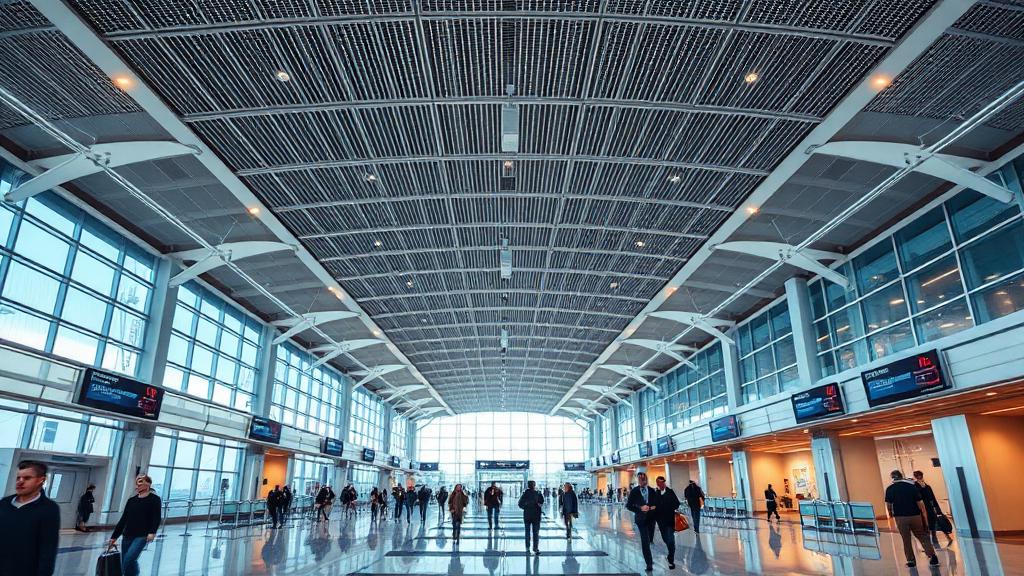
1Why Airport Soundproofing Is Critical
• Employee health and safety: Airport workers—from gate agents to retail staff—are exposed to high noise levels throughout their shifts. OSHA regulations require hearing protection above 85 dB, making acoustic barriers essential
• Communication clarity: PA announcements must be clearly audible for safety. Background noise that masks announcements creates confusion and potential safety hazards
• Premium space differentiation: First-class lounges, club areas, and VIP spaces command premium prices partly because they offer escape from terminal noise
2Unique Acoustic Challenges in Airports
• Jet engines at takeoff: 130-140+ dB at close range
• Auxiliary power units (APUs): 90-100 dB
• Ground support equipment: 85-95 dB
• General terminal ambient: 65-80 dB
Aircraft noise contains significant low-frequency energy that easily penetrates lightweight construction. Standard drywall assemblies that perform well against voices struggle against the rumble of jet engines. MLV's high mass helps block these challenging frequencies.
Unlike offices or hotels with quiet periods, major airports operate 18-24 hours daily. Soundproofing systems must perform consistently without fatigue or degradation from constant acoustic loading.
Terminal spaces feature high ceilings, glass curtain walls, and open floor plans that allow sound to travel great distances. Acoustic treatment must address both direct transmission through walls and reflected sound within spaces.
All materials in airports must meet stringent fire codes and cannot create security vulnerabilities. MLV products used in airports require appropriate fire ratings and must be installed in approved assemblies.
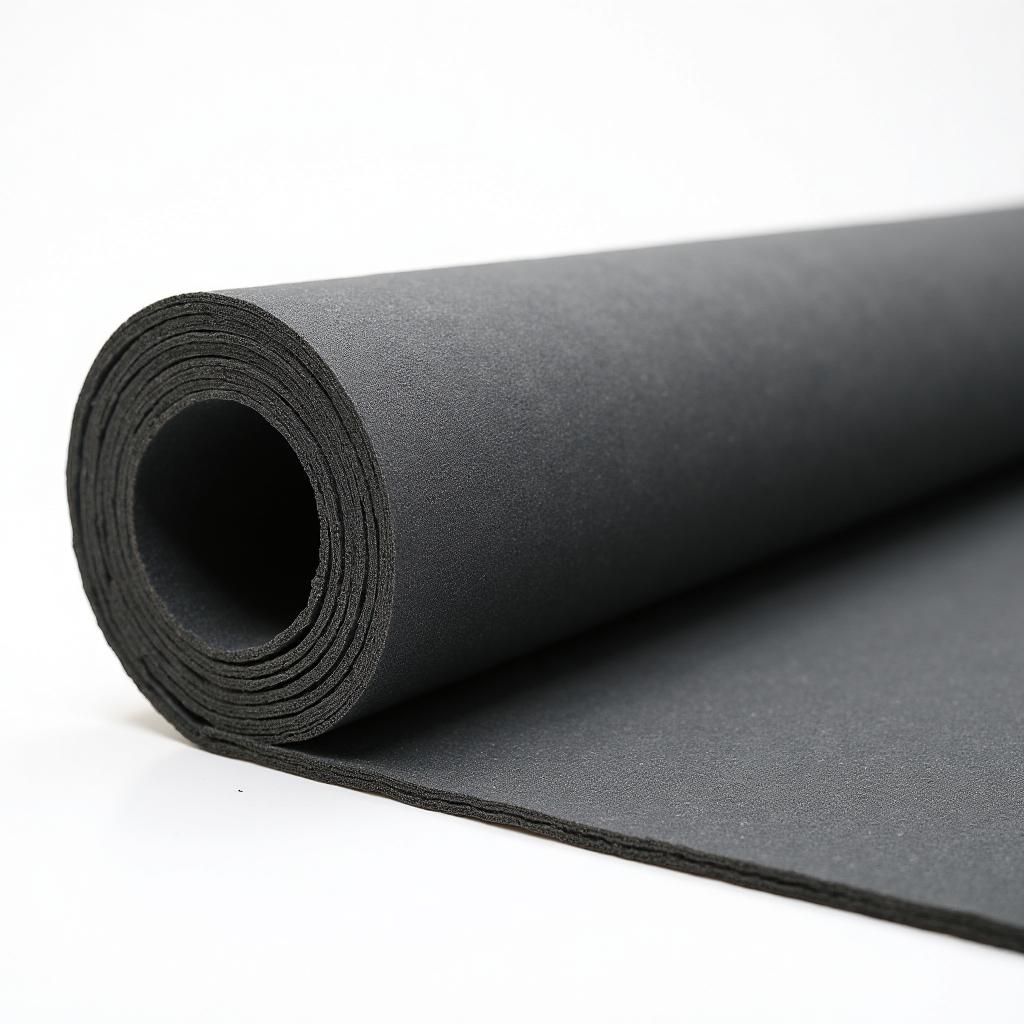
3How Mass Loaded Vinyl Works in Airport Applications
• Limp mass behavior: Unlike rigid materials that resonate at specific frequencies, MLV's flexibility provides consistent performance across the sound spectrum
• Thin profile: At 1/8" to 1/4" thick, MLV fits within standard wall cavities, preserving valuable terminal floor space
• Flexibility: Conforms to complex geometries common in modern airport architecture
A typical airport wall might achieve STC 35-42 with standard insulated construction. Adding 1 lb/sf MLV can push performance to STC 48-54. With 2 lb/sf MLV and proper assembly design, STC 55-62+ is achievable—enough to make aircraft noise manageable even in spaces adjacent to active gates.
MLV works synergistically with:
• Acoustic insulation for absorption
• Resilient channels or clips for decoupling
• Laminated glass for facade performance
• Ceiling treatments for overhead noise control
4Terminal and Concourse Soundproofing
Walls facing active runways and taxiways require maximum performance:
• Heavy-gauge metal studs or concrete backup
• Full-cavity mineral wool insulation
• 2 lb/sf MLV layer applied to studs
• Resilient channels or isolation clips
• Double 5/8" drywall with damping compound
• Acoustic sealant at all penetrations
Jet bridges and gate doors create potential weak points. Treatment includes:
• MLV-wrapped door frames and jet bridge connections
• Acoustic seals on all operable doors
• Enhanced wall assemblies adjacent to gate openings
• Acoustic vestibules where feasible
Sound travels above suspended ceilings between spaces. Effective treatment includes:
• MLV barriers above ceiling grid in critical areas
• Insulation blankets over suspended ceilings
• Full-height demising walls for premium spaces
Concourse retail must balance visibility with acoustic separation. Solutions include:
• Partial-height walls with MLV core
• Acoustic glazing for storefronts
• Strategic placement away from gate areas
5Lounge and VIP Area Acoustic Design
First-class and business lounges should achieve:
• Background noise levels of 40-45 dB or lower
• STC 55+ for walls facing terminals or gates
• IIC 55+ for floors above active spaces
• Speech privacy between seating areas
• Double-stud or staggered-stud construction where space permits
• 2 lb/sf MLV for maximum mass
• Multiple drywall layers with damping compound
• Acoustic sealant at every seam and penetration
• Solid-core doors with acoustic seals (STC 45+)
• Continuous MLV barrier above suspended ceiling
• Acoustic absorption panels for interior quality
• Isolation from building structure to prevent vibration transmission
Mechanical noise can undermine acoustic investment:
• Specify low-velocity, low-turbulence air distribution
• Use lined ductwork with acoustic silencers
• Locate equipment away from lounge spaces
• Isolate equipment on vibration mounts
6Operations and Administrative Spaces
These critical spaces require exceptional acoustic isolation:
• Maximum STC ratings (60+) for exterior walls
• Vibration isolation from building structure
• Redundant acoustic barriers for fail-safe performance
• Controlled internal acoustics for clear communication
Standard office acoustic targets apply, but with airport-specific considerations:
• STC 50+ for walls facing operational areas
• Additional treatment for low-frequency aircraft noise
• Speech privacy between offices
Workers need quiet spaces for rest between shifts:
• Enhanced wall assemblies facing noisy areas
• Acoustic absorption for interior comfort
• White noise systems to mask intrusive sounds
While inherently noisy, security areas benefit from:
• Ceiling treatments to reduce reverberant noise
• Barriers between screening lanes
• Acoustic treatment in interview and secondary screening rooms
7FAA Regulations and Acoustic Standards
The FAA's airport noise compatibility planning program establishes noise exposure maps and compatibility guidelines. While focused on community impact, these regulations influence:
• Building placement and orientation
• Facade acoustic requirements
• Land use around airports
Employee areas must comply with occupational noise limits:
• 90 dB time-weighted average (8-hour exposure)
• 85 dB action level requiring hearing conservation programs
• Engineering controls (including acoustic barriers) preferred over personal protection
International Building Code (IBC) and local amendments govern:
• Fire ratings for acoustic materials
• Assembly requirements for rated walls
• Smoke and toxicity requirements
ASTM and ISO standards provide testing protocols:
• ASTM E90 for laboratory STC testing
• ASTM E336 for field STC measurement
• ISO 717 for international comparisons
• ASTM E1414 for open-plan acoustics
8New Construction vs Retrofit Projects
• Design acoustic zoning from the start—locate quiet spaces away from noise sources
• Integrate MLV into wall framing sequences before drywall
• Coordinate with mechanical and electrical systems
• Build walls to structure, eliminating above-ceiling flanking
• Specify appropriate window and door assemblies upfront
• Lower installed cost when included in original scope
• Existing walls may not extend to structure
• Limited access to wall cavities without demolition
• Penetrations and flanking paths already established
• Continuous operations limit construction windows
• Historic or architectural constraints
• Higher per-square-foot costs
• Add MLV over existing drywall with new finish layer
• Prioritize highest-impact areas first (lounges, operations)
• Install ceiling barriers without removing existing ceiling
• Upgrade doors and seals simultaneously
• Address obvious flanking before investing in walls
• Phase work to minimize operational disruption
Airport acoustic upgrades deliver returns through:
• Improved passenger satisfaction scores
• Premium pricing for enhanced lounge spaces
• Reduced employee hearing conservation costs
• Compliance with evolving regulations
• Extended operational hours with community acceptance
FAQs: Airport Soundproofing
Related Guides in Industry Solutions
Continue exploring with these hand-picked articles

School Soundproofing with Mass Loaded Vinyl (MLV)
Complete guide to soundproofing schools, classrooms, and educational facilities with mass loaded vinyl. Meet ANSI S12.60 standards, improve speech intelligibility, and create optimal learning environments for students.
Courthouse Soundproofing with Mass Loaded Vinyl (MLV)
Complete guide to soundproofing courthouses, courtrooms, and legal facilities with mass loaded vinyl. Ensure speech privacy for attorney-client communications, protect witness identities, and create optimal acoustics for judicial proceedings.
Industrial Factory Soundproofing with Mass Loaded Vinyl (MLV)
Complete guide to soundproofing manufacturing plants, production facilities, and industrial factories with mass loaded vinyl. Control machinery noise, meet OSHA regulations, and protect workers from hearing damage.
Our Complete Product Line
Professional-grade soundproofing materials for any application
Need Expert Soundproofing Advice?
Our team of soundproofing specialists is here to help you choose the right products and installation methods for your museum or gallery project.