Acoustic Absorption vs. Acoustic Diffusion: What's the Difference and When Do You Need Each?
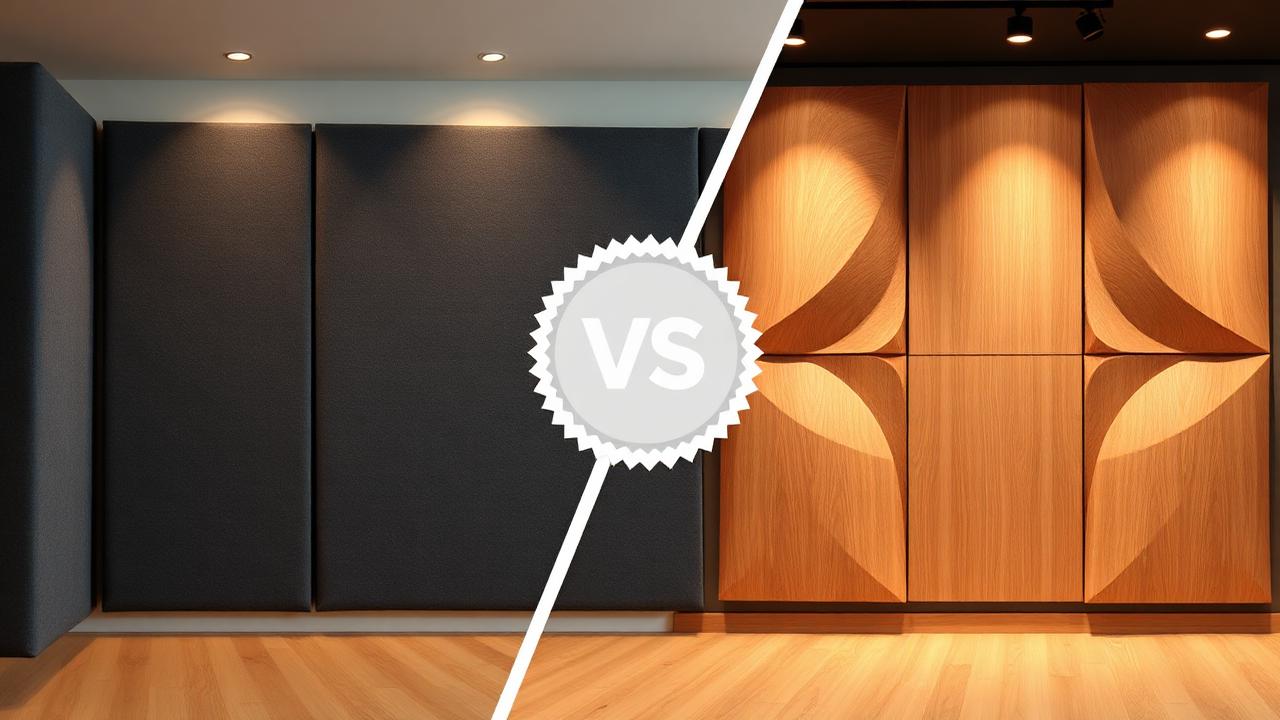
1Why Treatment Type Matters More Than Coverage
2How Acoustic Absorption Works
• Thickness determines low-frequency performance. A 2-inch panel absorbs well above 500 Hz but barely touches frequencies below 250 Hz. A 4-inch panel extends absorption down to ~125 Hz. To absorb bass below 100 Hz, you need 6+ inches of depth or specialized bass traps.
• NRC (Noise Reduction Coefficient) rates absorbers from 0 to 1.0, representing the average absorption across 250–2,000 Hz. An NRC of 0.85 means the material absorbs 85% of mid-frequency sound energy.
• Mounting matters enormously. The same panel mounted flush against a wall absorbs less low-frequency energy than the same panel mounted with a 4-inch air gap behind it. The air gap acts as additional depth.
• Rigid fiberglass panels (703/705) — NRC 0.85–1.05, the studio standard
• Mineral wool panels — NRC 0.90–1.05, denser and more fire-resistant
• Open-cell acoustic foam — NRC 0.60–0.85, lighter but less effective at low frequencies
• Fabric-wrapped panels — Fiberglass or mineral wool inside a decorative frame, NRC 0.80–1.00
• Heavy curtains and drapes — NRC 0.35–0.55, only effective at high frequencies
3How Acoustic Diffusion Works
• Quadratic Residue Diffusers (QRD) — A series of wells of mathematically calculated depths based on a prime number sequence. The most scientifically validated type, offering predictable scattering across a designed frequency range.
• Primitive Root Diffusers (PRD) — Similar to QRD but with different mathematical sequences that optimize for specific applications.
• Skyline/Binary diffusers — Blocks of varying heights arranged in a grid pattern. Scatter sound in two dimensions (both horizontally and vertically) rather than one.
• Poly-cylindrical diffusers — Curved surfaces that scatter low frequencies effectively. Often used on rear walls of control rooms and concert halls.
• Bookshelf diffusion — Irregularly filled bookshelves act as surprisingly effective broadband diffusers, scattering mid and high frequencies naturally.
4Head-to-Head: Absorption vs. Diffusion
| Property | Absorption | Diffusion |
|---|---|---|
| What it does to sound energy | Removes it (converts to heat) | Redistributes it (scatters reflections) |
| Effect on reverberation time | Reduces RT60 significantly | Minimal change to RT60 |
| Effect on flutter echo | Eliminates by removing energy | Eliminates by scattering energy |
| Room feel | Drier, more controlled, quieter | Spacious, lively, natural |
| Best for small rooms (<12 ft) | Yes — works at any distance | Limited — needs distance to blend |
| Best for large rooms (>20 ft) | Use strategically, not wall-to-wall | Excellent — enough distance for blending |
| Cost per sq ft | $3–8 (DIY) / $8–20 (commercial) | $15–50+ (wood QRD/skyline) |
| DIY difficulty | Easy — mineral wool + fabric | Hard — requires precise CNC or woodwork |
5When to Use Absorption
6When to Use Diffusion
8Conclusion
FAQs: Acoustic Absorption vs Diffusion
Related Guides in Comparisons
Continue exploring with these hand-picked articles
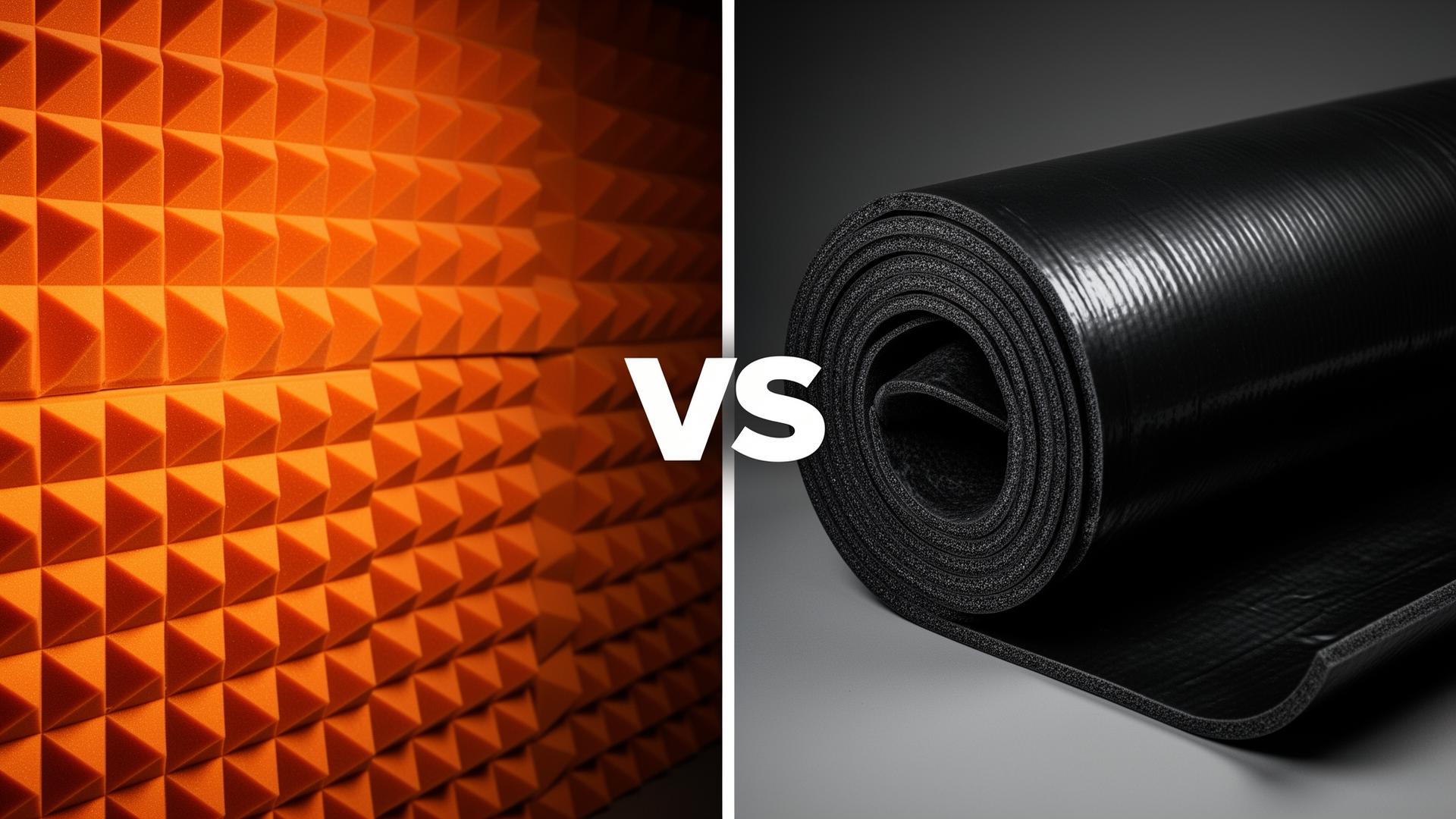
Acoustic Foam vs MLV: Which One Actually Stops Noise?
Acoustic foam absorbs echo while MLV blocks sound transmission—they're not the same thing. Discover which material you actually need, why foam won't stop neighbor noise, and when to use both for optimal acoustic control.
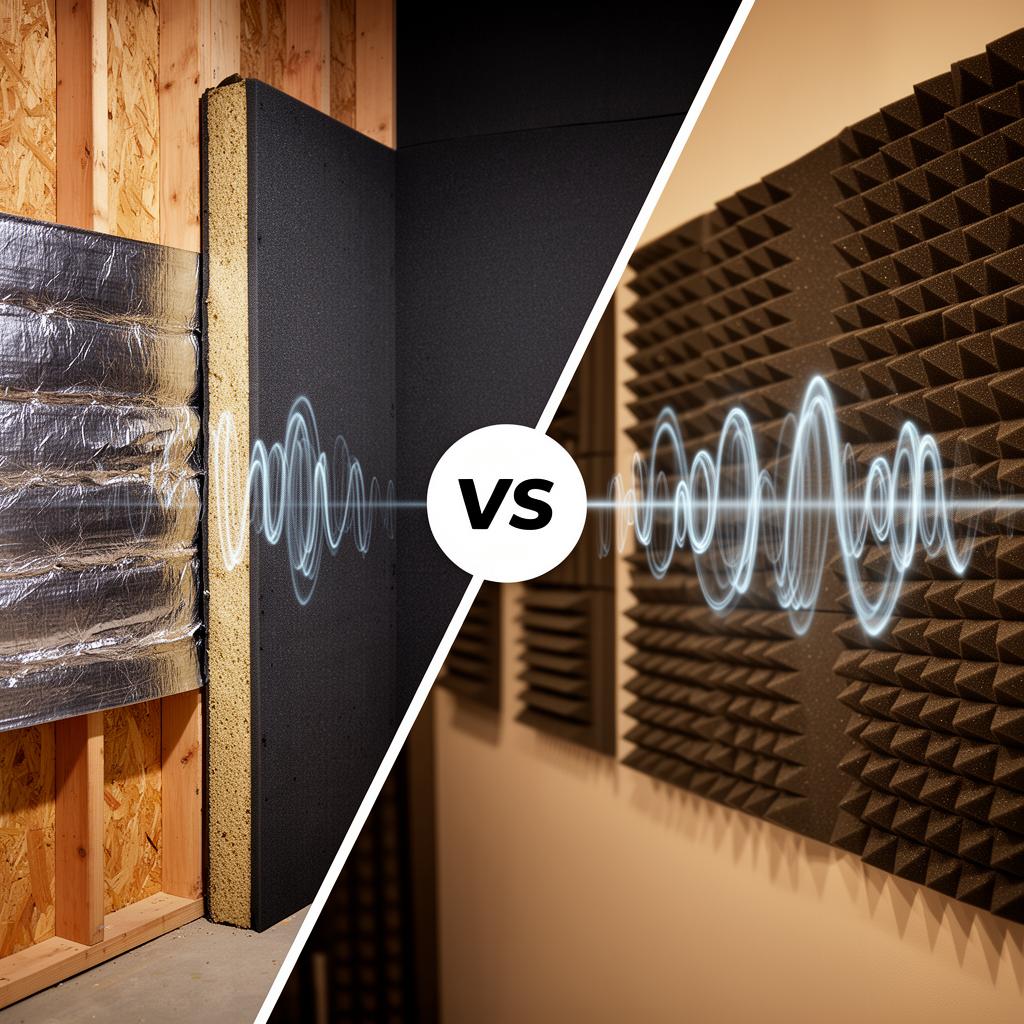
Soundproofing vs Sound Absorbing: The Critical Difference That Costs Thousands
Soundproofing blocks noise between spaces using dense materials like MLV. Sound absorption reduces echo within a room using porous materials like foam. Learn exactly when to use each, how they work differently, and why confusing them wastes thousands of dollars.
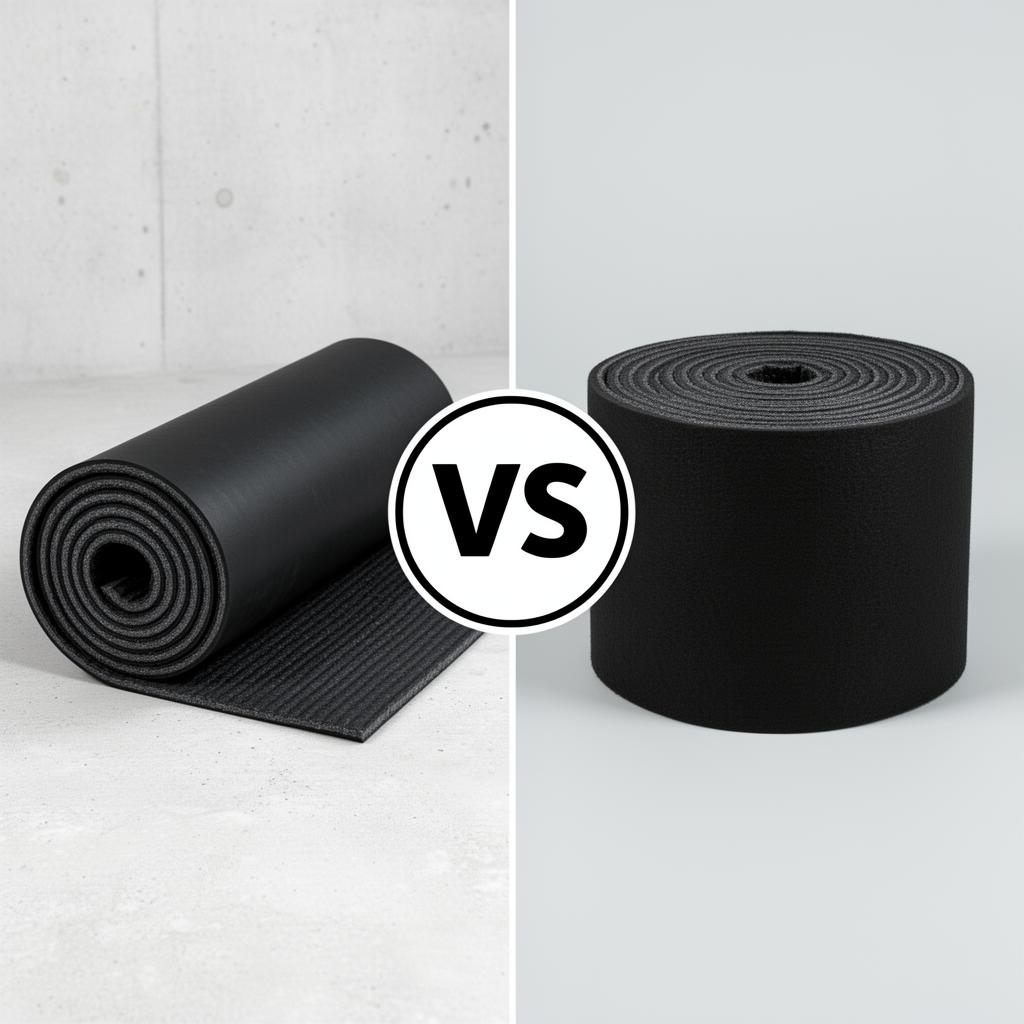
1 lb vs. 2 lb Mass Loaded Vinyl: Which Thickness Should You Buy?
Compare 1 lb/ft² MLV (STC 26) vs 2 lb/ft² MLV (STC 32). Practical buyer's guide covering use cases, cost math, wall assemblies, and when upgrading to 2 lb MLV is worth the investment.
Our Complete Product Line
Professional-grade soundproofing materials for any application
Need Expert Soundproofing Advice?
Our team of soundproofing specialists is here to help you choose the right products and installation methods for your museum or gallery project.