Home Office Soundproofing with Mass Loaded Vinyl (MLV)
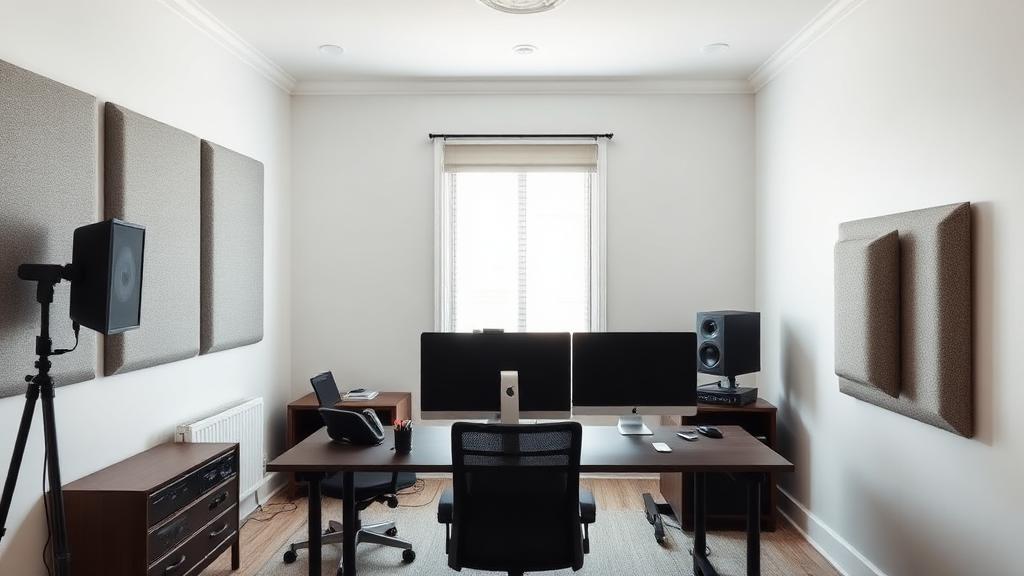
1The Remote Work Noise Problem
Home offices face a unique combination of sound challenges that typical office buildings don't have.
External Noise Sources
The world outside your home never stops making noise:
- Traffic: Cars, trucks, motorcycles—especially problematic if you're near a busy road
- Landscaping: Lawn mowers, leaf blowers, construction equipment
- Neighbors: Kids playing, dogs barking, pool parties, outdoor gatherings
- Aircraft: Flight paths can create intermittent but disruptive noise
- Weather: Wind, rain on windows, HVAC systems cycling
Internal Noise Sources
The noise inside your home is often worse than what's outside:
- Family members: Conversations, TV, music, kitchen activities
- Children: Playing, crying, homeschooling noise
- Pets: Barking at delivery drivers, meowing for attention
- Household appliances: Washing machines, dryers, dishwashers
- HVAC: Furnace cycling, air conditioning hum
2Why MLV Works for Home Offices
MLV addresses home office noise through proven acoustic physics.
Mass Law Principle
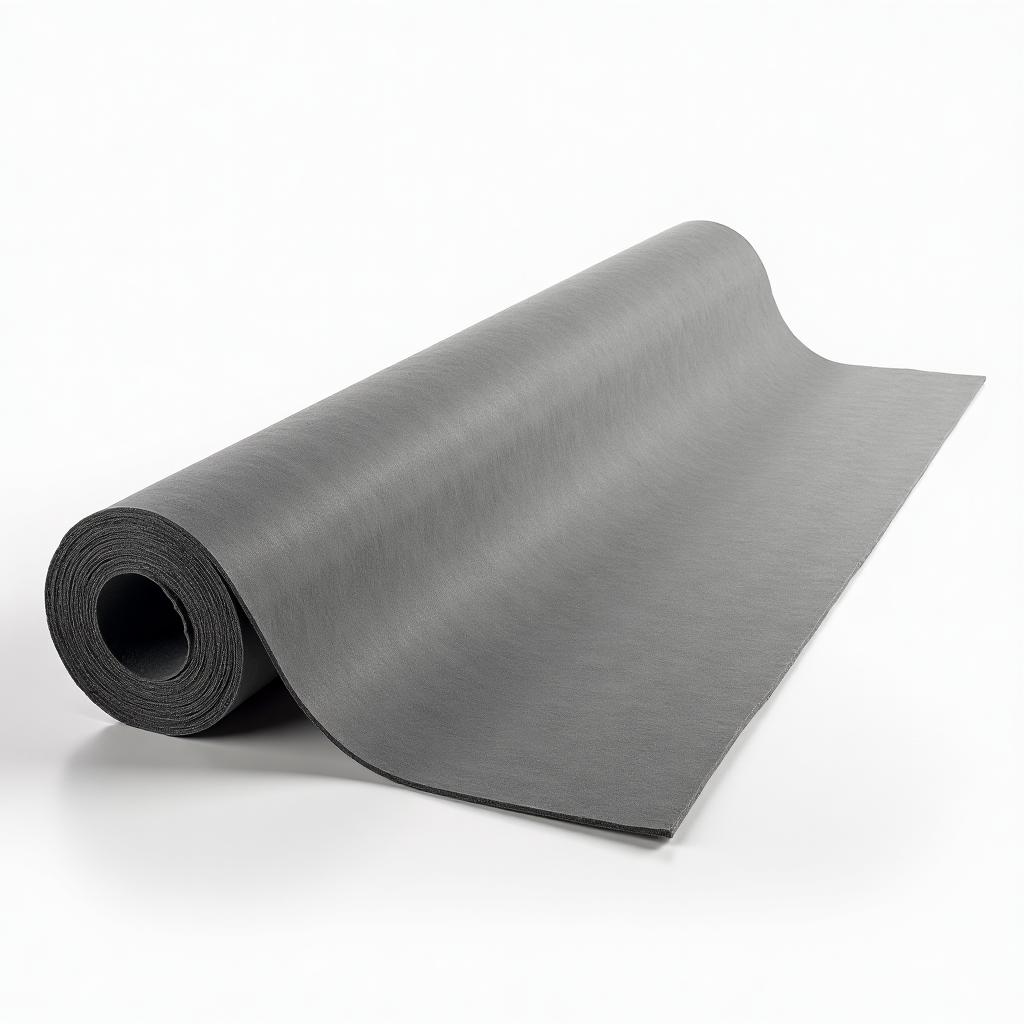
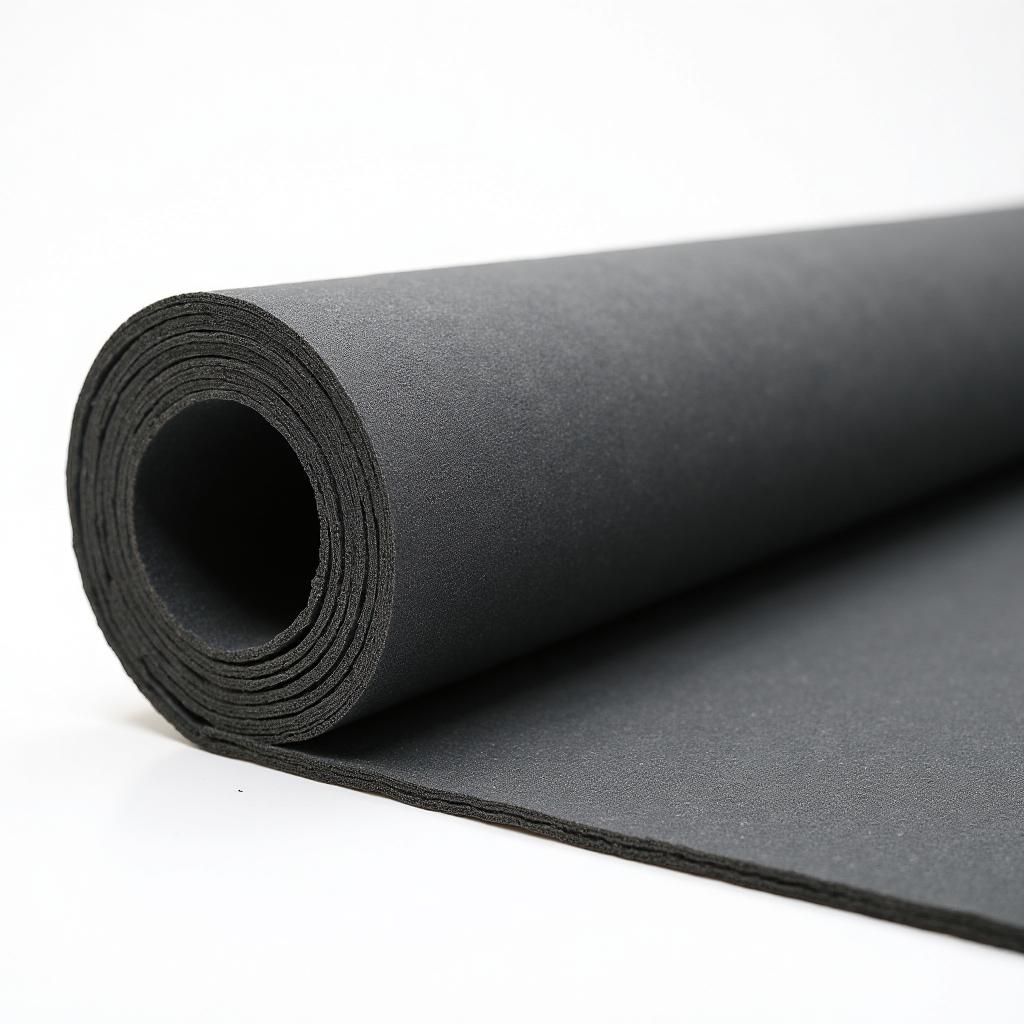
Sound transmission decreases as mass increases. MLV adds 1-2 lbs per square foot to walls without significant thickness—critical when you're converting a small bedroom or closet into an office.
Blocking vs. Absorbing
Acoustic foam panels and fabric treatments absorb echo inside a room, making recordings sound better. But they don't stop noise from entering. MLV creates an actual barrier that blocks sound transmission.
| Material | Primary Function | Blocks External Noise? |
|---|---|---|
| Acoustic foam panels | Absorbs echo/reverb | No |
| Fabric wall panels | Absorbs mid/high frequencies | Minimal |
| Heavy curtains | Some absorption + minor blocking | Slight |
| Mass Loaded Vinyl | Blocks sound transmission | Yes |
| MLV + absorption combo | Blocks + controls room acoustics | Yes |
Limp Mass Behavior
Unlike rigid materials, MLV doesn't resonate at specific frequencies. This "limp mass" behavior means it blocks sound consistently across the frequency spectrum rather than amplifying certain tones.
3Common Home Office Noise Sources
Before installing MLV, identify where your noise problems actually originate.
Prioritizing Treatment
Sound travels through your weakest barriers first. A perfectly soundproofed wall means nothing if noise pours through a hollow-core door or thin window.
| Noise Path | Priority | Typical Fix |
|---|---|---|
| Hollow-core door | Critical | Replace with solid core + seals |
| Gap under door | Critical | Door sweep + threshold seal |
| Single-pane window | High | Secondary glazing or MLV panel |
| Thin shared wall | High | MLV + drywall layer |
| HVAC vent | Medium | Duct silencer or baffles |
| Electrical outlets | Medium | Acoustic putty pads |
The 24-Hour Noise Test
Spend a full work day noting every noise interruption. Write down the source, direction, and severity. This "noise diary" reveals patterns you might miss in a quick assessment and helps you prioritize your soundproofing budget.
4Wall Soundproofing Strategies
Walls are often the largest surface area in your home office and a primary noise transmission path.
Full Construction Approach (Owners)
For permanent, high-performance soundproofing:
- Remove existing drywall (or add to existing)
- Fill cavities with mineral wool insulation
- Attach 1 lb MLV to studs, overlapping seams by 2"
- Seal all seams with acoustic tape
- Install 5/8" drywall over MLV
- Apply acoustic caulk at all perimeters
This assembly can achieve STC 50+ on a standard 2x4 wall—enough to make normal conversation inaudible through the wall.
Single Shared Wall Focus
If noise primarily comes from one direction (e.g., living room TV on the other side of your office wall), focus your entire budget on that single wall rather than spreading thin across all surfaces.
Assembly Performance Comparison
| Wall Assembly | Approx. STC | Result |
|---|---|---|
| Single drywall, no insulation | STC 33 | Normal speech easily heard |
| Single drywall + insulation | STC 38 | Loud speech heard |
| Double drywall + insulation | STC 43 | Loud speech muffled |
| Drywall + MLV + insulation | STC 48 | Normal speech blocked |
| Double drywall + MLV + insulation | STC 52+ | Loud speech barely audible |
5Window and Door Treatment
Windows and doors are typically the weakest points in any room's sound isolation.
Door Upgrades
A hollow-core interior door provides almost no sound blocking—roughly STC 20-25. Upgrades in order of effectiveness:
- Door sweep + weatherstripping: Seals the gap at bottom and sides (STC +3-5)
- Solid-core door replacement: Dense wood or composite core (STC 30-35)
- MLV-lined door panel: Attach MLV to hollow door interior
- Acoustic door: Purpose-built sealed door (STC 45+)
Window Solutions
Windows are challenging because you typically want to preserve light and views:
- Heavy curtains: Minimal blocking but some absorption
- Acoustic curtains: Better than standard, but still limited (3-5 dB reduction)
- Secondary glazing: Adding an interior window panel creates an air gap (significant improvement)
- MLV window plug: Removable panel for when quiet is critical (blocks light but very effective)
- Window replacement: Double or triple-pane windows (expensive but permanent)
The Window Plug Strategy
For important calls or focused work, a removable MLV window plug provides temporary but significant noise reduction:
- Measure window frame interior dimensions
- Cut rigid foam board to fit snugly
- Attach 1 lb MLV to foam board
- Add fabric facing for appearance
- Insert during calls, remove for natural light
6Ceiling and Floor Considerations
Depending on your home layout, vertical noise paths may require attention.
Ceiling Treatment (Noise from Above)
If your office is below a bedroom, playroom, or high-traffic area:
- Add mineral wool insulation between joists (if accessible)
- Install 1 lb MLV on ceiling joists
- Add 5/8" drywall on resilient channels
- Use acoustic caulk at all perimeters
For impact noise (footsteps), you'll also need carpet/rugs upstairs or resilient underlayment in the floor assembly.
Floor Treatment (Noise to Below)
If your office is above living spaces and you're concerned about your typing, chair rolling, or pacing disturbing others:
- Heavy area rug with thick pad
- Chair mat on rug for wheeled chairs
- Consider desk isolation pads for standing desks
7Renter-Friendly Solutions
Can't modify walls? These approaches work for apartments and rentals.
Freestanding Acoustic Panels
Build or buy panels with MLV core and fabric facing that lean against walls without attachment. They're not as effective as in-wall installation but provide meaningful improvement.
Heavy Moving Blankets
Industrial moving blankets provide some mass and absorption. Hang them on temporary hooks or stands near noise sources.
Portable Door Barriers
MLV-core door blankets that hang over interior doors during work hours, removed when not needed.
Workspace Relocation
Sometimes the best solution is moving your office to a quieter room:
- Interior rooms have fewer exterior walls and windows
- Rooms furthest from street noise sources
- Rooms not adjacent to living room or kitchen
- Basement or attic spaces (often naturally quieter)
Renter Solution Comparison
| Solution | Noise Reduction | Cost | Portability |
|---|---|---|---|
| Heavy curtains | Low | $50-200 | High |
| Moving blankets | Low-Medium | $50-150 | High |
| Acoustic panels (foam) | Echo only | $100-300 | High |
| MLV freestanding panels | Medium | $200-500 | Medium |
| Door blanket (MLV core) | Medium-High | $100-250 | High |
8Professional Meeting Audio
Good soundproofing is only half the equation for professional video calls.
Room Acoustics for Calls
Once you've blocked external noise with MLV, address internal room acoustics:
- Reduce echo: Absorption panels, rugs, curtains, bookshelves
- Microphone placement: Closer to mouth = less room sound pickup
- Background positioning: Avoid parallel hard surfaces behind you
The Professional Setup
For executives, salespeople, or anyone whose income depends on call quality:
- MLV soundproofing to block external noise
- Acoustic panels behind and around desk for echo control
- Quality USB microphone with noise cancellation
- Proper lighting to reduce camera grain/noise
- Headphones to prevent audio feedback
Noise Cancellation Software
Modern AI-powered noise cancellation (Krisp, NVIDIA RTX Voice, native Zoom features) can filter background noise digitally. However, they work best when combined with physical soundproofing—they can't remove everything, and heavy noise creates artifacts.
9STC Targets for Home Offices
Setting realistic goals helps you budget effectively.
| Work Type | Typical Noise Issues | Target STC | Result |
|---|---|---|---|
| Email/writing work | Minor distractions | STC 40 | Acceptable focus |
| Standard video calls | Background noise audible | STC 45 | Professional appearance |
| Important client calls | Any noise disruptive | STC 50 | Clean, quiet audio |
| Recording/podcasting | Silence required | STC 55+ | Studio-quality quiet |
ROI Calculation
Consider the value of your time and productivity:
- Noise interruptions cost 15-25 minutes of refocus time each
- Background noise on calls affects client perception
- Chronic noise stress reduces overall work quality
- A $500-2,000 soundproofing investment pays for itself quickly
Phased Approach
You don't have to do everything at once:
- Phase 1: Door seals and sweeps ($50-100)
- Phase 2: Solid-core door upgrade ($200-400)
- Phase 3: Primary wall MLV treatment ($300-600)
- Phase 4: Window solutions as needed ($100-500)
11Conclusion
A properly soundproofed home office transforms your work-from-home experience. No more apologizing for barking dogs on calls, no more losing focus every time a car drives by, no more fighting for concentration against household noise. Mass Loaded Vinyl is the foundation of effective home office soundproofing, adding the mass needed to actually block noise rather than just absorbing echo.
Start with your weakest points—usually doors and windows—then address the primary wall where noise enters. Even modest improvements make a significant difference in focus, productivity, and professional appearance on video calls. The investment pays for itself in better work quality and reduced stress within months of installation.
FAQs: Home Office Soundproofing MLV
Related Guides in Residential Soundproofing
Continue exploring with these hand-picked articles
Home Studio Soundproofing with Mass Loaded Vinyl (MLV)
Complete guide to soundproofing your home studio with Mass Loaded Vinyl. Achieve professional-grade STC 55-60 isolation for recording, mixing, and producing without disturbing neighbors or household members.
Apartment Soundproofing with Mass Loaded Vinyl (MLV)
Transform your apartment, studio, or loft into a peaceful retreat. Complete guide to using Mass Loaded Vinyl for blocking neighbor noise through walls, ceilings, and floors—solutions for renters and owners.
Home Theater Soundproofing with Mass Loaded Vinyl (MLV)
Keep your movie nights from disturbing the rest of the house or neighbors. Complete guide to using Mass Loaded Vinyl for containing loud movies, music, and gaming sound in your dedicated home theater room.
Our Complete Product Line
Professional-grade soundproofing materials for any application
Need Expert Soundproofing Advice?
Our team of soundproofing specialists is here to help you choose the right products and installation methods for your museum or gallery project.