Garage Soundproofing with Mass Loaded Vinyl (MLV)
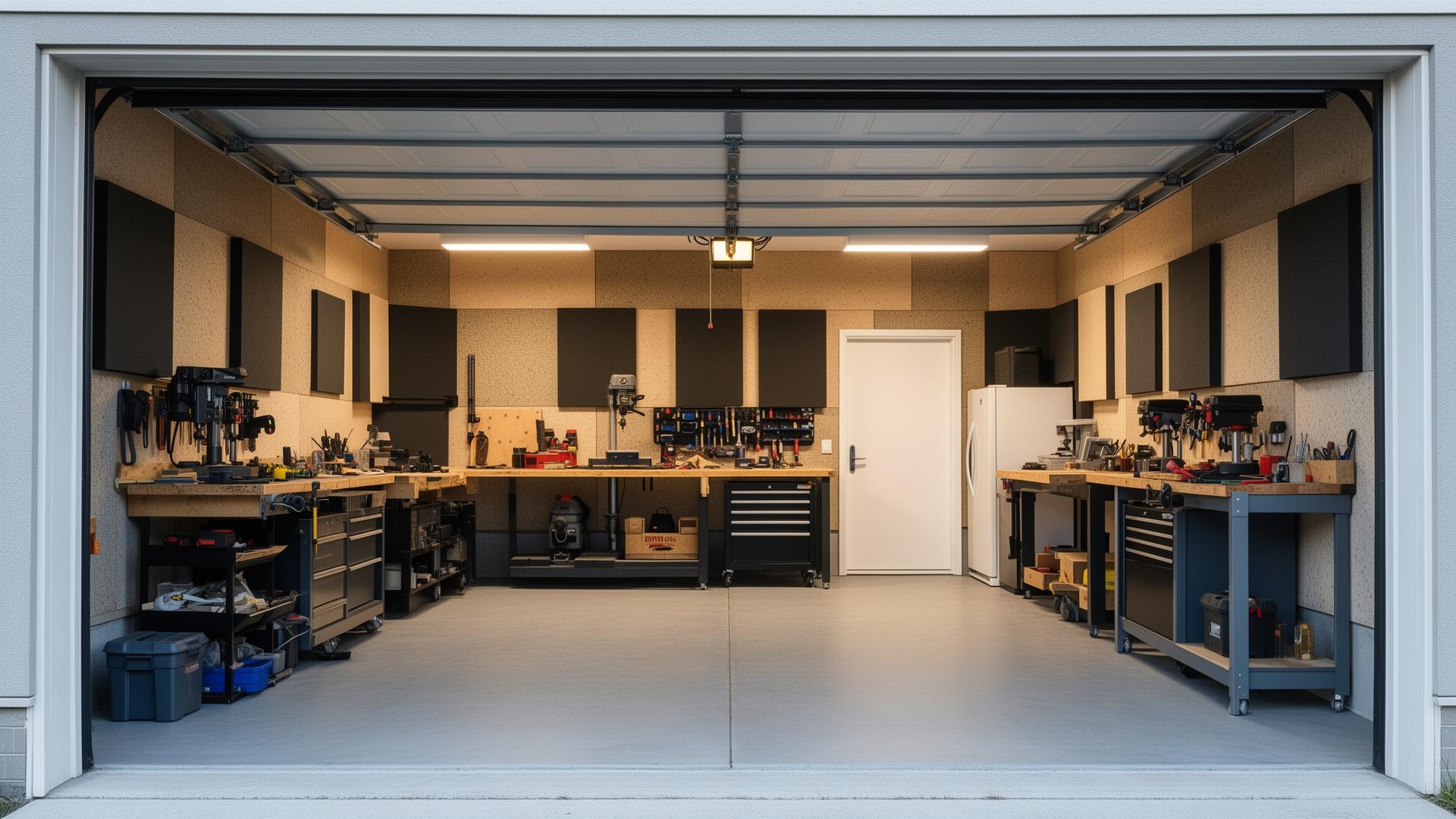
1Why Garages Are Noise Nightmares
The Construction Reality
• Hollow metal doors: Roll-up garage doors are essentially giant sound holes with STC ratings below 20
• Uninsulated walls: Many garages have exposed studs or minimal insulation between framing
• Concrete floors: Hard reflective surfaces amplify sound energy rather than absorbing it
• Shared wall connections: Attached garages share structural framing with living spaces, transmitting vibration directly
Sound Level Reality Check
• Drum kit: 100-130 dB—equivalent to a jet engine at close range
• Angle grinder: 95-115 dB—penetrates standard construction easily
• Air compressor: 80-95 dB—particularly problematic due to low-frequency content
• Electric guitar amplifier: 100-120 dB—designed to be loud and project energy
2Common Garage Noise Sources
Woodworking & Power Tools
• Impact noise: Hammering, nailing, and drilling transfer through structure as vibration
• Dust collection: Shop vacuums and dust systems add constant background drone
• Compressor cycling: Air compressors create sudden impulse noise when activating
Music & Band Practice
• Mid-range projection: Vocals, guitars, and keyboards fill the 200-2000 Hz range
• High-frequency energy: Cymbals, high hats, and amplifier harmonics extend to 15,000+ Hz
• Volume expectations: Bands practice at performance levels—typically 100-110 dB
Automotive Work
• Impact wrenches: Air tools produce 95-105 dB impulse noise
• Metal work: Grinding, cutting, and welding create sustained high-frequency noise
• Exhaust testing: Performance exhaust systems can exceed 100 dB easily
3Understanding Sound Paths
Direct Transmission
• Ceiling paths: Sound travels upward into bedrooms, offices, or living spaces above
• Garage door: The largest and weakest acoustic element in most garages
• Windows: Standard single-pane glass transmits sound almost freely
Flanking Paths
• HVAC ducts: Shared ductwork carries sound throughout the house
• Door gaps: Even small gaps under doors allow significant sound leakage
• Structural connections: Floor joists, wall studs, and headers transmit vibration throughout framing
Impact Transmission
• Wall-mounted equipment: Compressors and power tools vibrate directly into framing
• Speaker coupling: Subwoofers and bass amplifiers transfer energy into floors and walls
4The Garage Door Dilemma
The Honest Assessment
• Insulated doors: Foam-filled panels improve thermal performance but only reach STC 25-28
• Perimeter gaps: Weather seals are designed for dust, not sound—air gaps leak noise
• Replacement cost: Acoustic-rated side-hinged doors cost $5,000-15,000 installed
Practical Improvements
• Upgrade seals: Commercial-grade brush or bulb seals reduce gap transmission
• Interior acoustic curtains: Heavy MLV curtain systems inside the garage door add significant mass
• Partial wall: Building a short knee wall with an access door reduces effective opening size
The 'Dedicated Space' Solution
• Solid-core door: Install STC 40+ rated door into new partition
• Airlock design: The space between partition and garage door acts as a sound buffer
• Cost comparison: Often cheaper than acoustic garage door replacement with better results
5Wall Soundproofing Strategies
Priority Walls
• Neighbor-facing second: Exterior walls facing adjacent properties affect neighborhood relations
• Interior walls last: Walls facing your own yard matter less unless you have outdoor living areas
MLV Wall Assembly
• Retrofit option: Attach MLV directly over existing drywall, then add new layer—achieves STC 45-50
• Overlap seams: MLV seams should overlap 2" minimum and be sealed with acoustic caulk
• Don't compress: MLV needs to hang freely to dampen vibration—don't stretch tight
• Extend fully: Run MLV from floor to ceiling, tucking behind bottom plates where possible
STC Performance Comparison
| Wall Assembly | STC Rating | dB Reduction |
|---|---|---|
| Single 1/2" drywall | STC 33 | ~20 dB |
| Double 1/2" drywall | STC 38 | ~25 dB |
| Single drywall + 1 lb MLV | STC 45 | ~30 dB |
| Double drywall + 1 lb MLV between | STC 50 | ~35 dB |
| Staggered stud + MLV + double drywall | STC 55+ | ~40 dB |
Exposed Stud Walls
• Staple MLV to studs: Attach MLV using staples or cap nails every 6-8 inches
• Seal perimeter: Use acoustic sealant at floor, ceiling, and corner connections
• Add drywall over: Install 5/8" drywall over MLV for fire rating and finished appearance
6Ceiling Isolation (Rooms Above)
The Footsteps in Reverse Problem
• Thin substrate: Many garage ceilings are 3/8" drywall or exposed framing
• Vibration coupling: Structure-borne sound travels efficiently through solid wood connections
• HVAC penetrations: Ductwork creates direct paths to bedroom and living areas
MLV Ceiling Installation
• MLV layer: Attach 1 lb/sf MLV to ceiling before installing new drywall
• Double drywall: Use 5/8" Type X drywall for fire rating plus mass
• Green Glue option: Add damping compound between drywall layers for additional 5-8 STC points
• Seal penetrations: Use acoustic putty pads on electrical boxes and firestop caulk on pipe penetrations
The Floor Assembly Above
• Area rugs: Heavy rugs in rooms above reduce footfall transmission into garage
• Subfloor floating: Serious isolation may require floating floor systems in rooms above
8Non-Invasive Solutions
Acoustic Curtain Systems
• Coverage strategy: Hang curtains over garage door interior when working for immediate improvement
• Shared wall coverage: Full-height curtains on shared wall add mass and absorption
• Easy removal: Curtains can be pulled back when loading cars or moving equipment
Portable Sound Barriers
• Position strategically: Place panels between noise source and problem walls during use
• Storage consideration: Panels store flat against walls when not needed for acoustic duty
Source Reduction
• Electronic drums: E-drums with headphones eliminate acoustic drum noise entirely
• Amp modeling: Digital amp simulators allow headphone monitoring for guitar practice
• Dust collection timing: Run shop vacs during less sensitive hours
• Anti-vibration mats: Isolate compressors and equipment from floor to reduce structure-borne noise
Neighbor Communication
• Give warning: Text neighbors before extended noisy projects
• Reciprocity: Tolerance works both directions—be understanding of their activities too
11Conclusion
Garage soundproofing requires a realistic approach that balances your activities, your budget, and the expectations of your household and neighbors. The garage door will always be the weakest link—accept this and focus your investment on the shared wall with your home and the ceiling if there are rooms above.
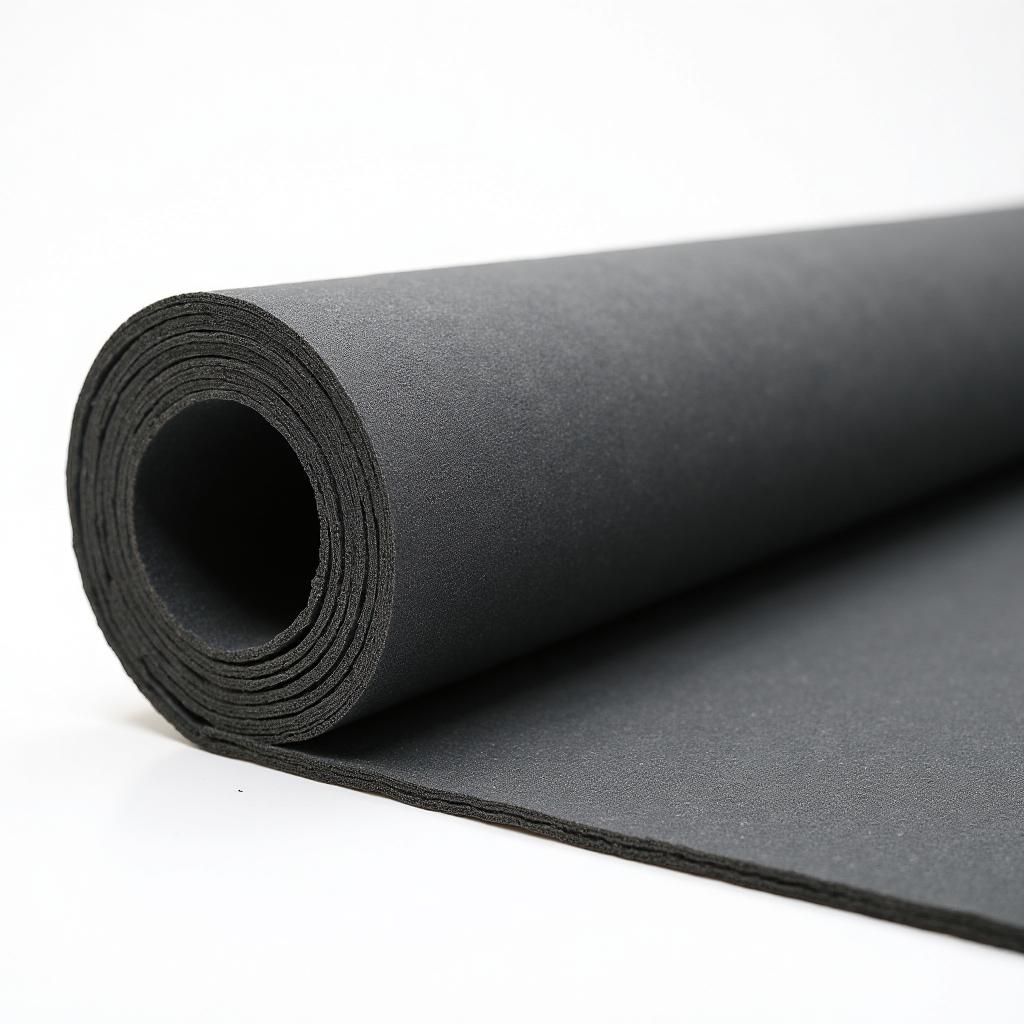
MLV is the most cost-effective way to add mass to garage walls and ceilings. A 1 lb/sf layer of MLV adds 8-10 STC points to any assembly, transforming a typical STC 33 garage wall into an STC 45+ barrier. For attached garages, treating just the shared wall often provides sufficient improvement for most activities.
Start with the shared wall and entry door upgrades—these improvements provide the most noticeable benefit for everyday use. If neighbors remain a concern, add exterior wall treatment. For serious use like band practice or metalworking, consider building a room-within-room using resilient channels and multiple MLV layers.
Remember that perfect silence isn't the goal—making your garage activities acceptable to those around you is. Often a 15-20 dB reduction is enough to change noise from "complaint-worthy" to "barely noticeable." Mass loaded vinyl delivers exactly this kind of practical, measurable improvement.
FAQs: Garage Soundproofing
Related Guides in Residential Soundproofing
Continue exploring with these hand-picked articles
Home Studio Soundproofing with Mass Loaded Vinyl (MLV)
Complete guide to soundproofing your home studio with Mass Loaded Vinyl. Achieve professional-grade STC 55-60 isolation for recording, mixing, and producing without disturbing neighbors or household members.

Apartment Soundproofing with Mass Loaded Vinyl (MLV)
Transform your apartment, studio, or loft into a peaceful retreat. Complete guide to using Mass Loaded Vinyl for blocking neighbor noise through walls, ceilings, and floors—solutions for renters and owners.
Home Theater Soundproofing with Mass Loaded Vinyl (MLV)
Keep your movie nights from disturbing the rest of the house or neighbors. Complete guide to using Mass Loaded Vinyl for containing loud movies, music, and gaming sound in your dedicated home theater room.
Our Complete Product Line
Professional-grade soundproofing materials for any application
Need Expert Soundproofing Advice?
Our team of soundproofing specialists is here to help you choose the right products and installation methods for your museum or gallery project.